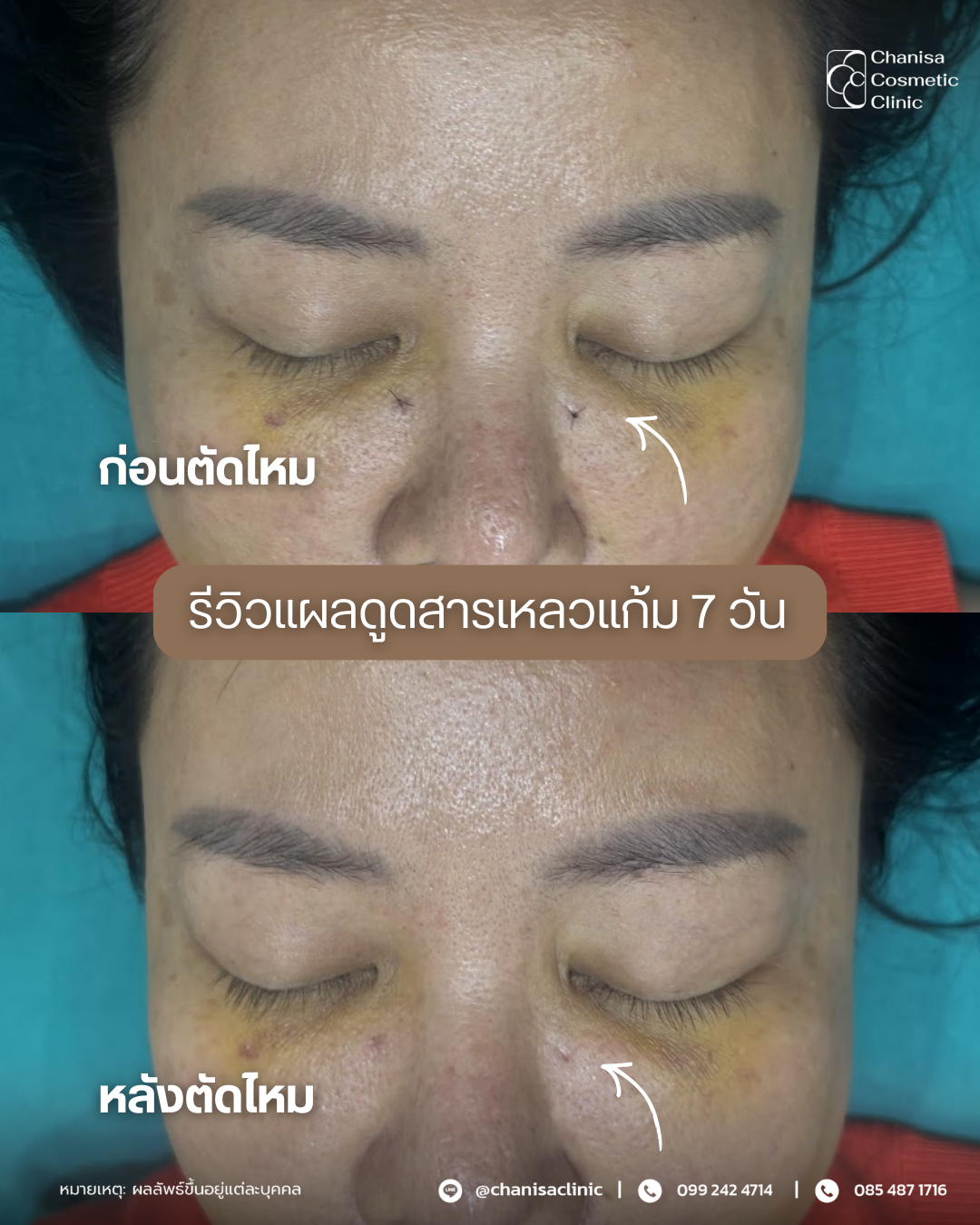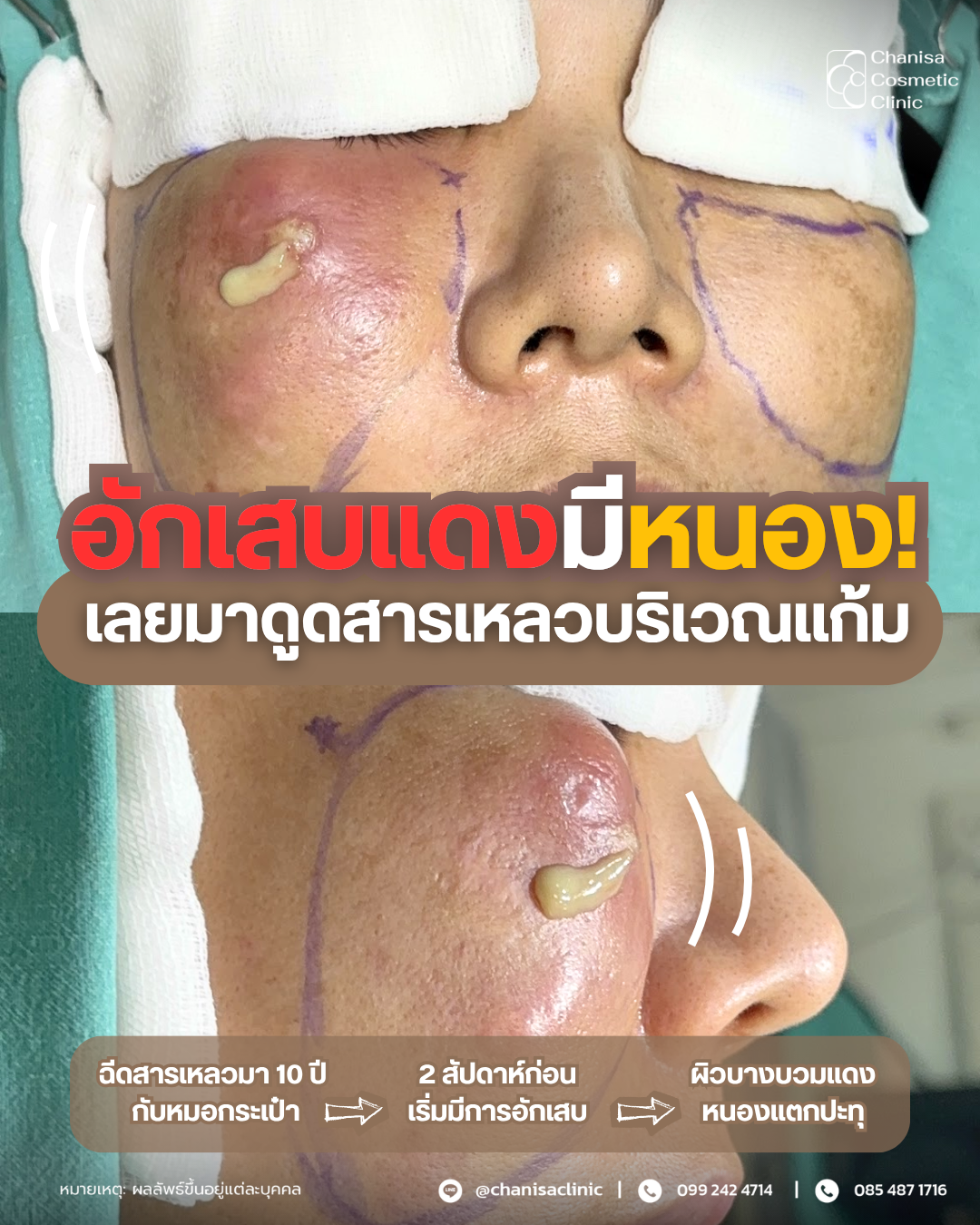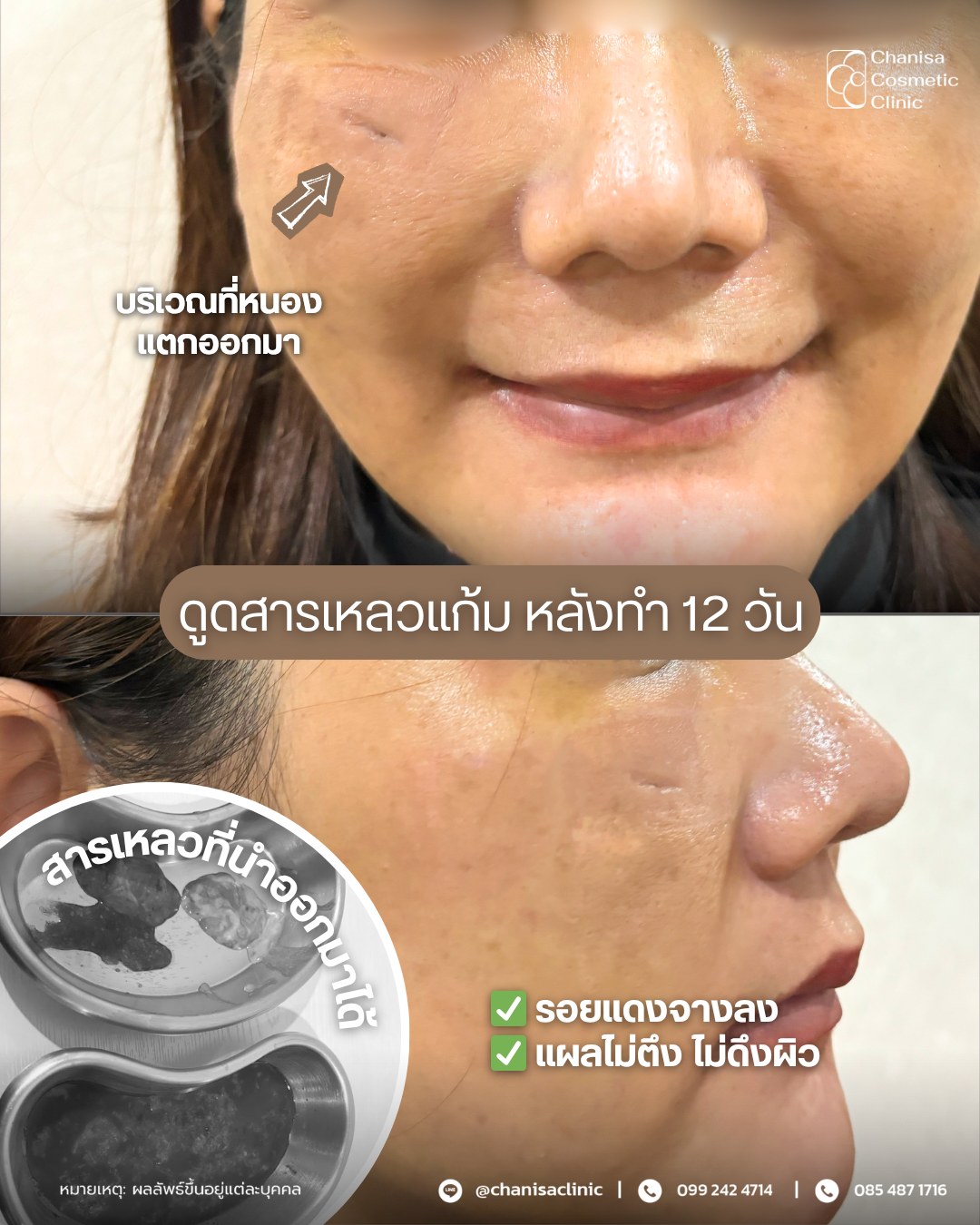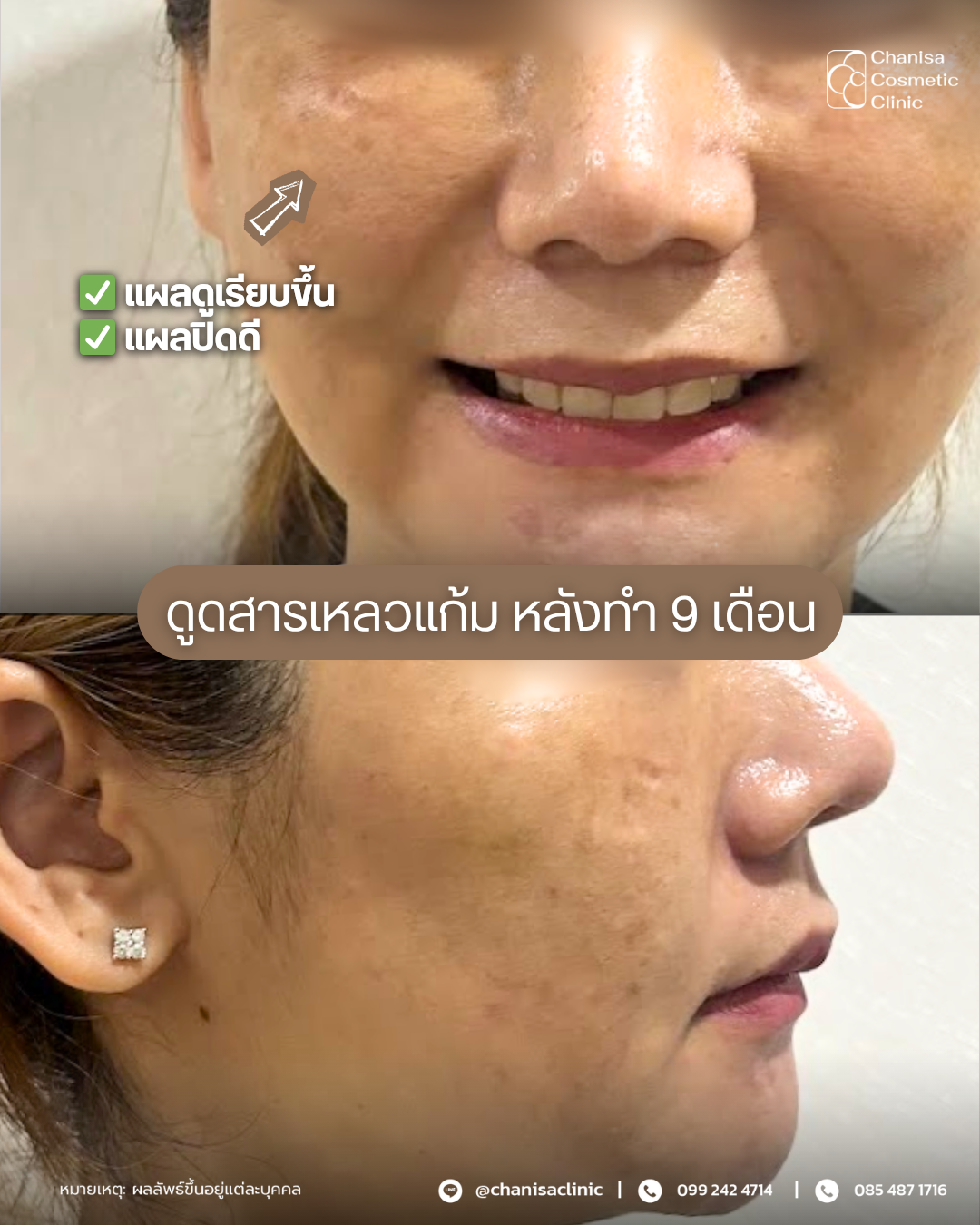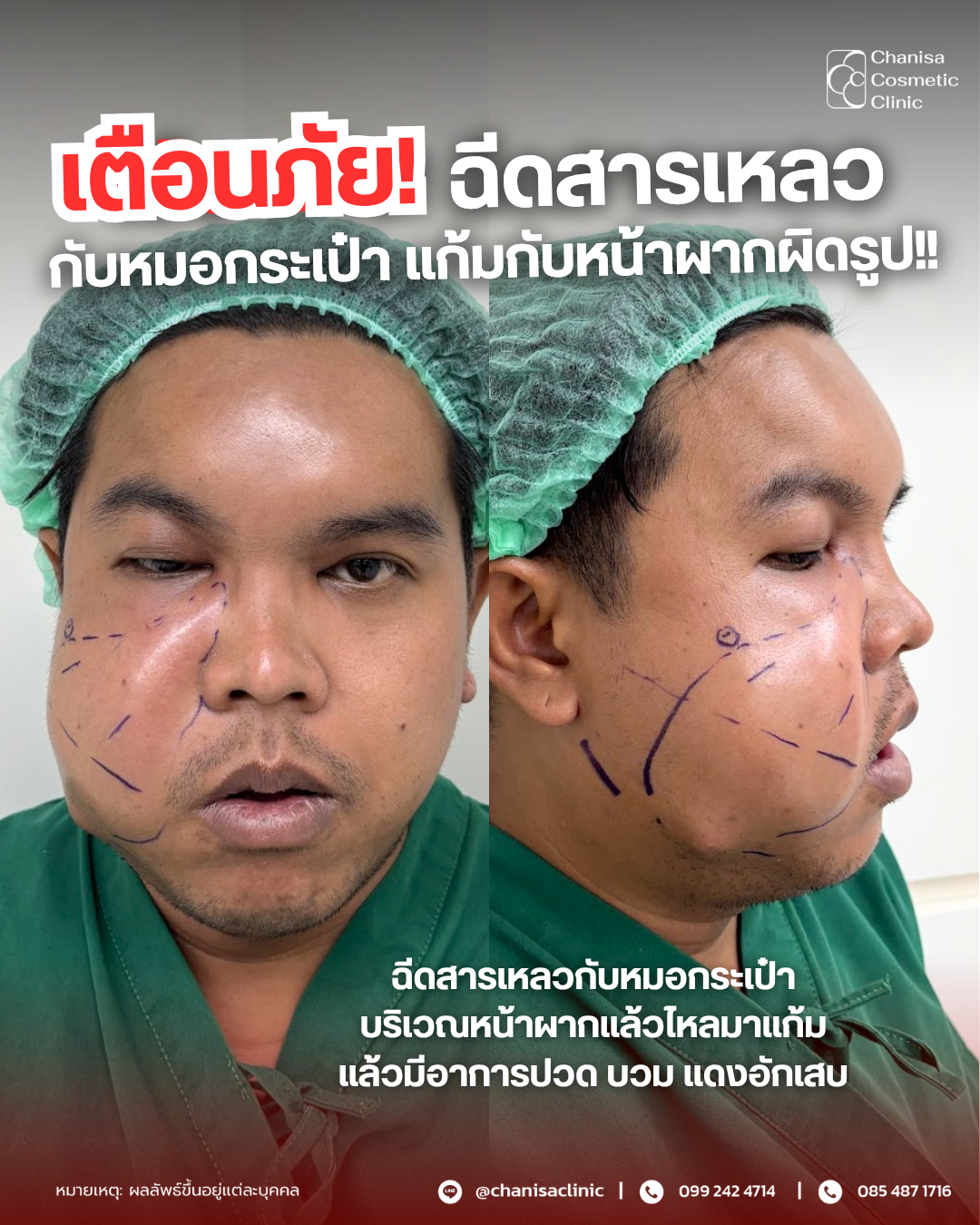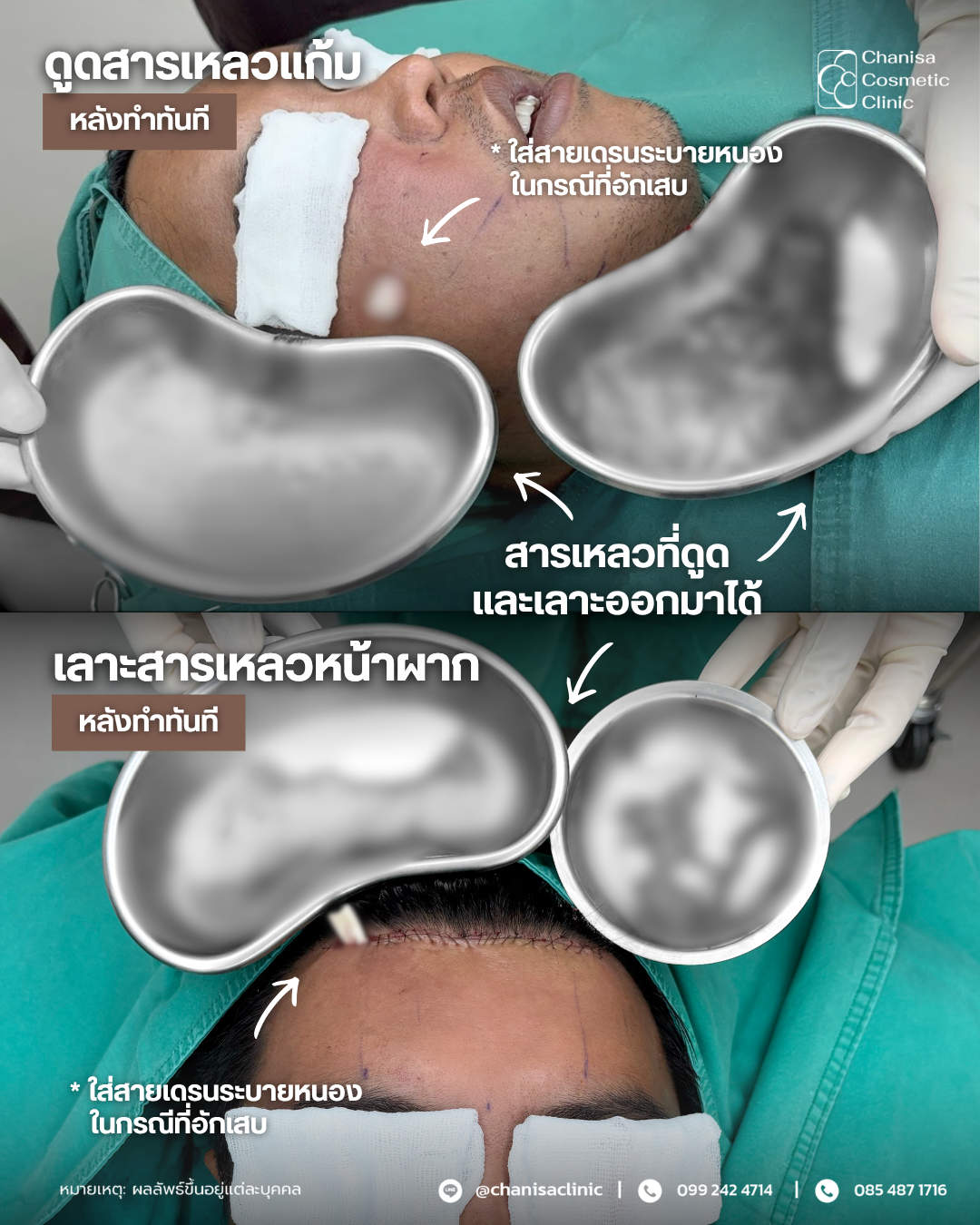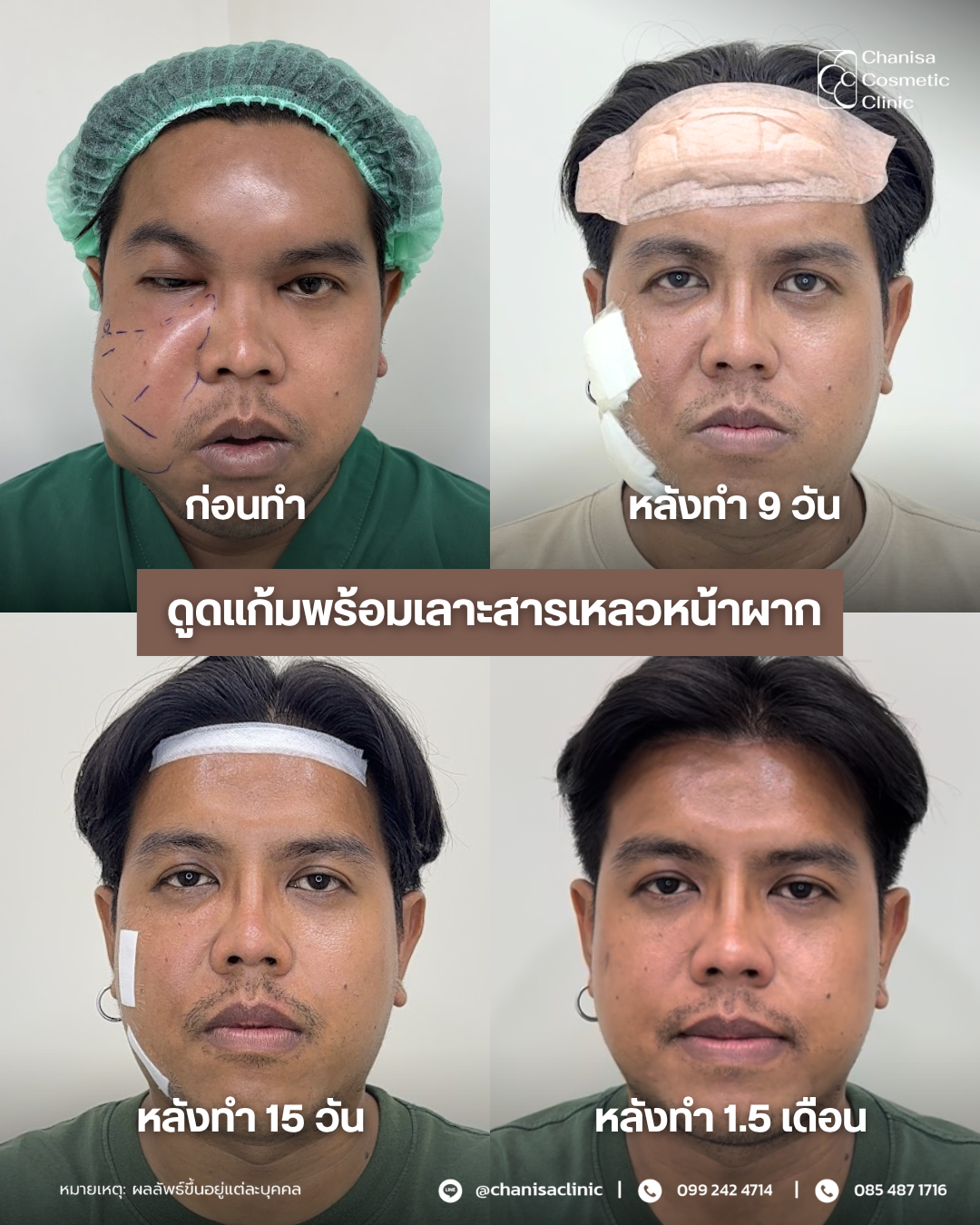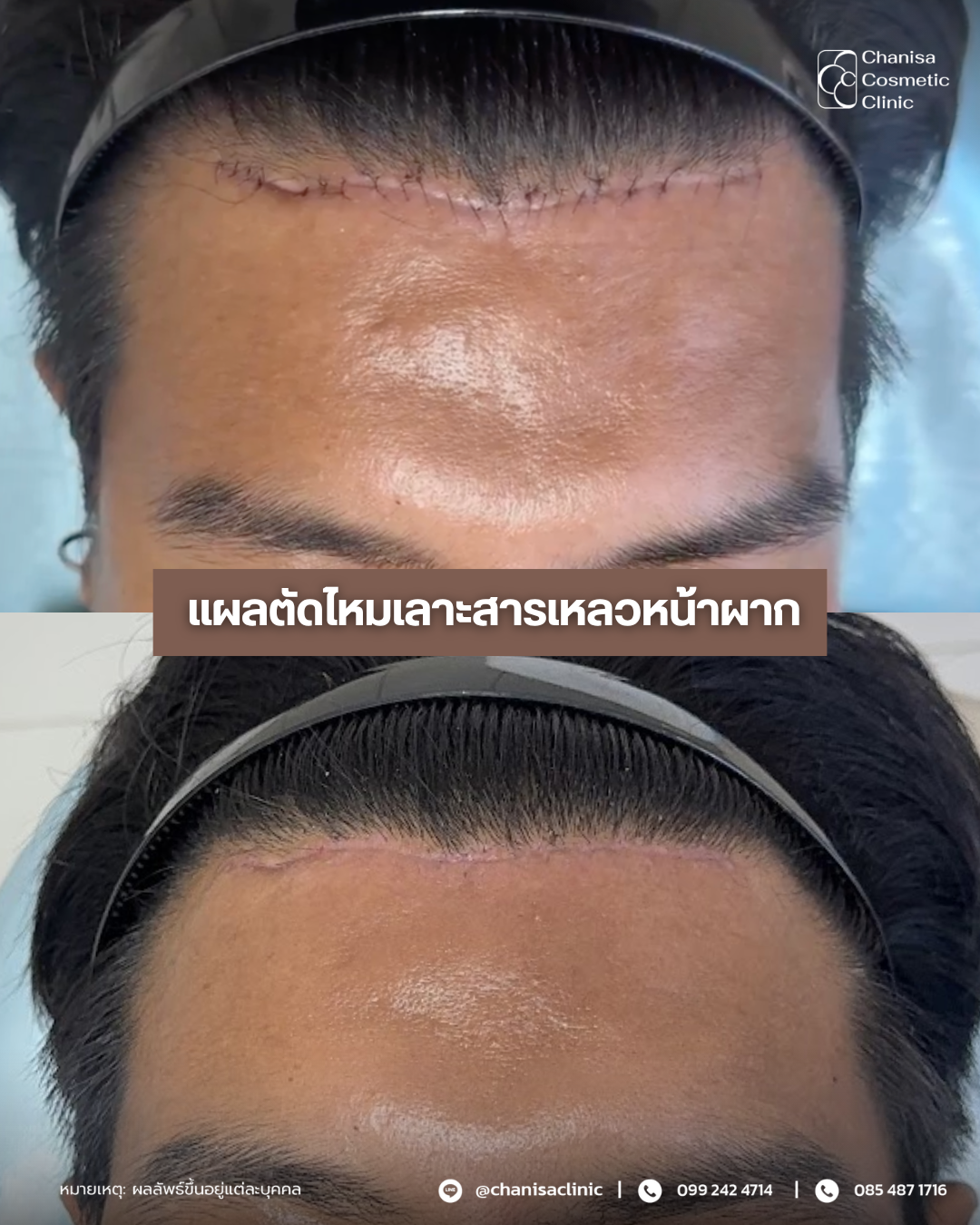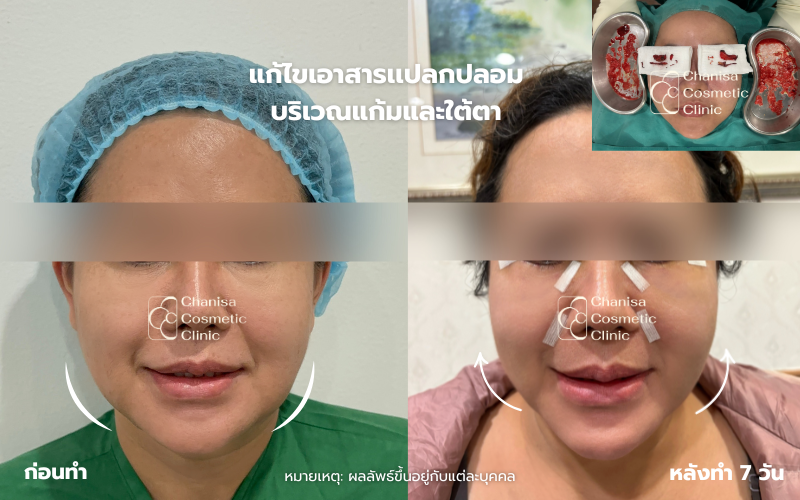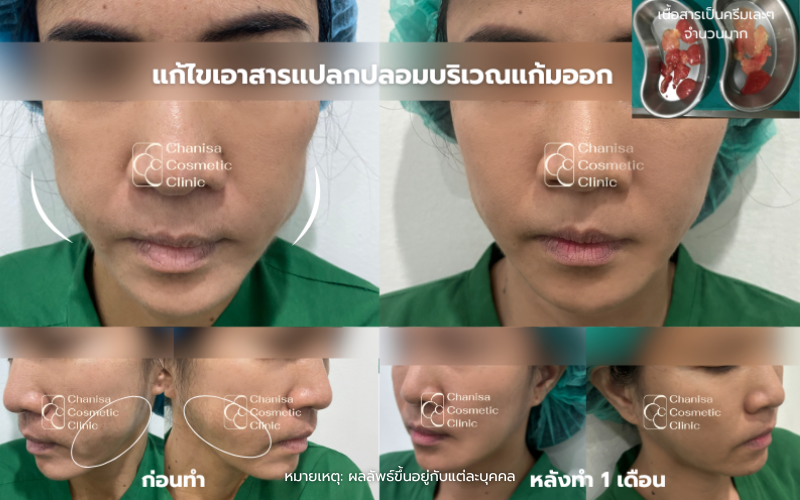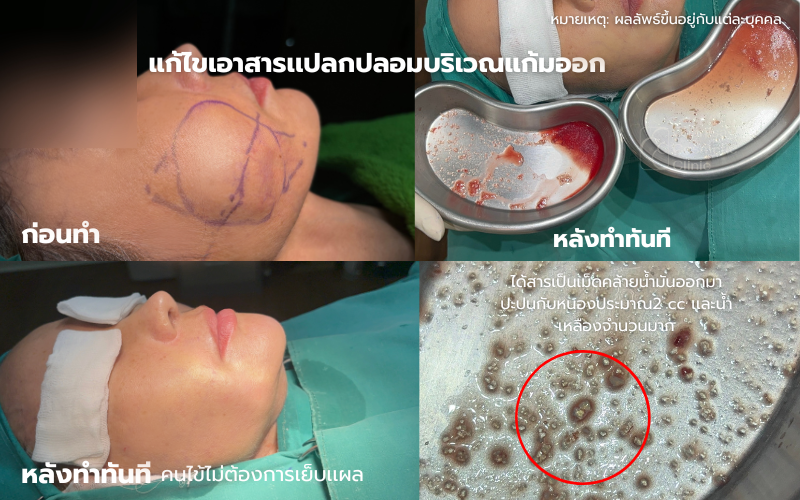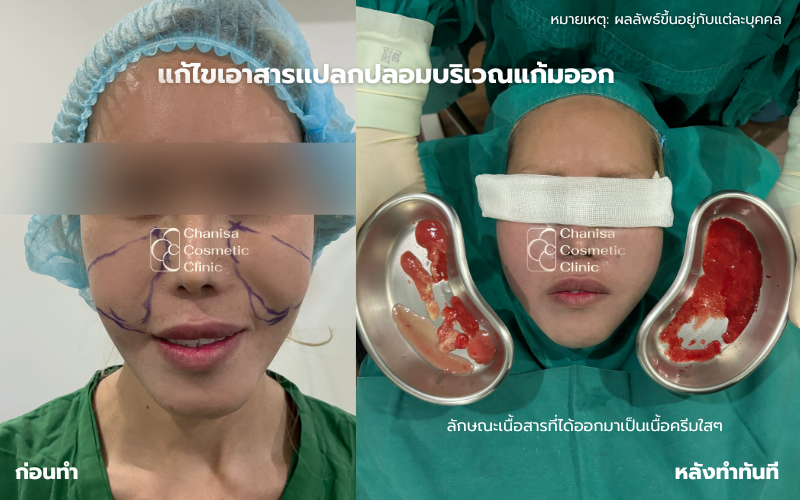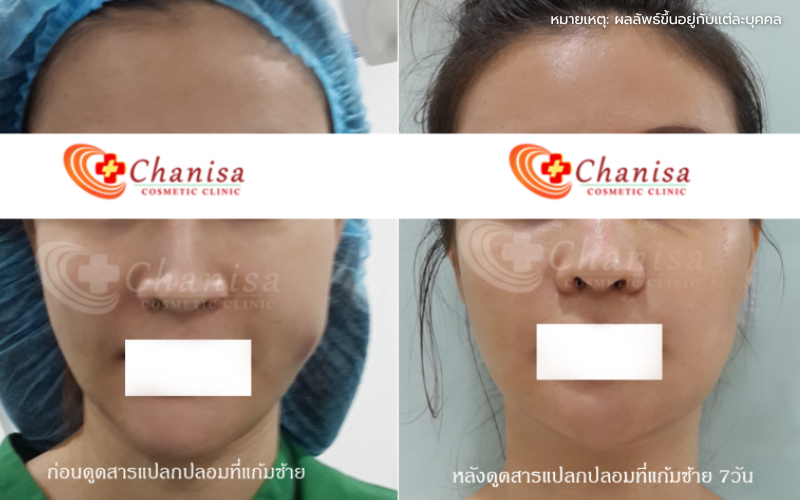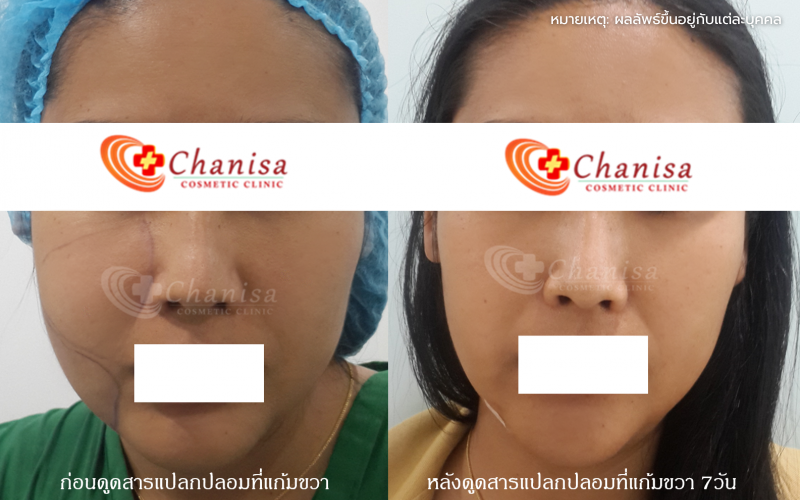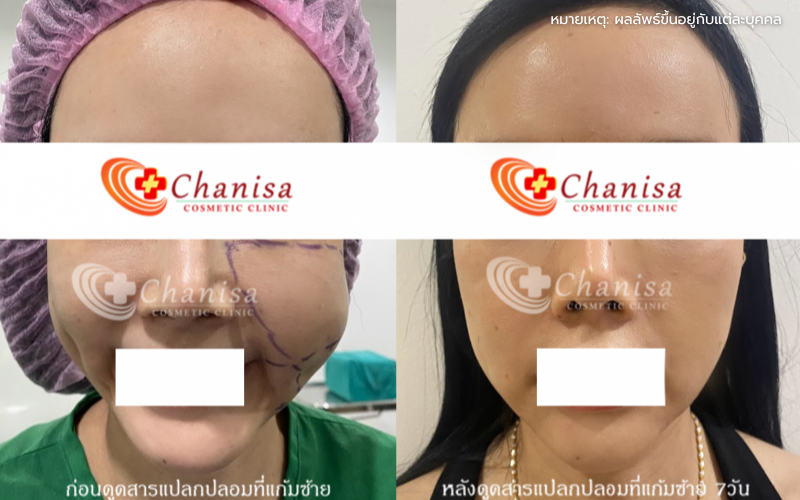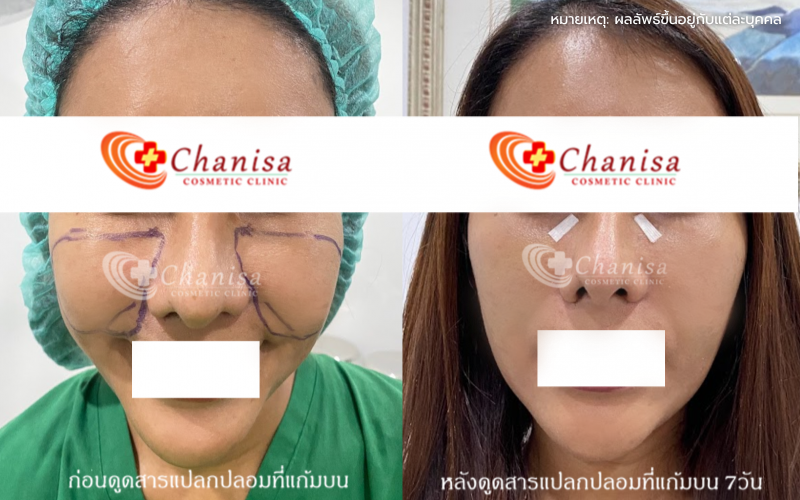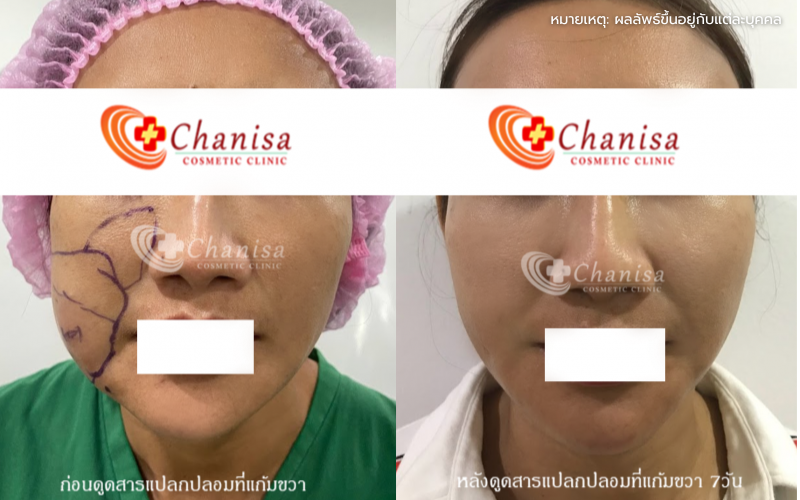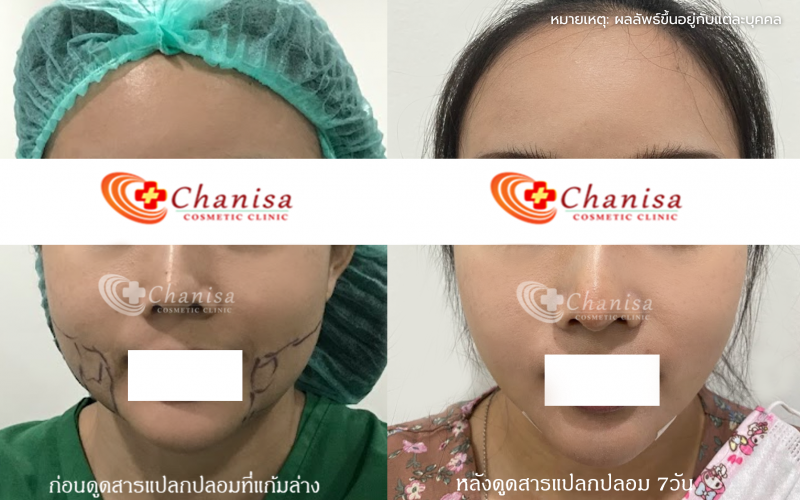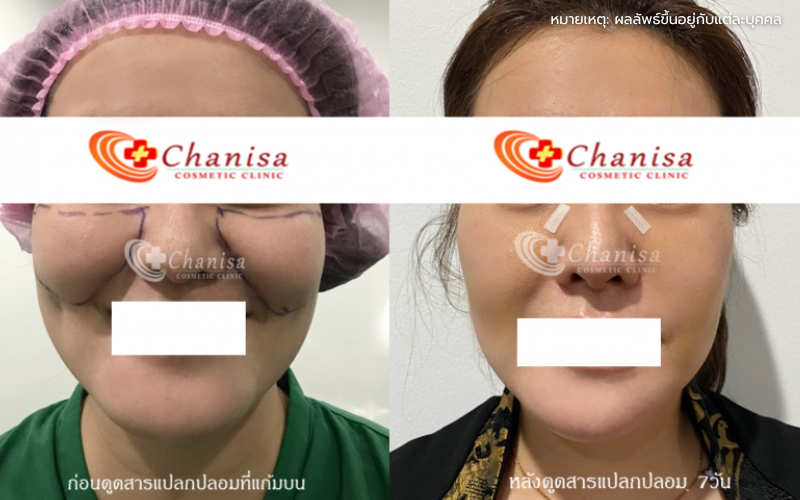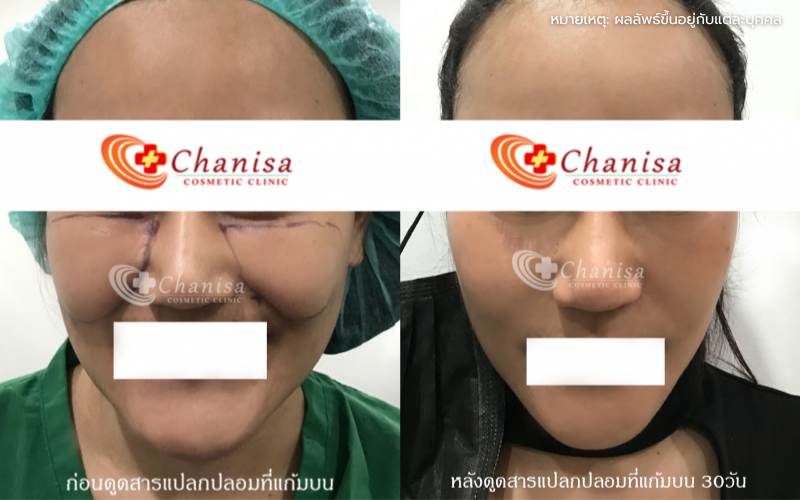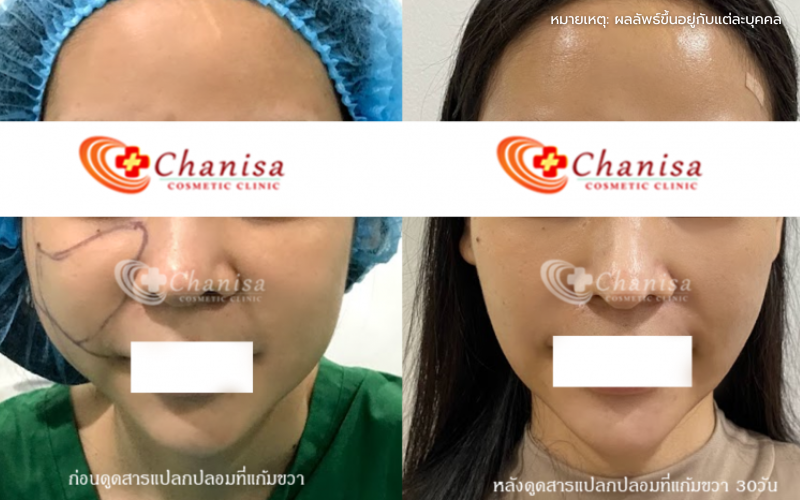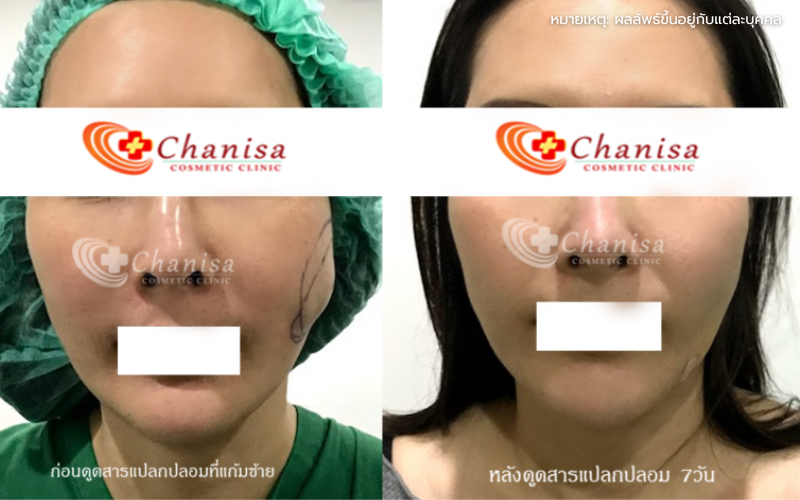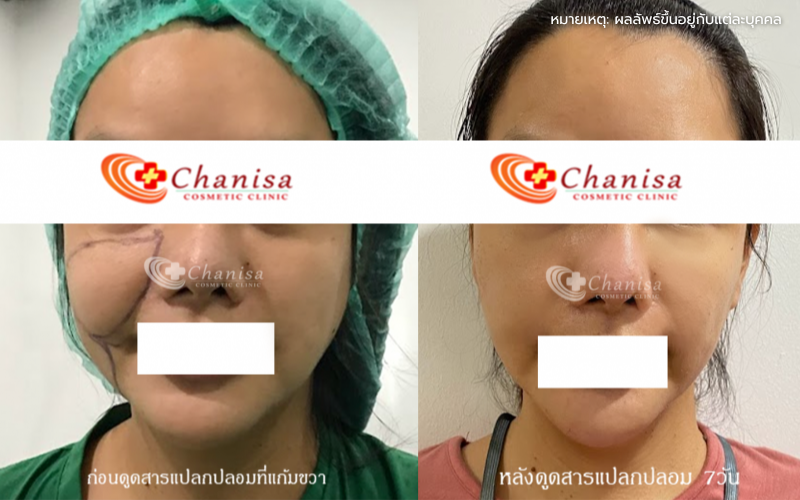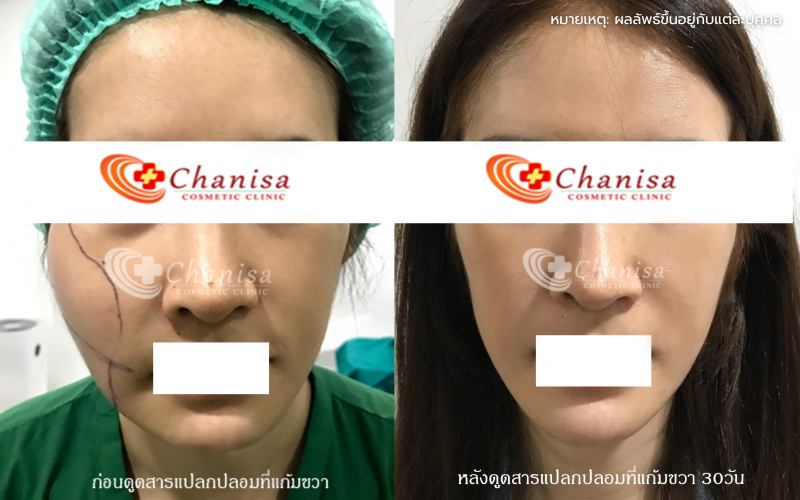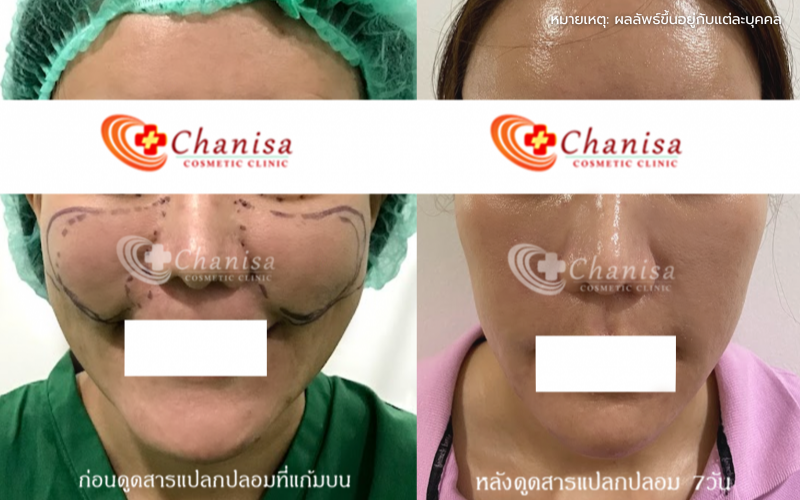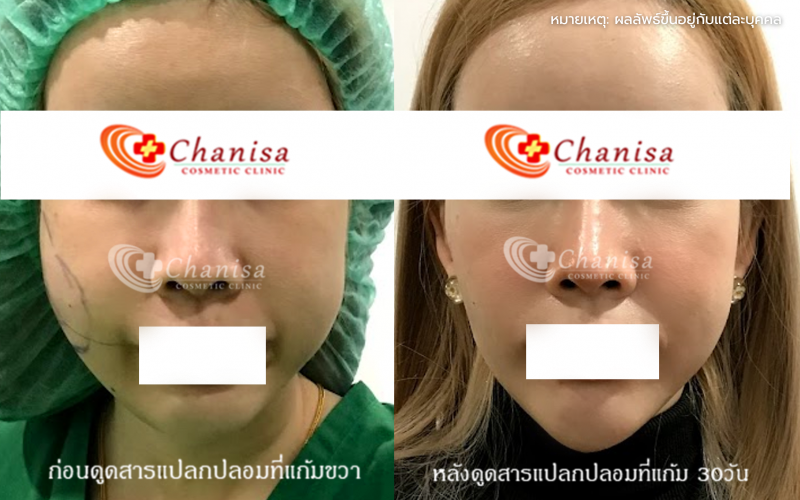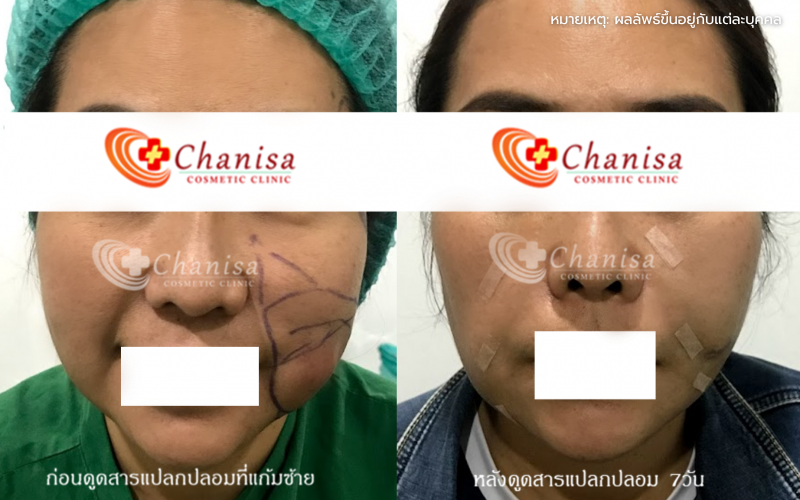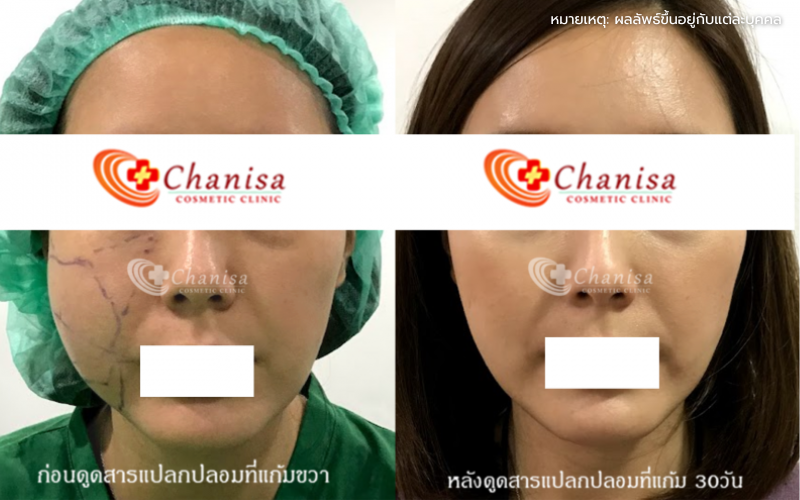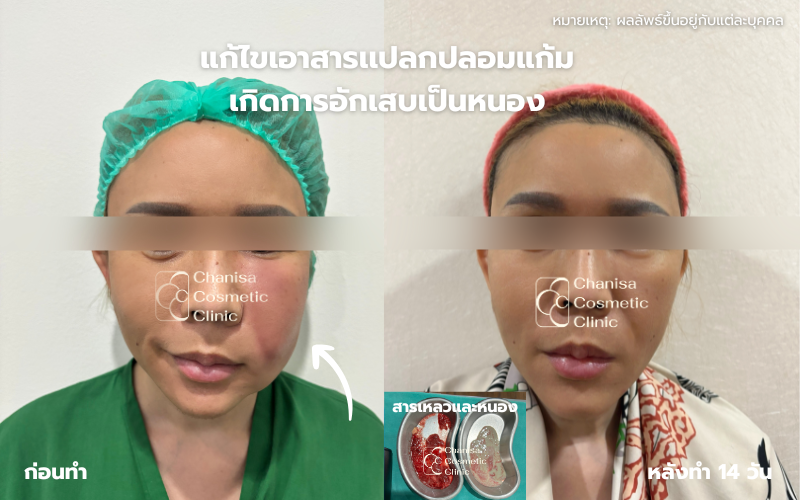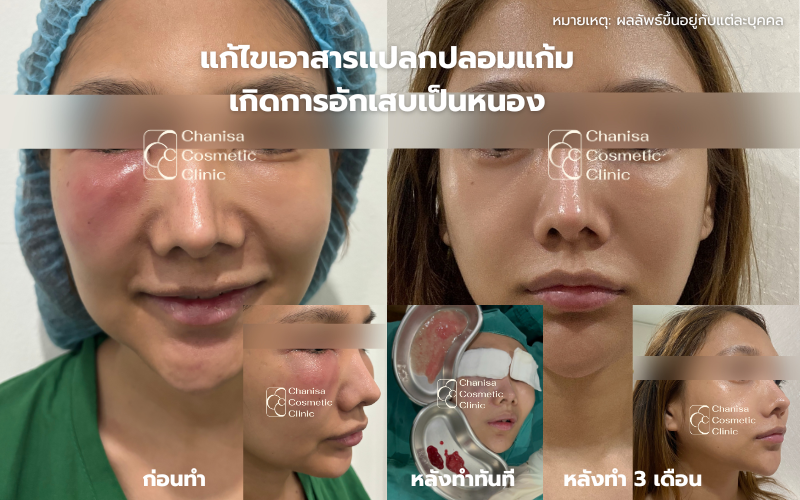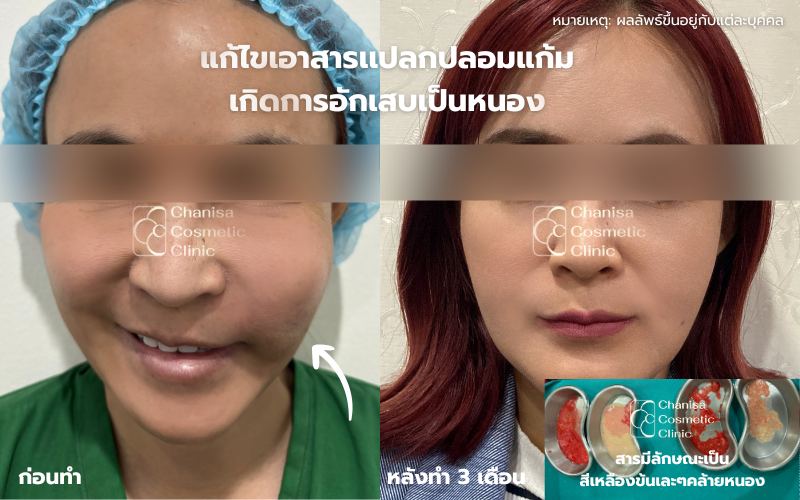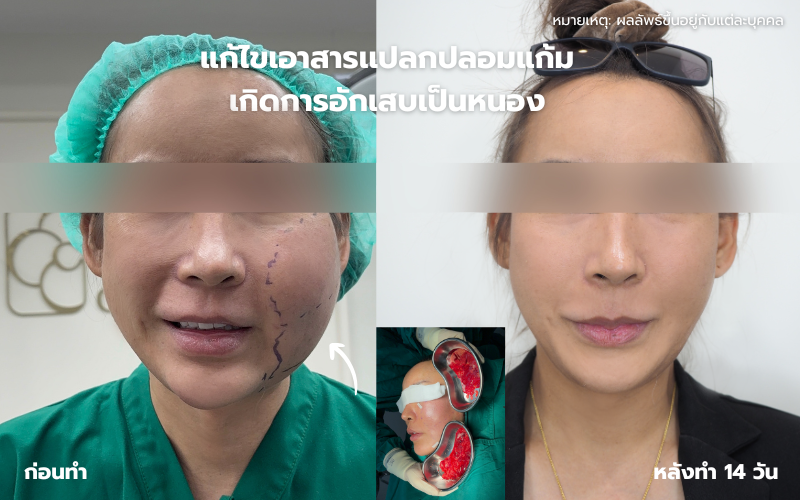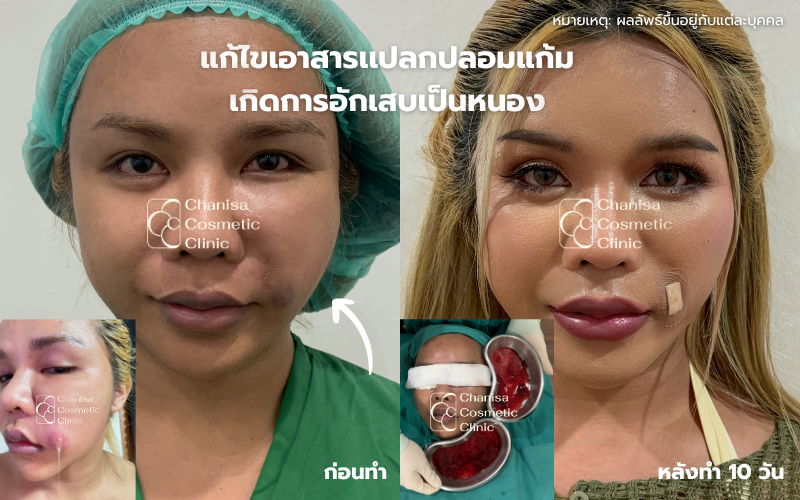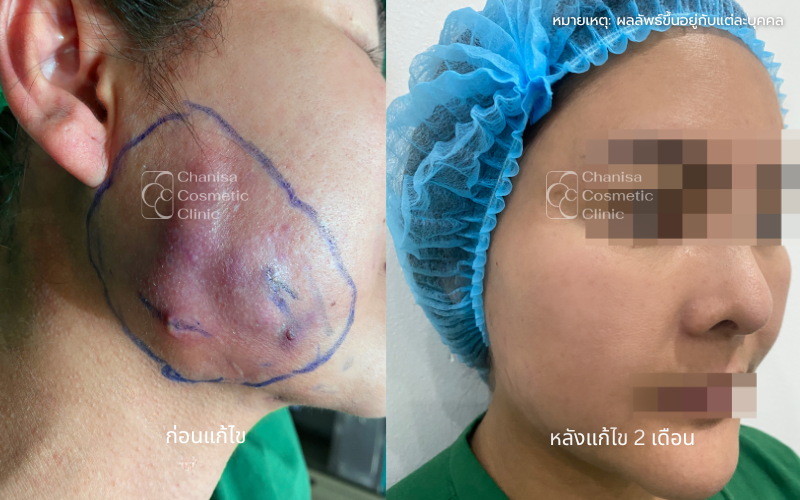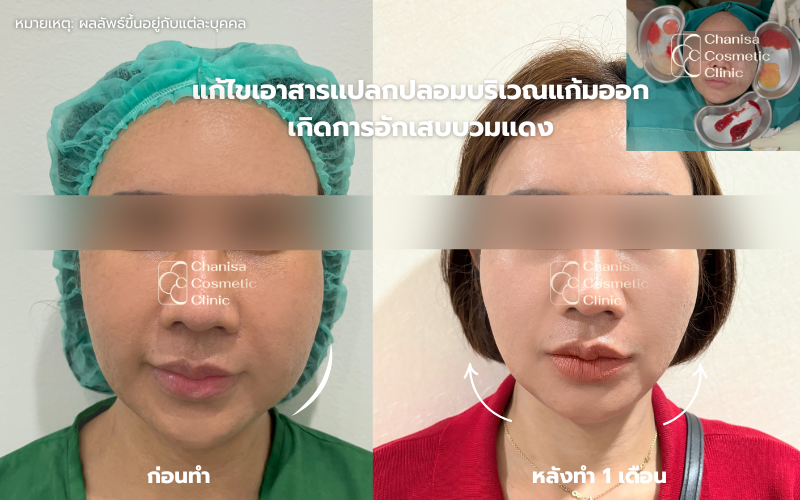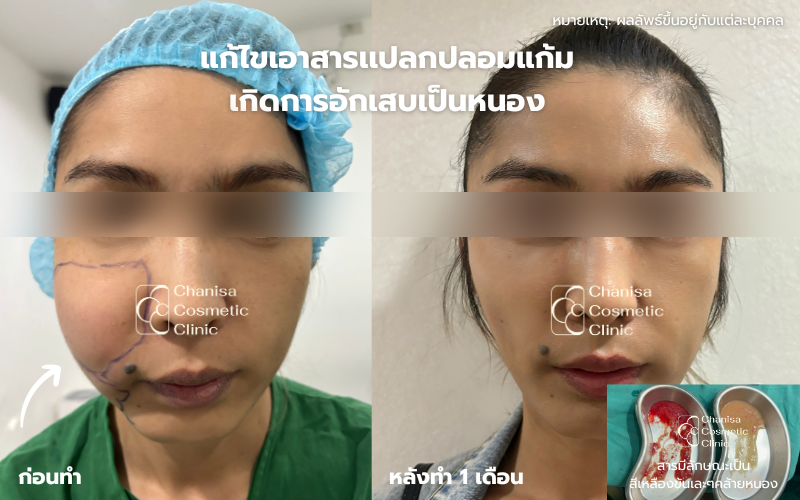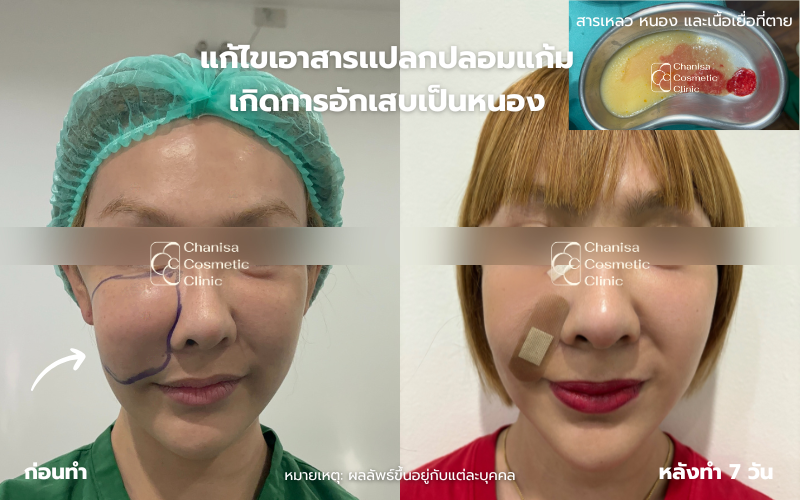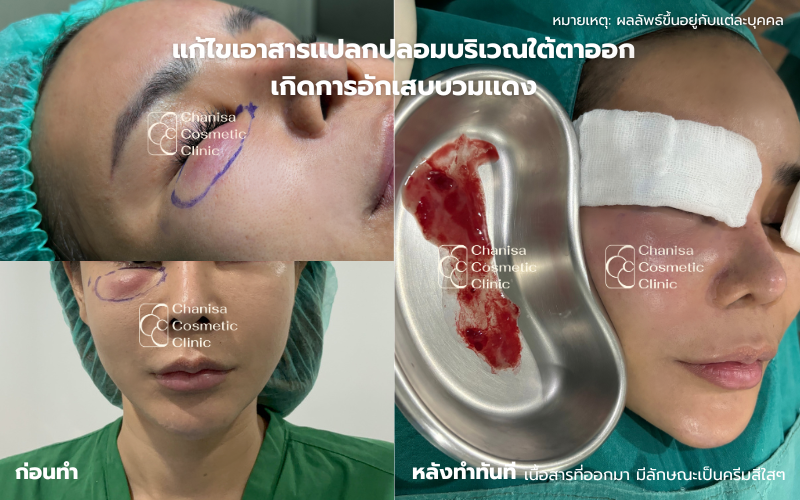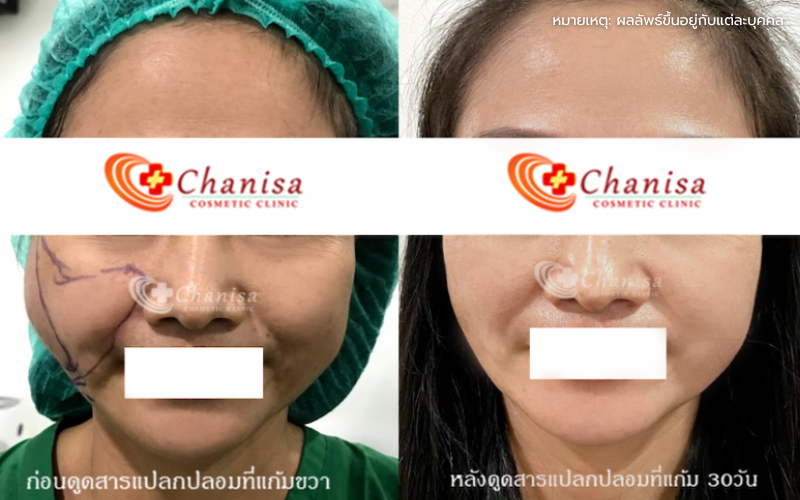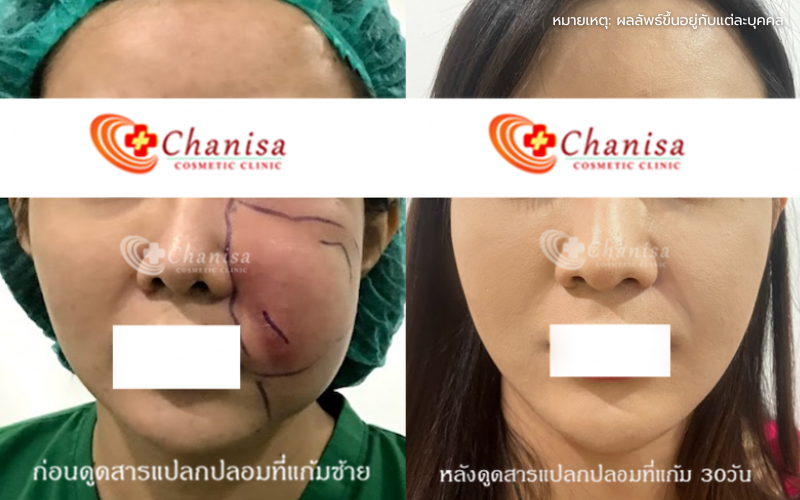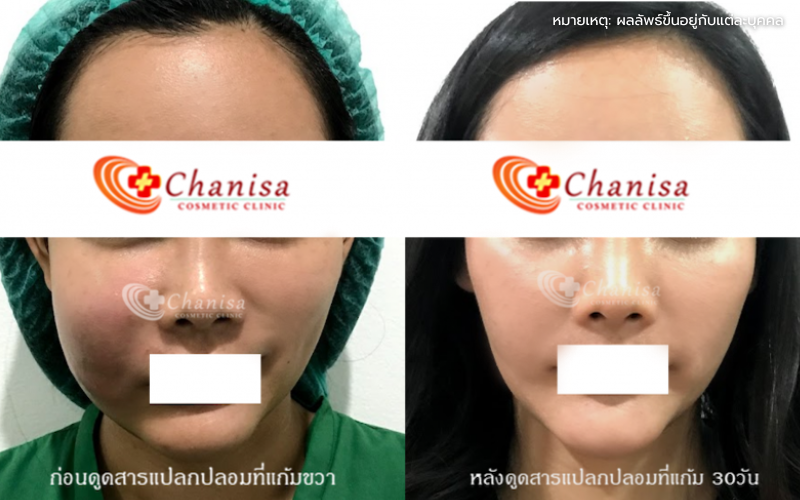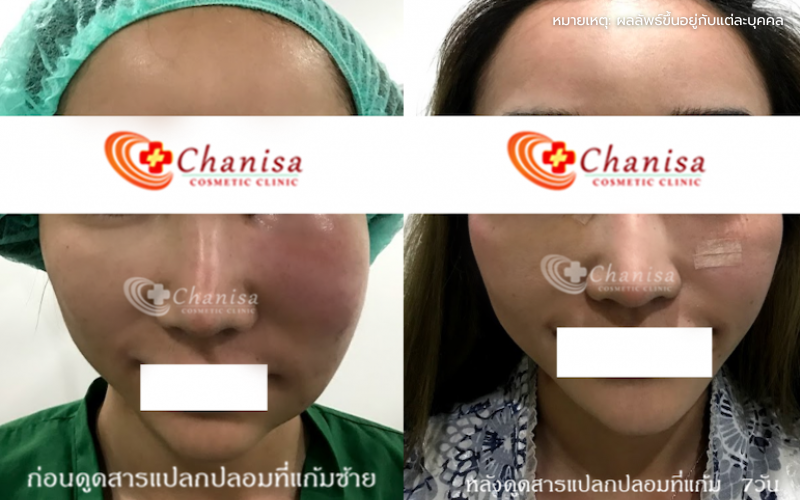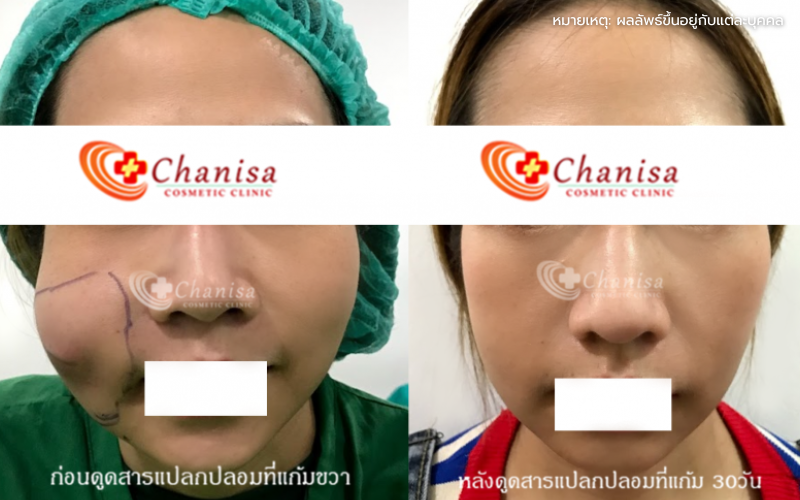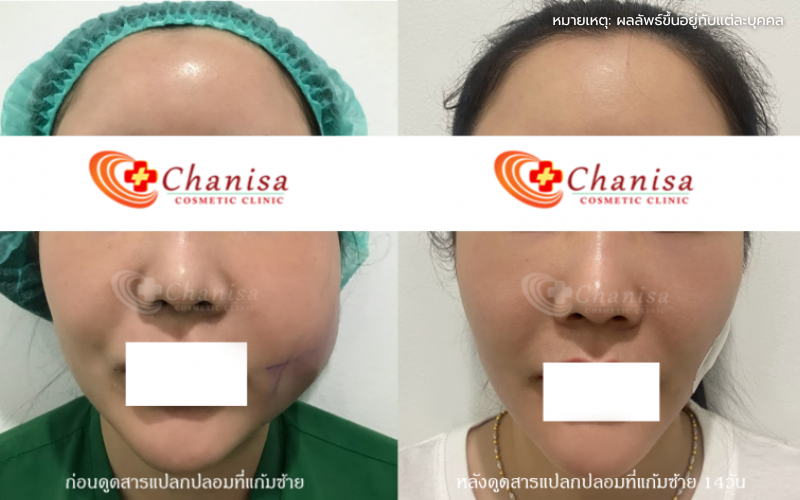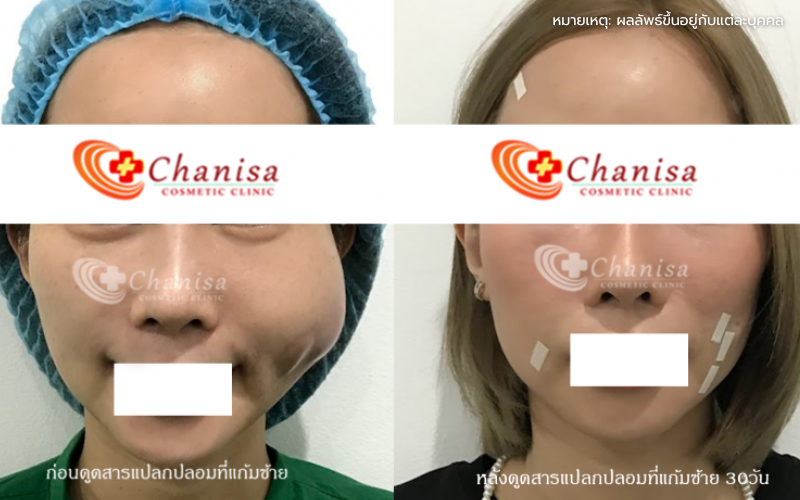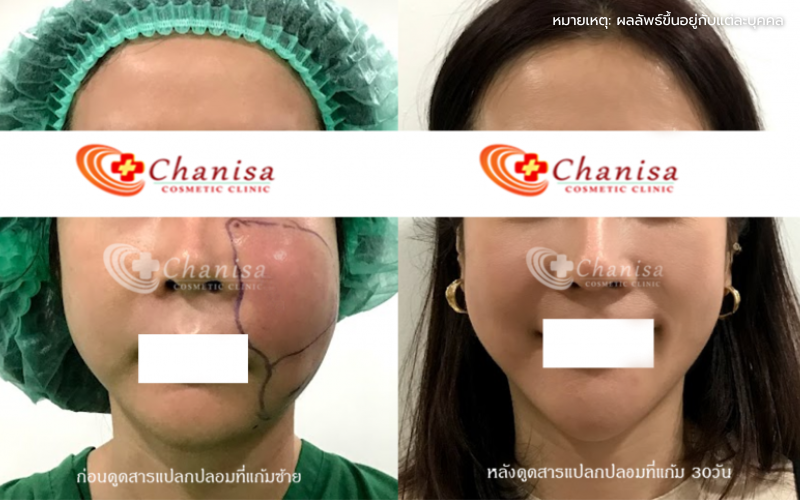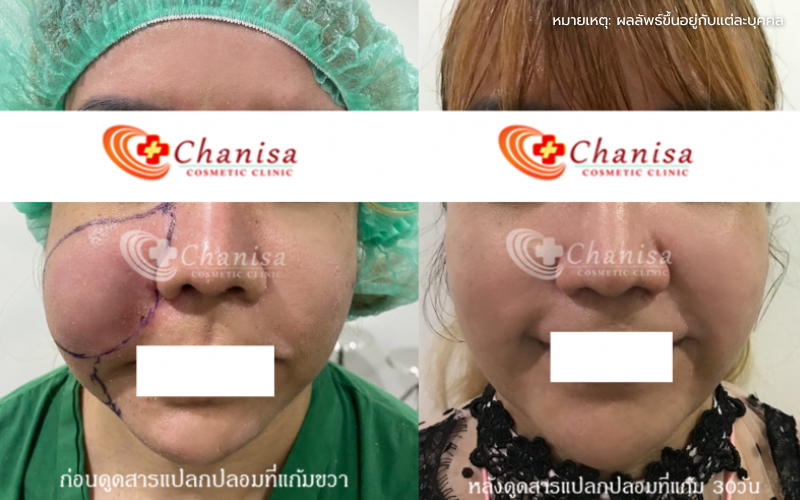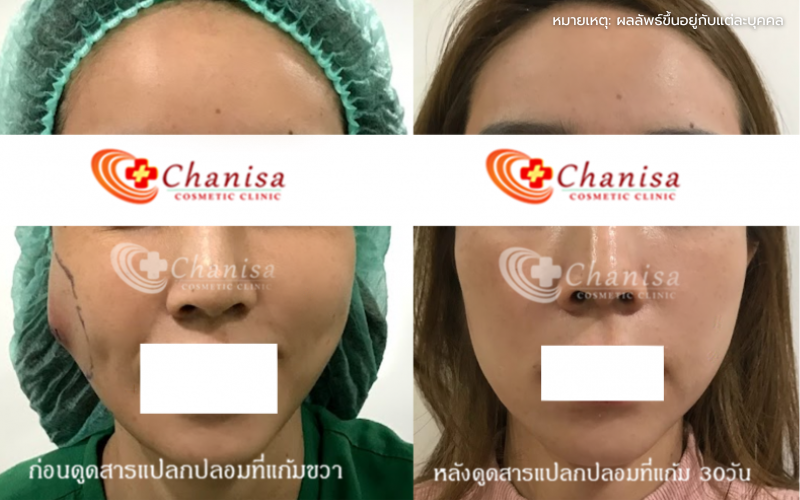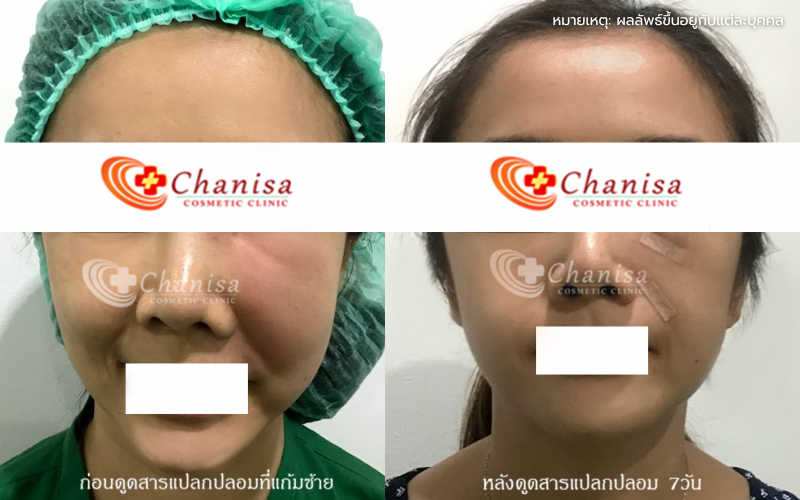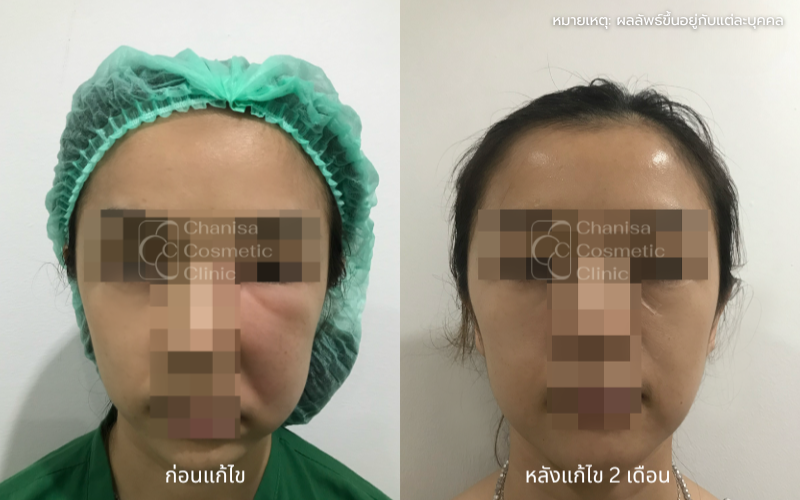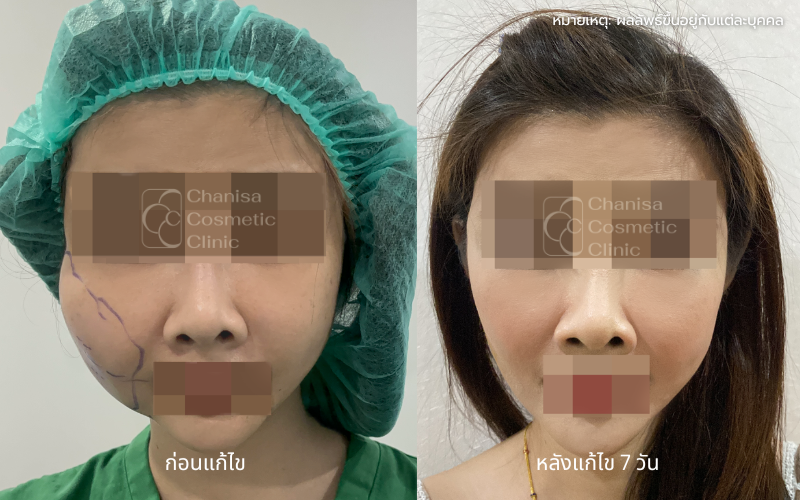
Suction or Excision of Liquid Silicone from the Cheeks
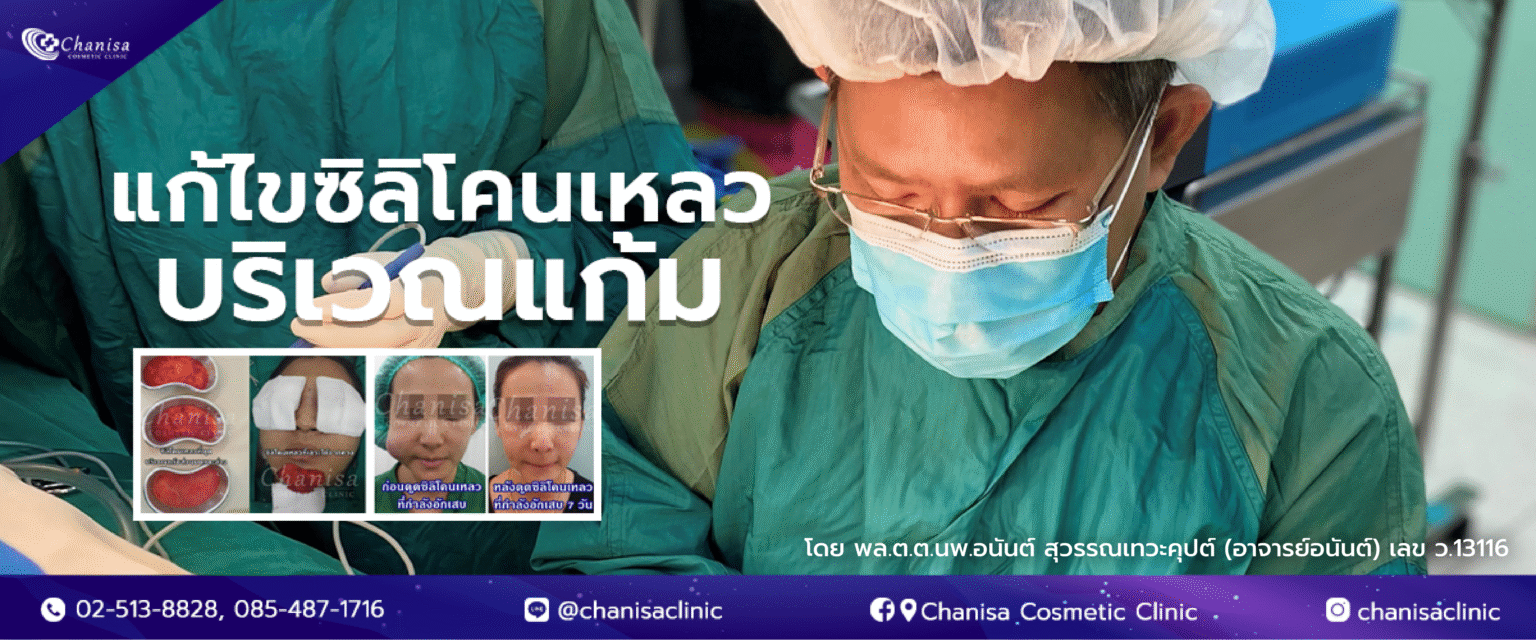
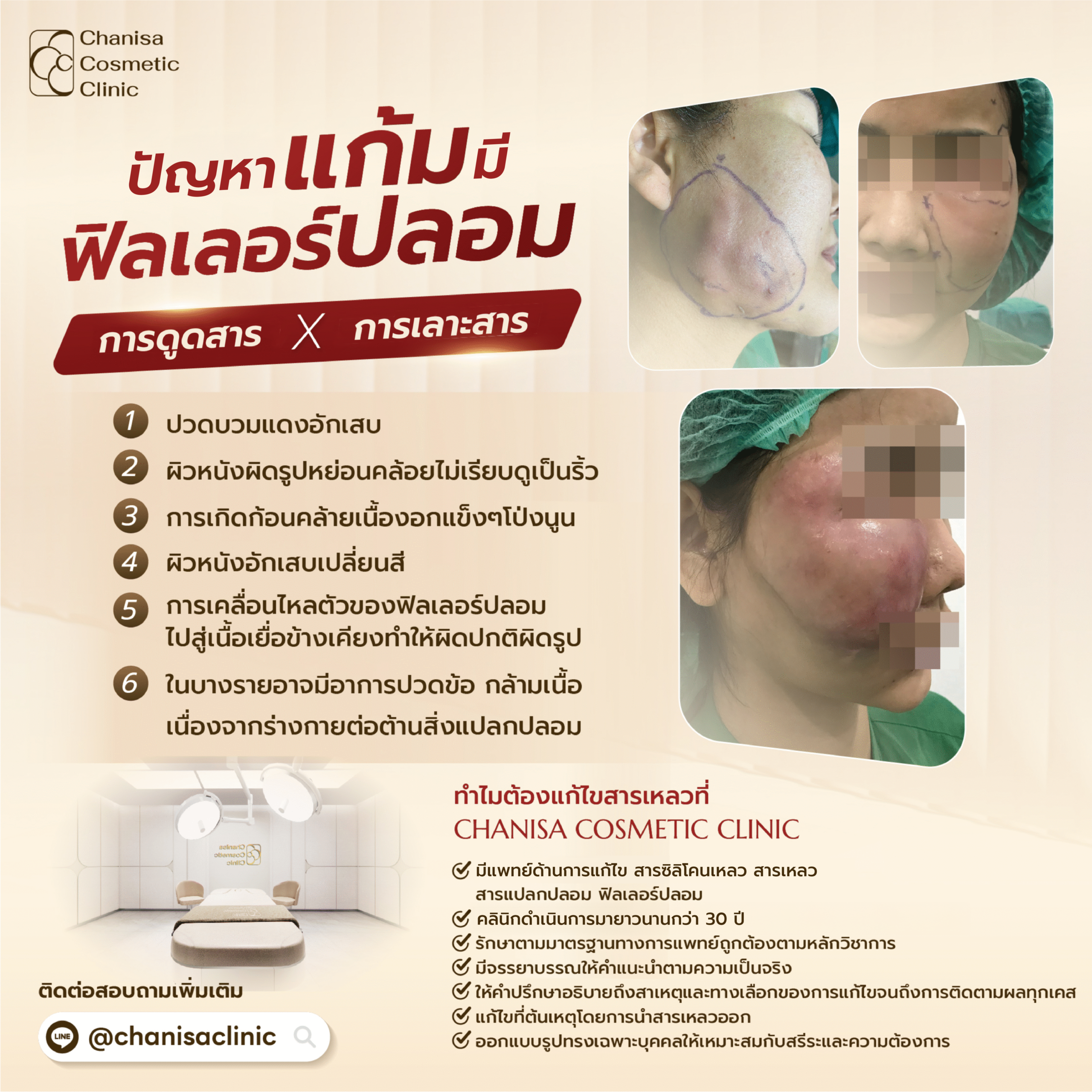
Complications of Liquid Silicone
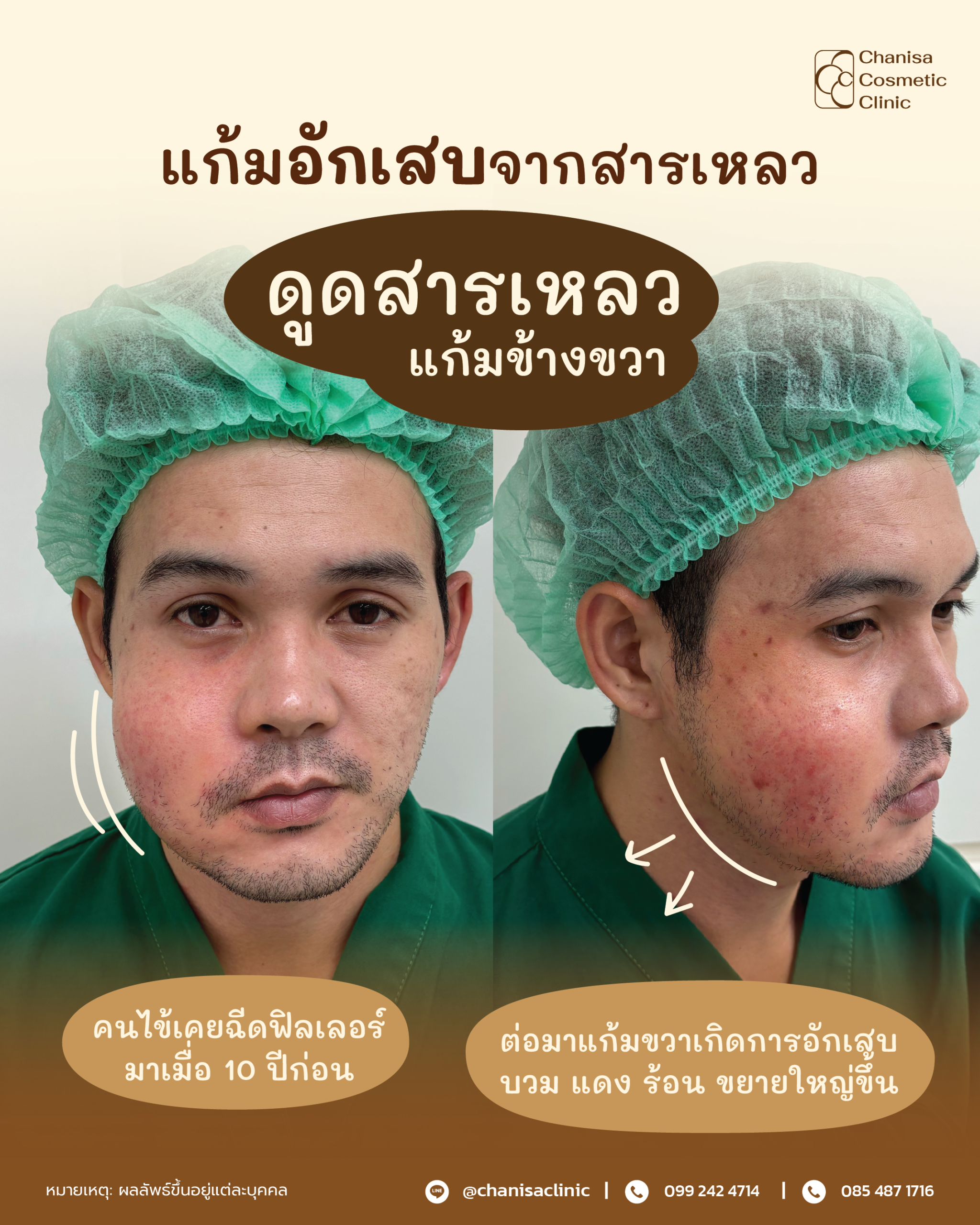
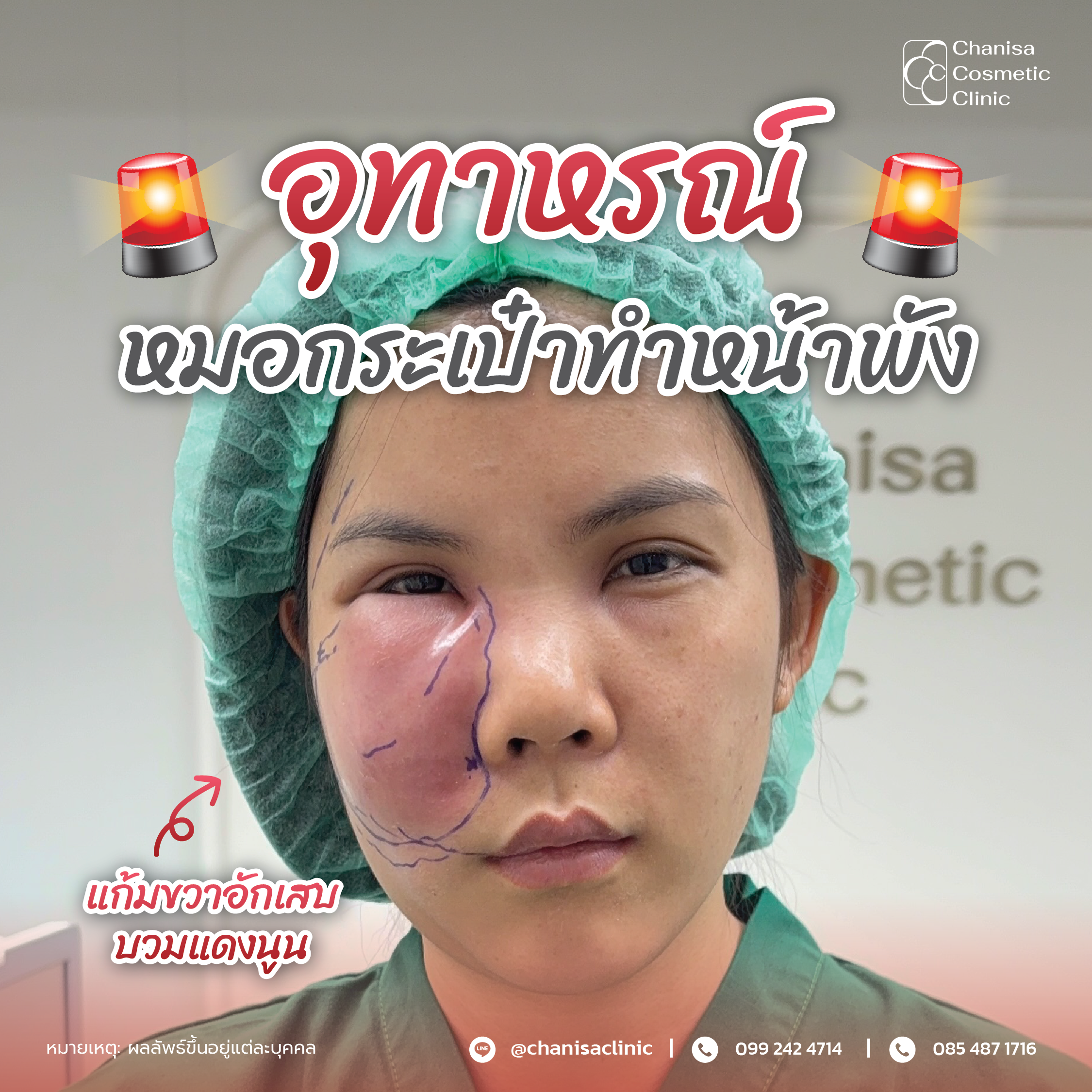
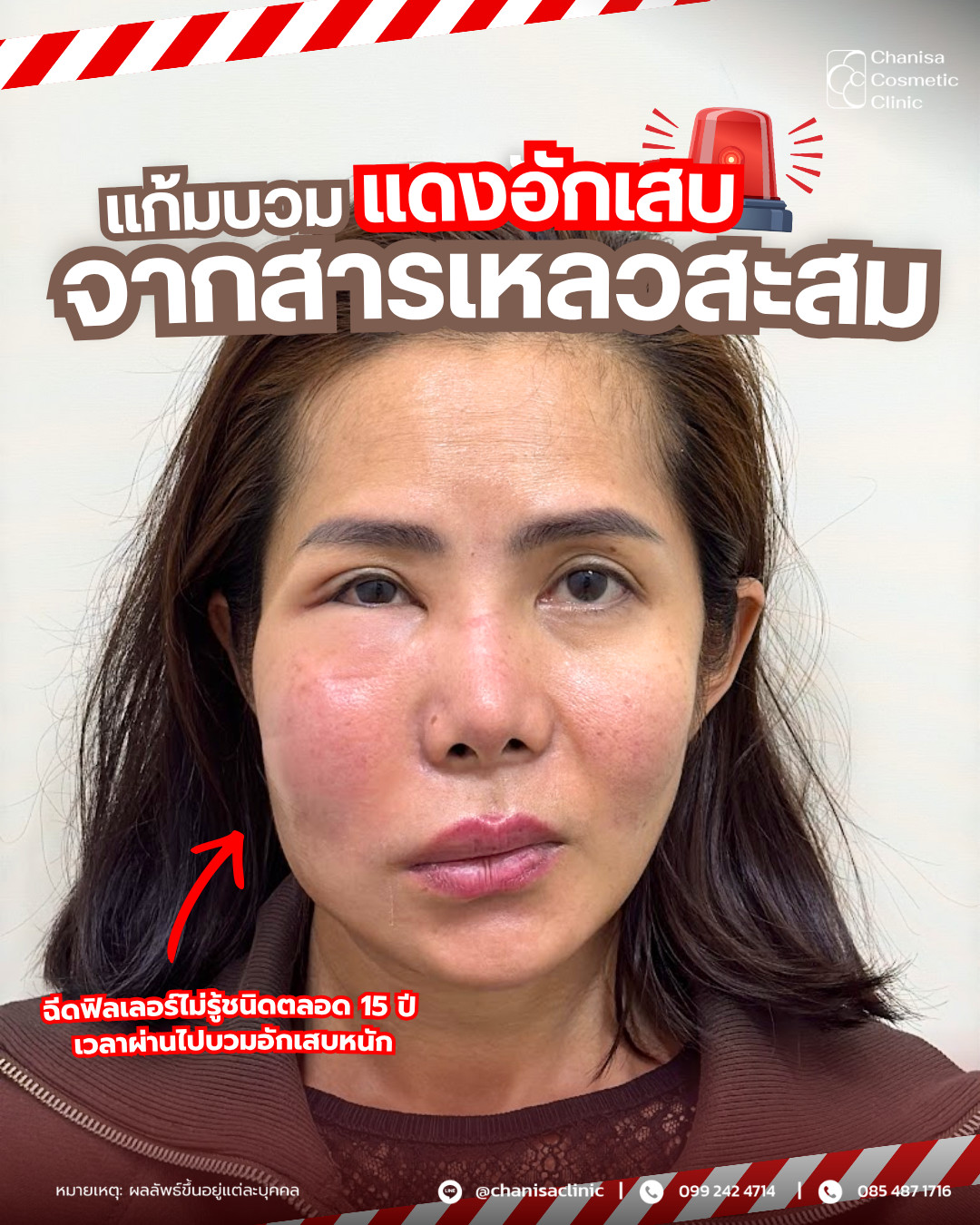
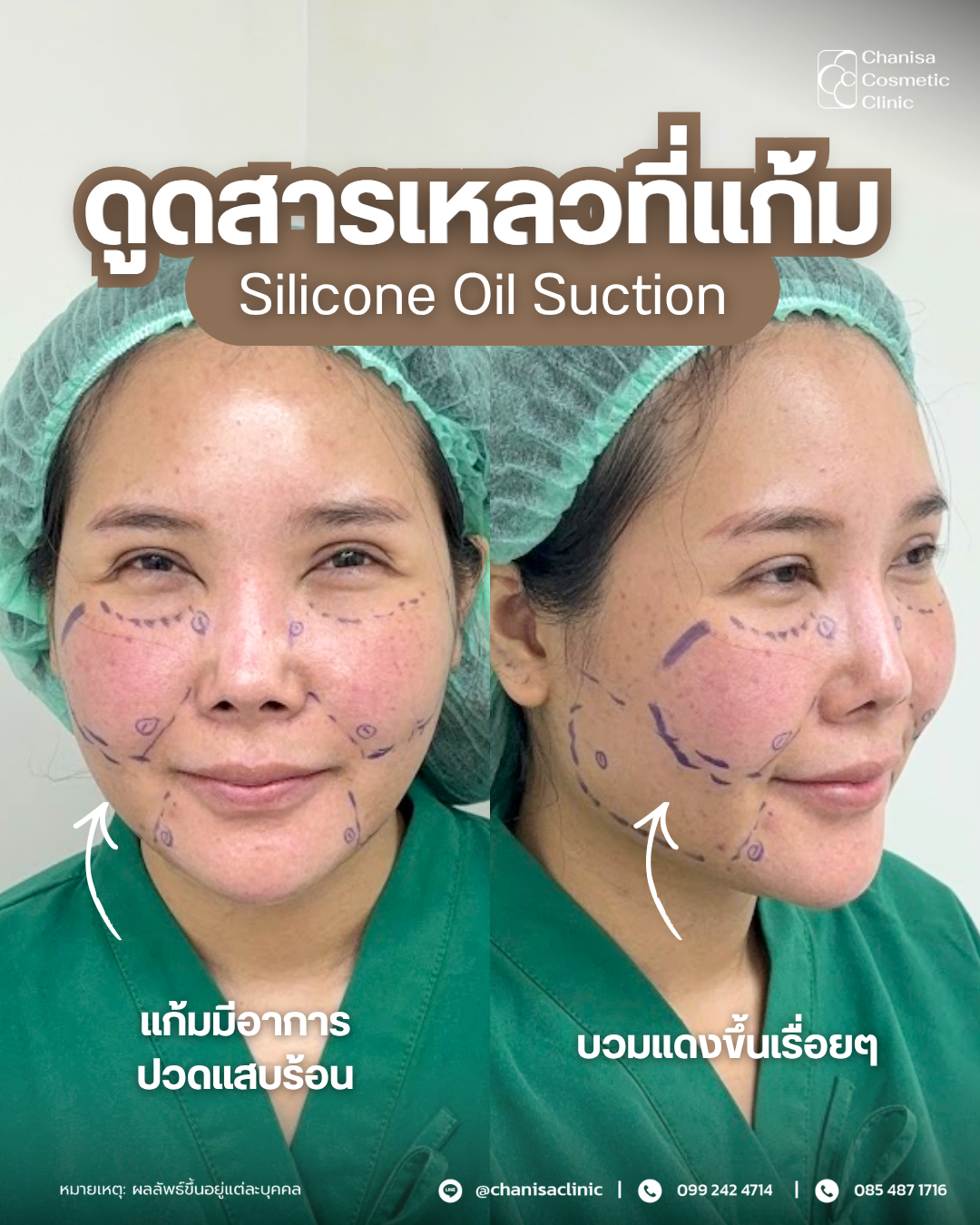
- Pain, swelling, redness, and inflammation
- Skin may become misshapen, saggy, uneven, or ridged
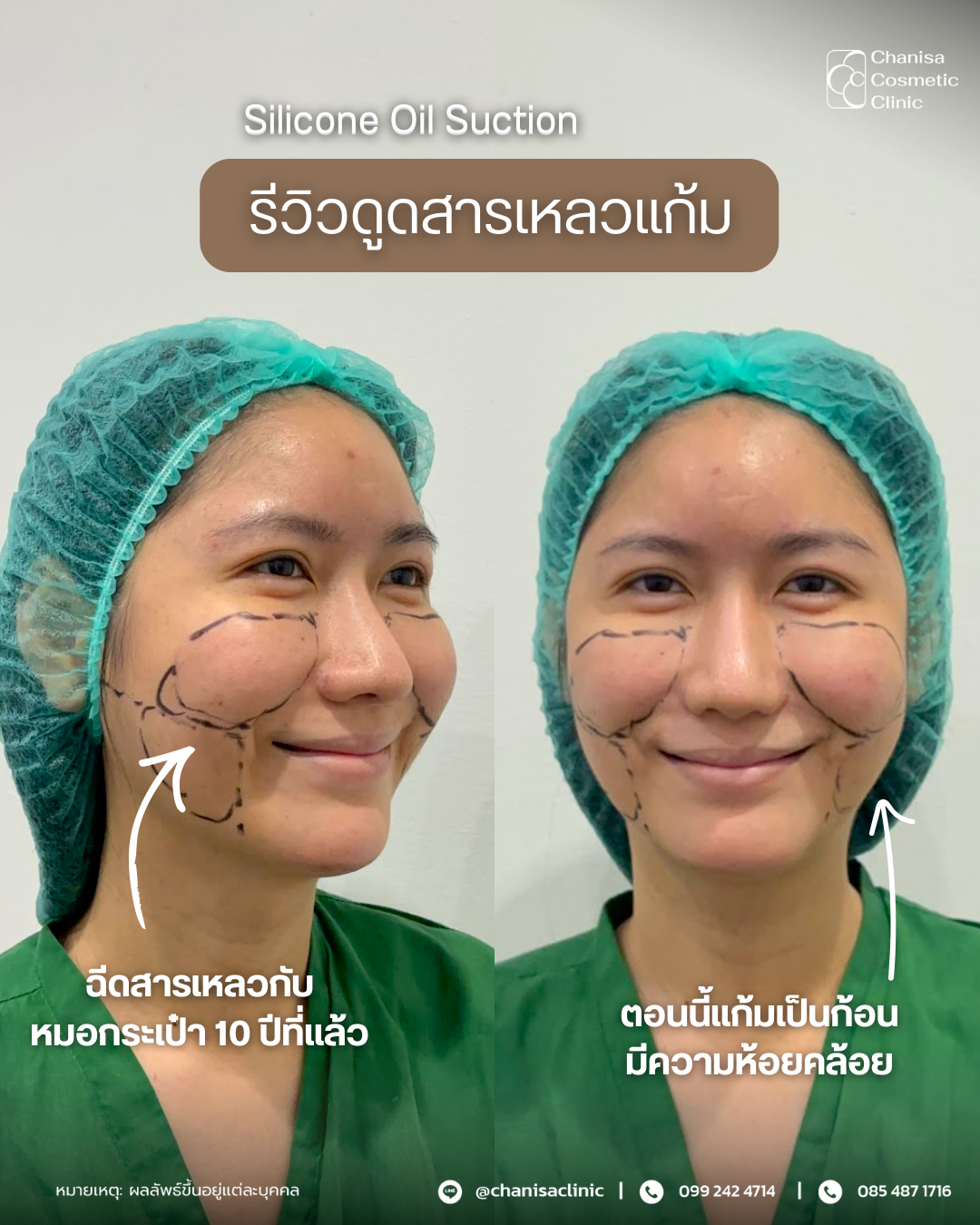
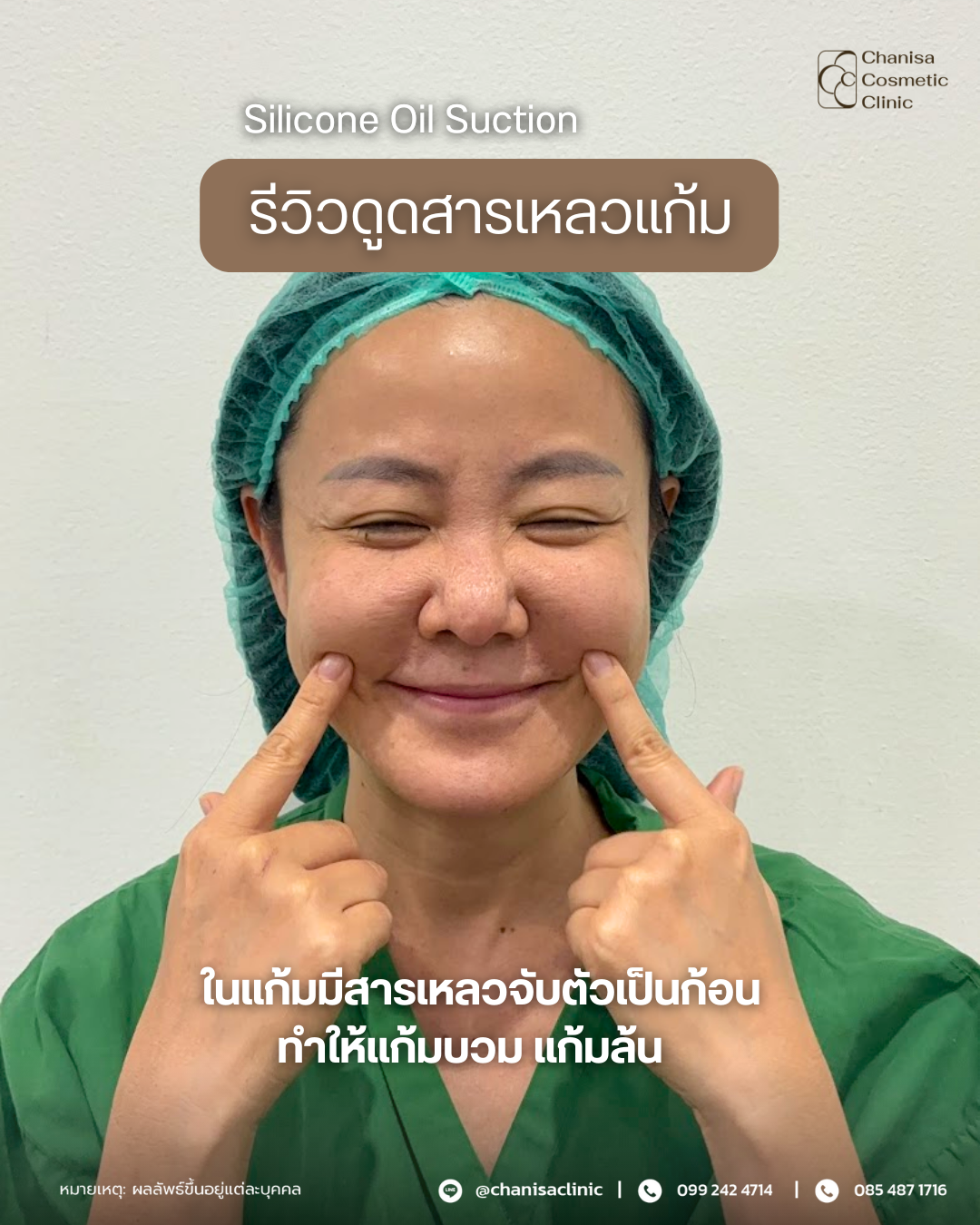
- Hard, raised lumps resembling tumors may form
- The skin may become inflamed and change color, such as turning yellow or red. In severe cases, it may appear purple.
- Liquid silicone may migrate into nearby tissues, causing them to become abnormal or misshapen, as if silicone had been injected there as well.
- Some people may experience joint or muscle pain as the body reacts to the foreign material.
Liquid Silicone Surgery in the Cheeks
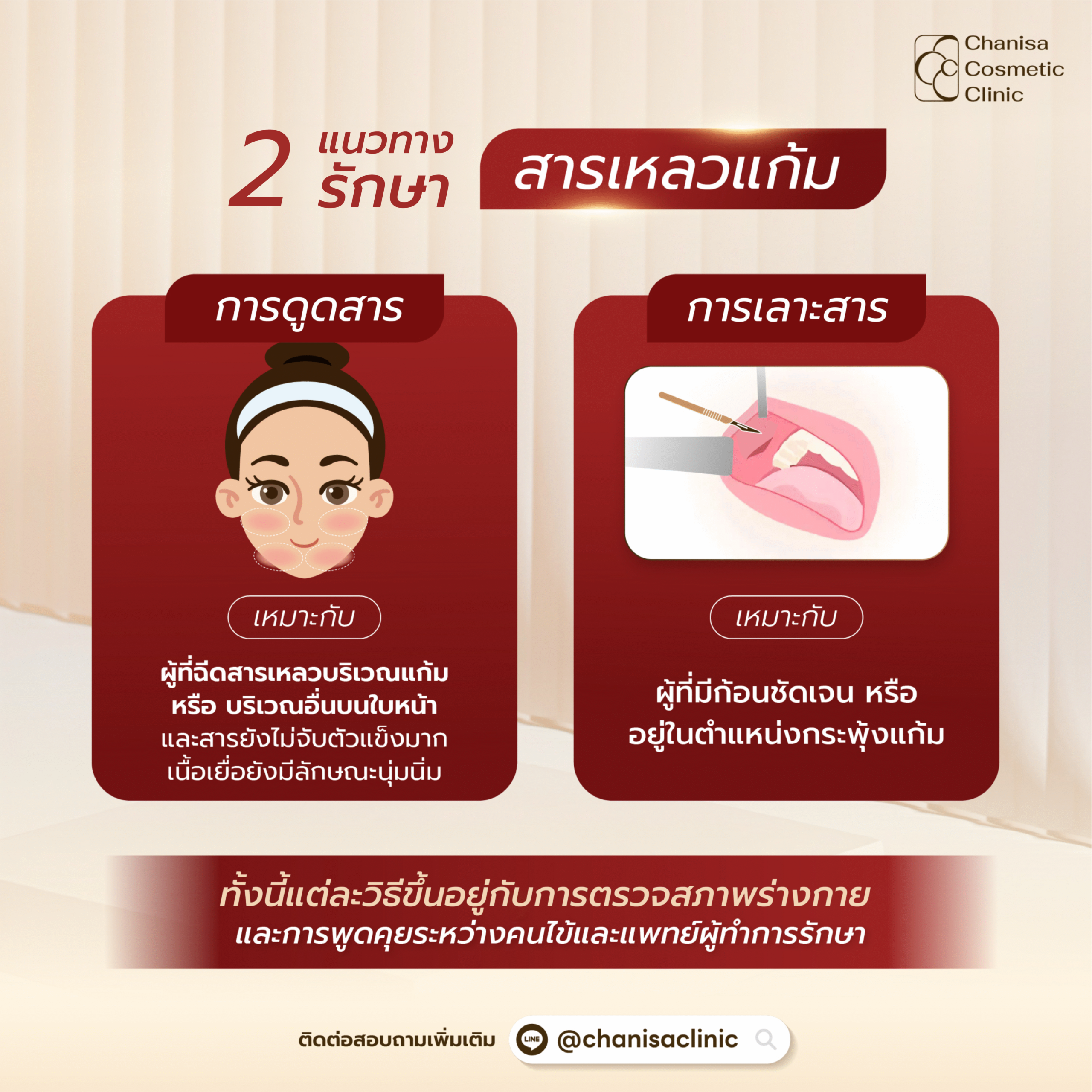
There are two types of surgery:
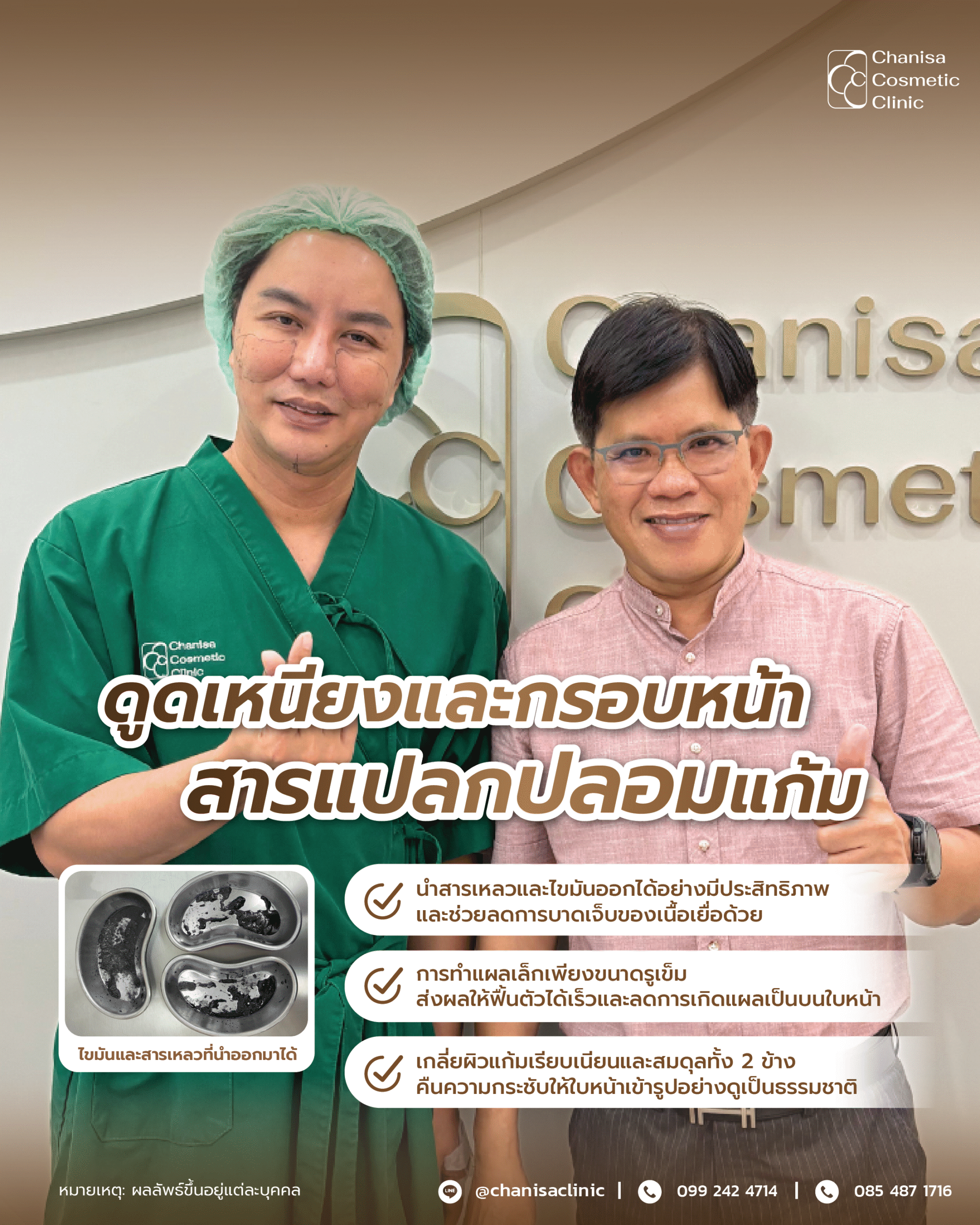
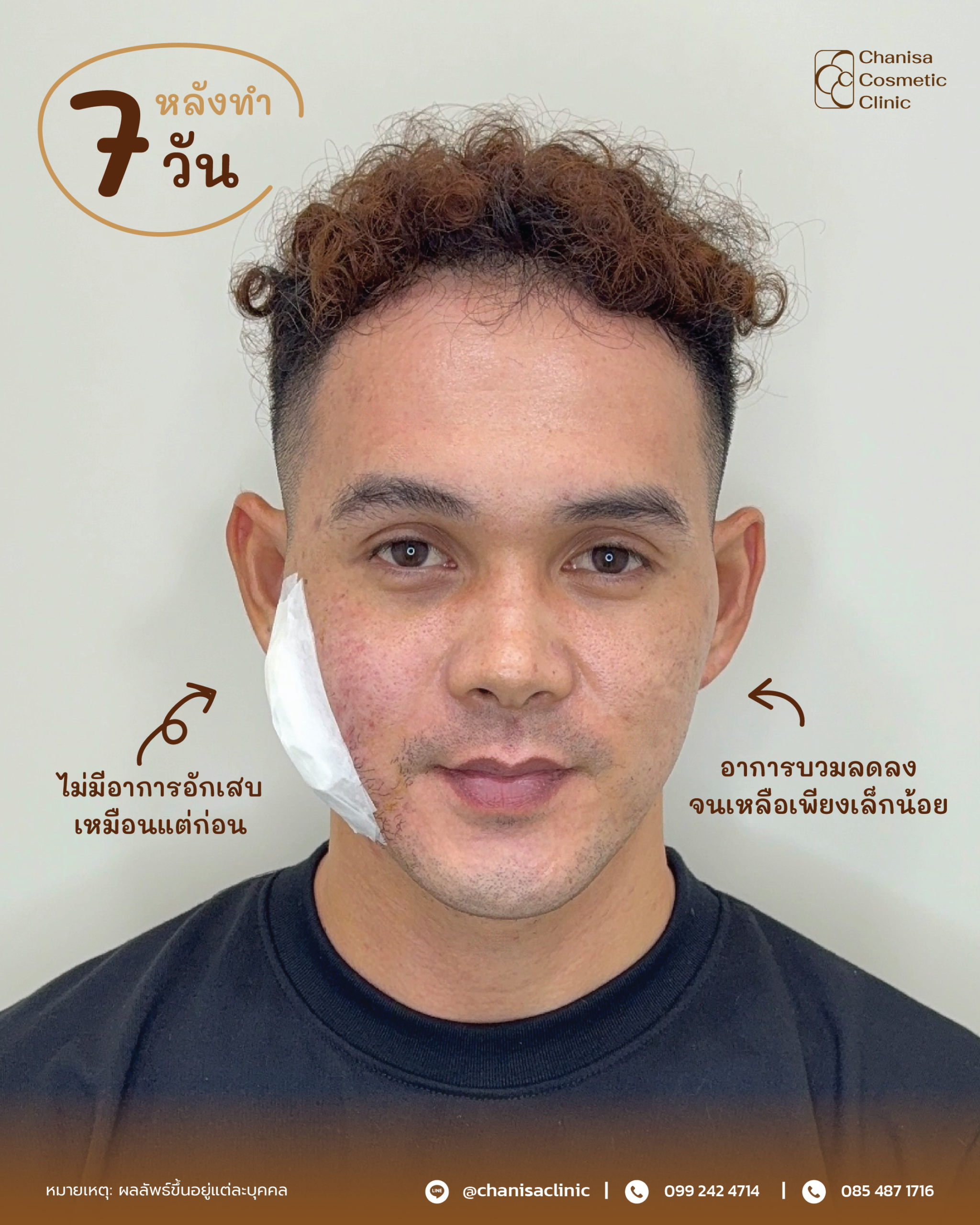
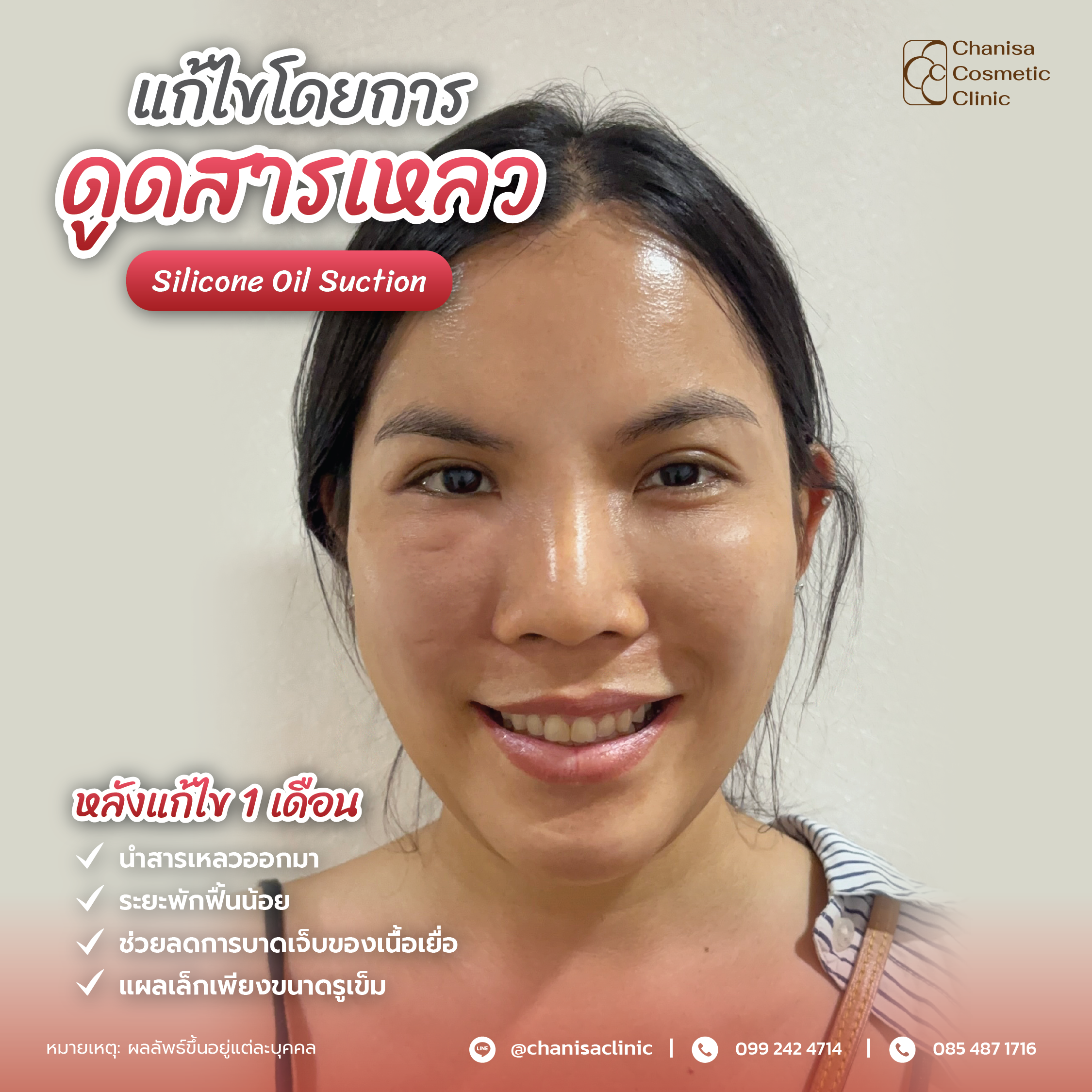
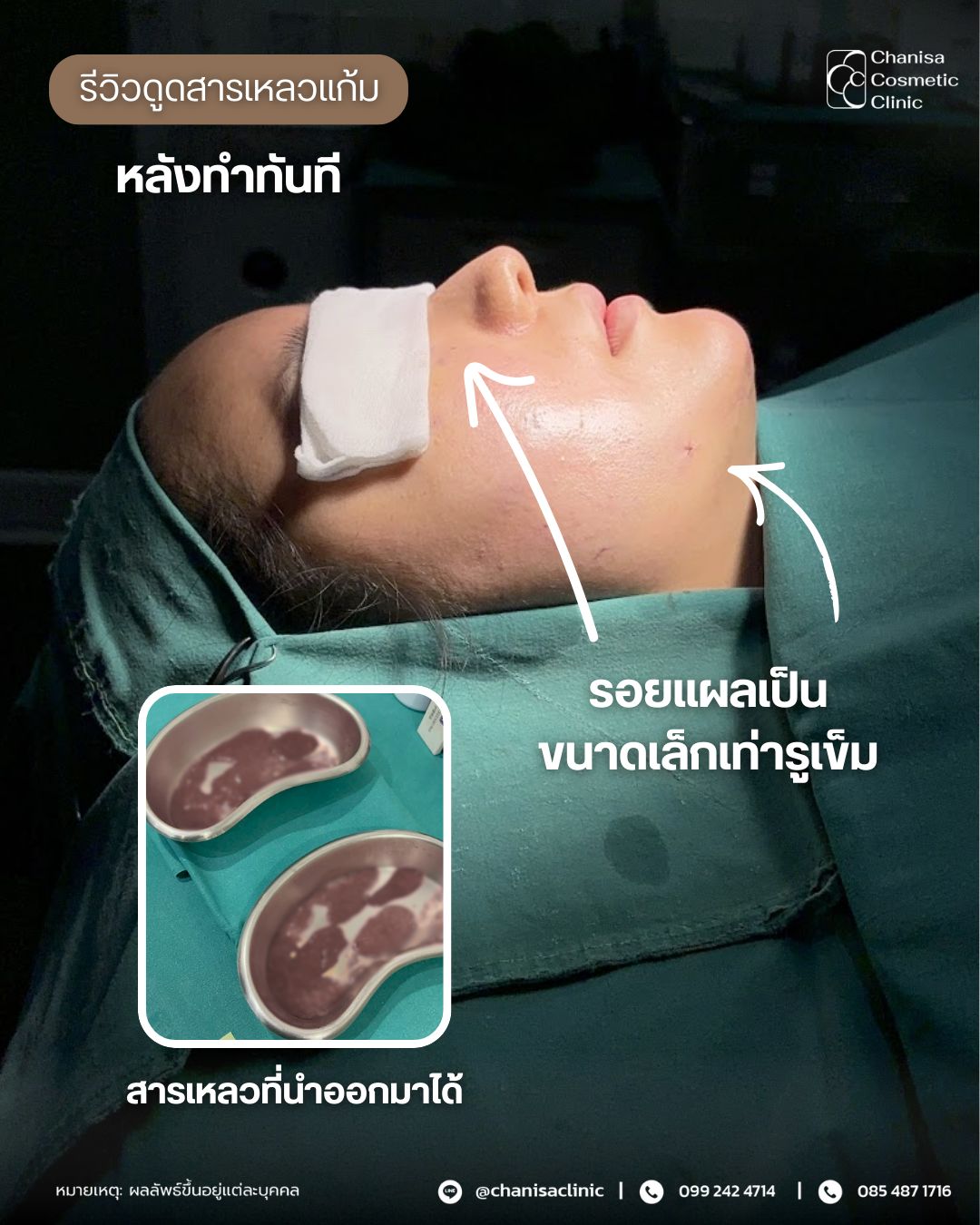
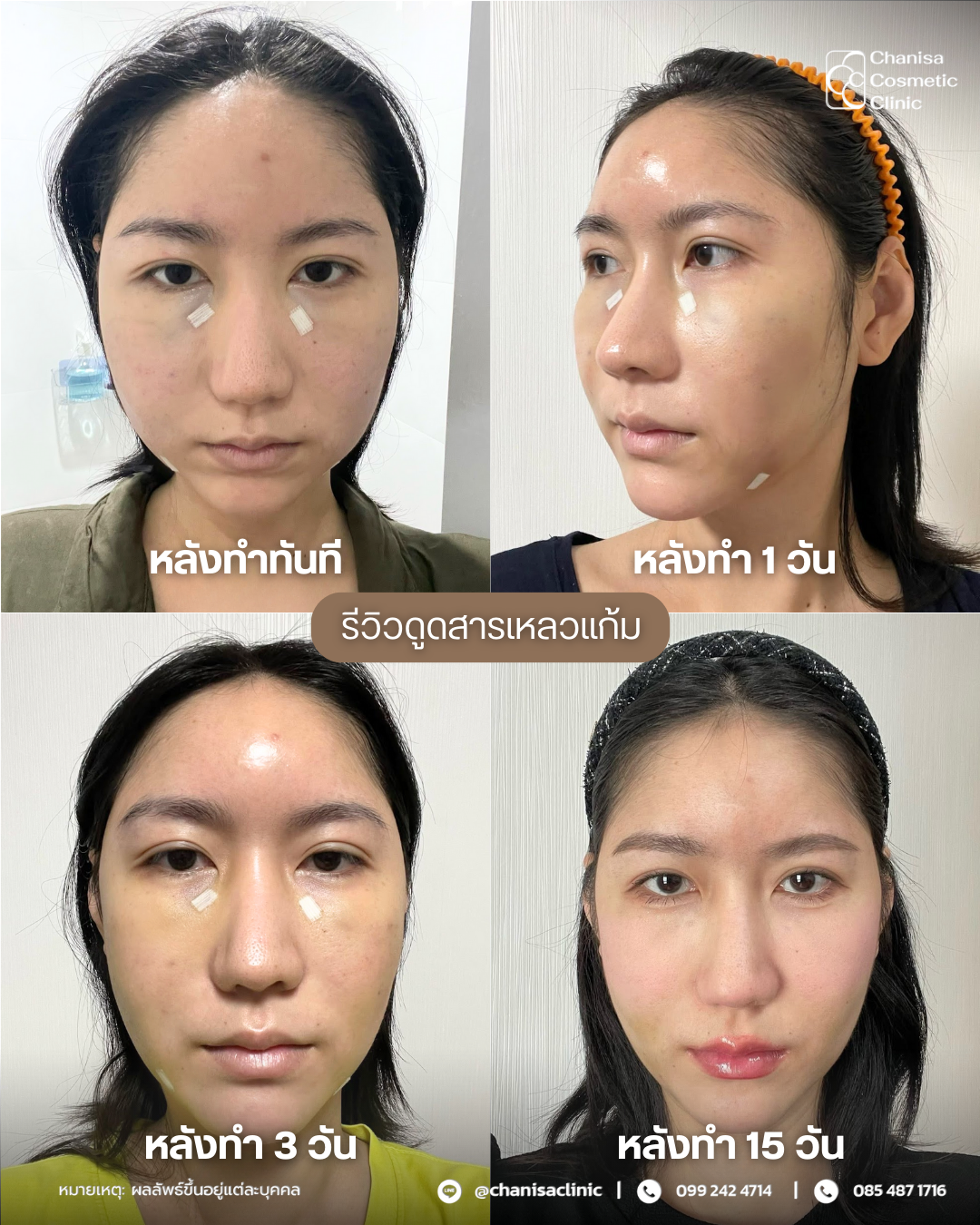
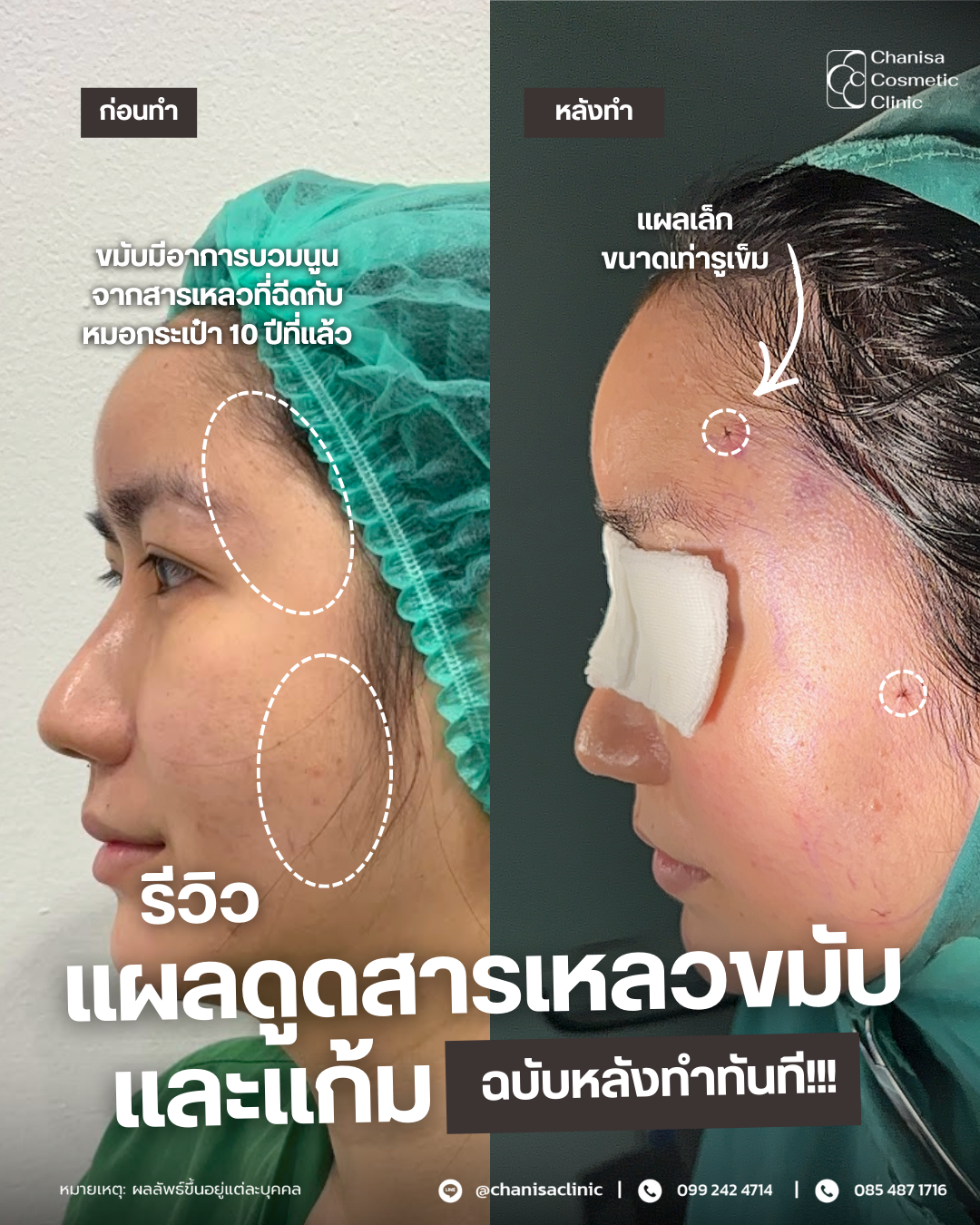
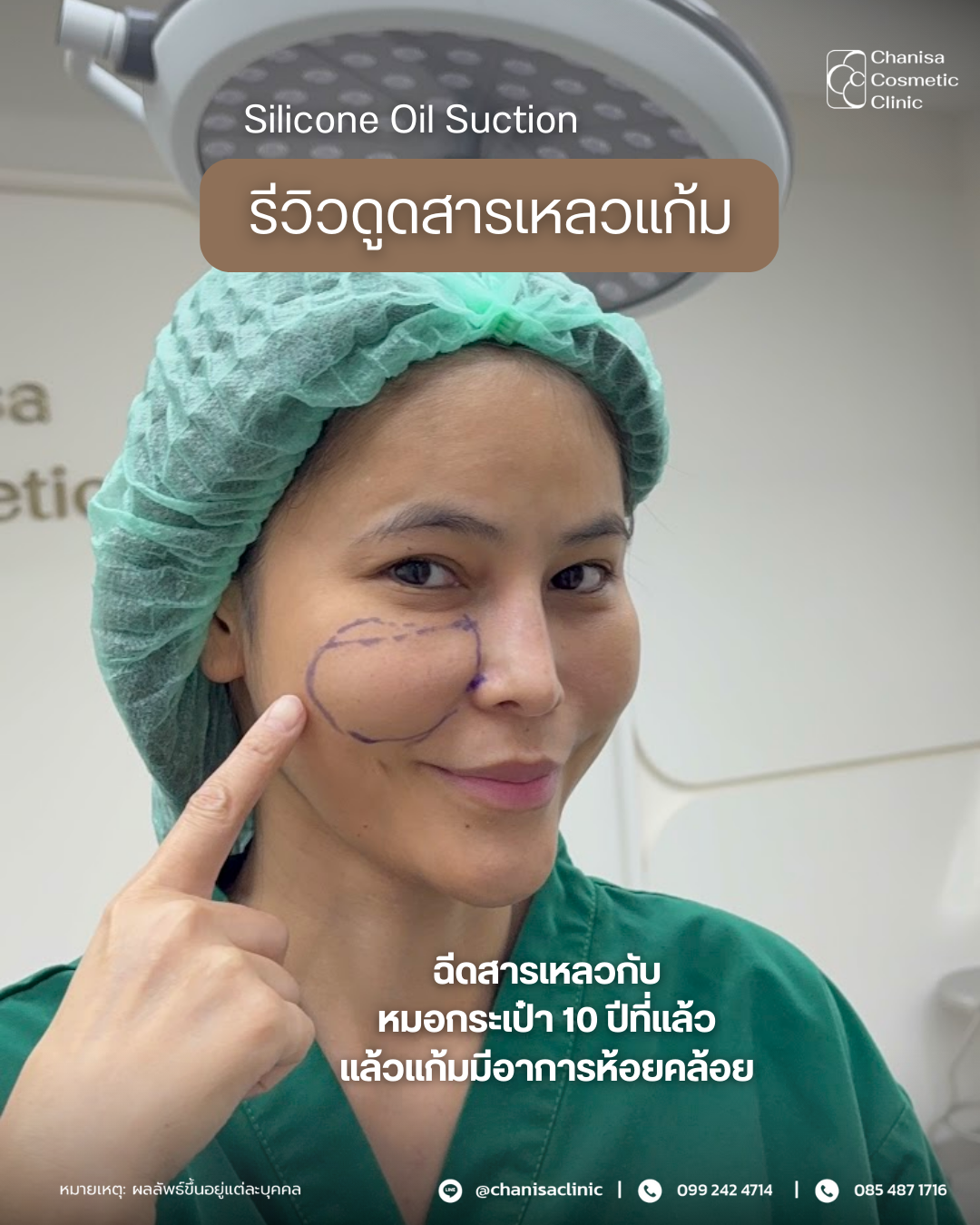
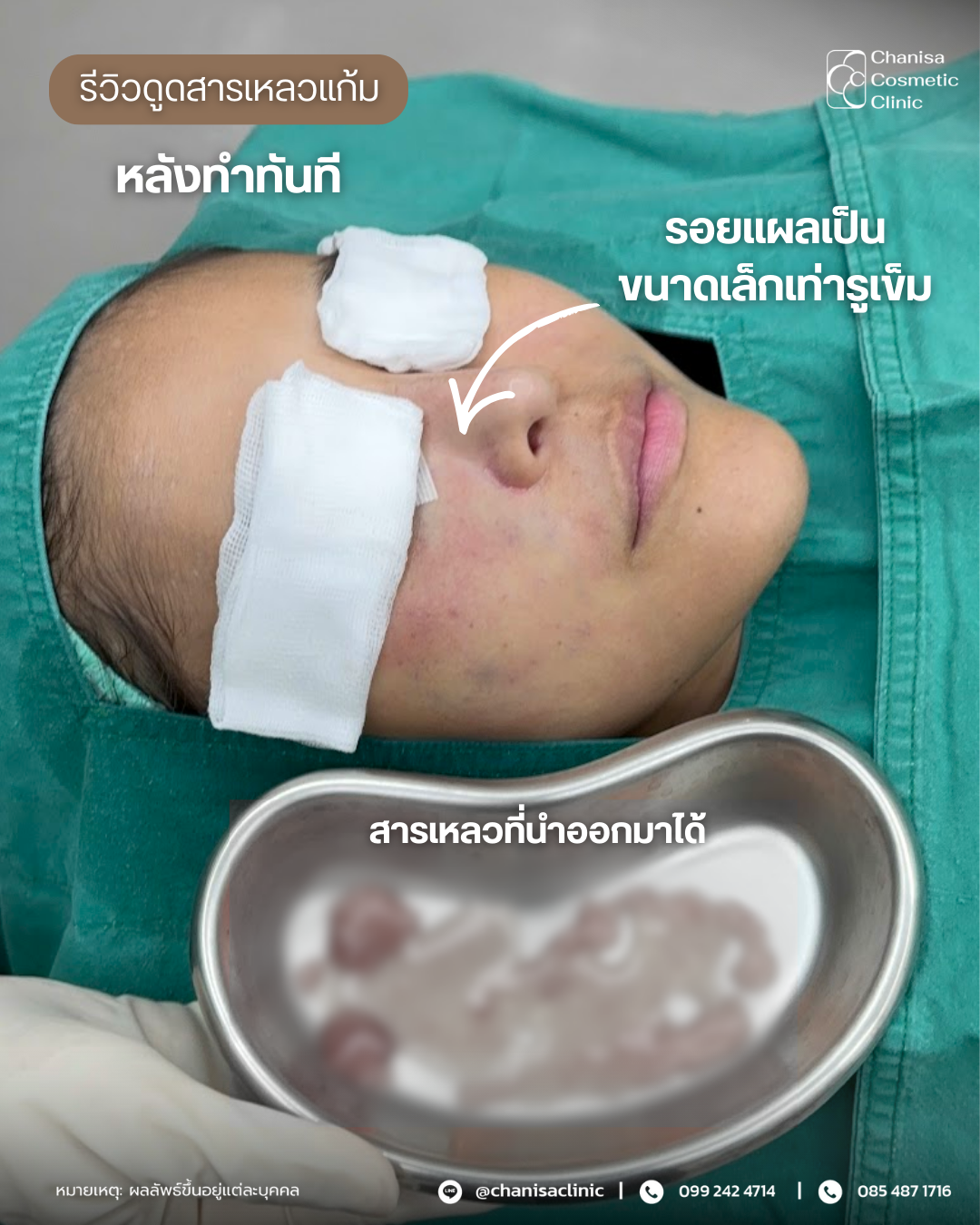
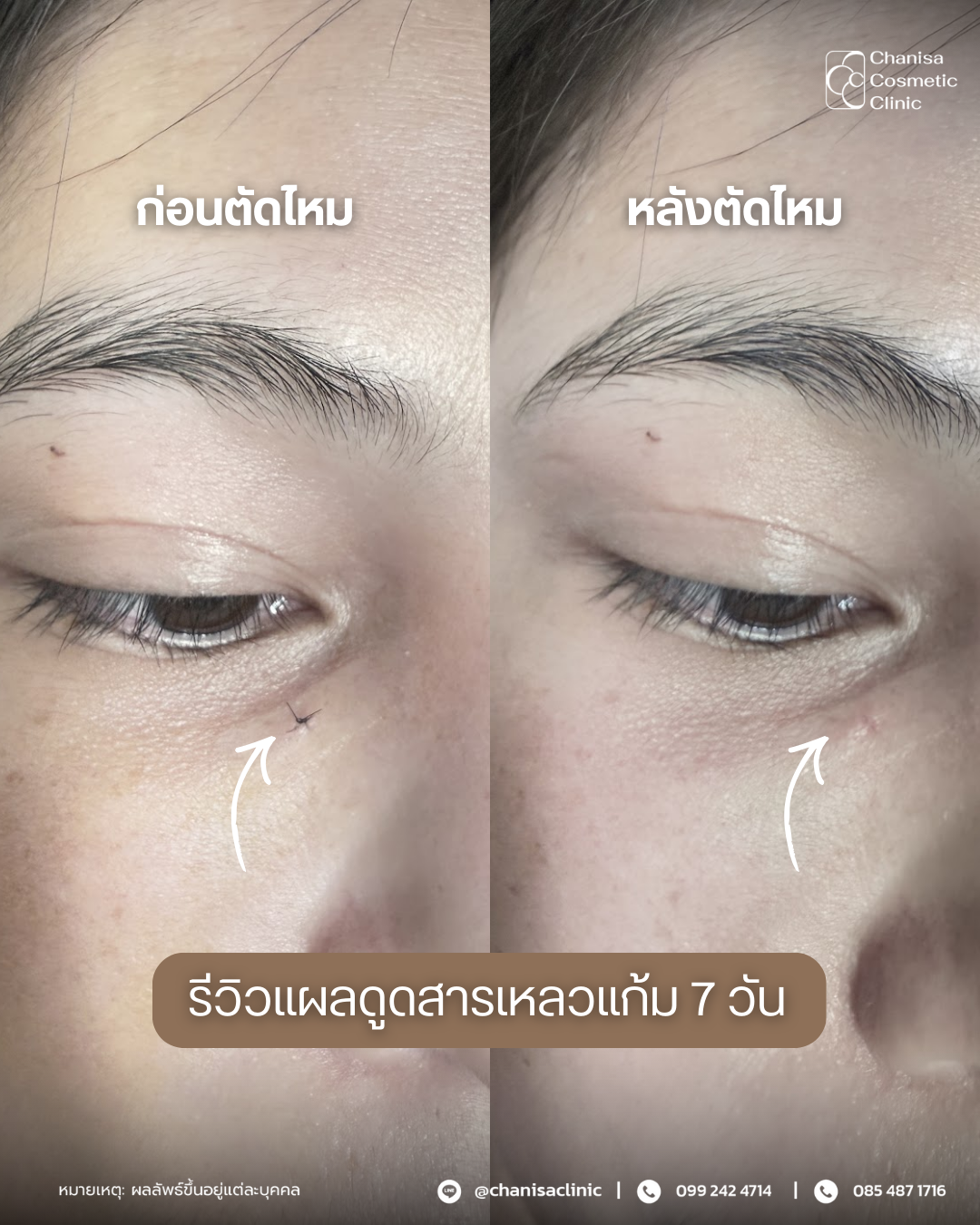
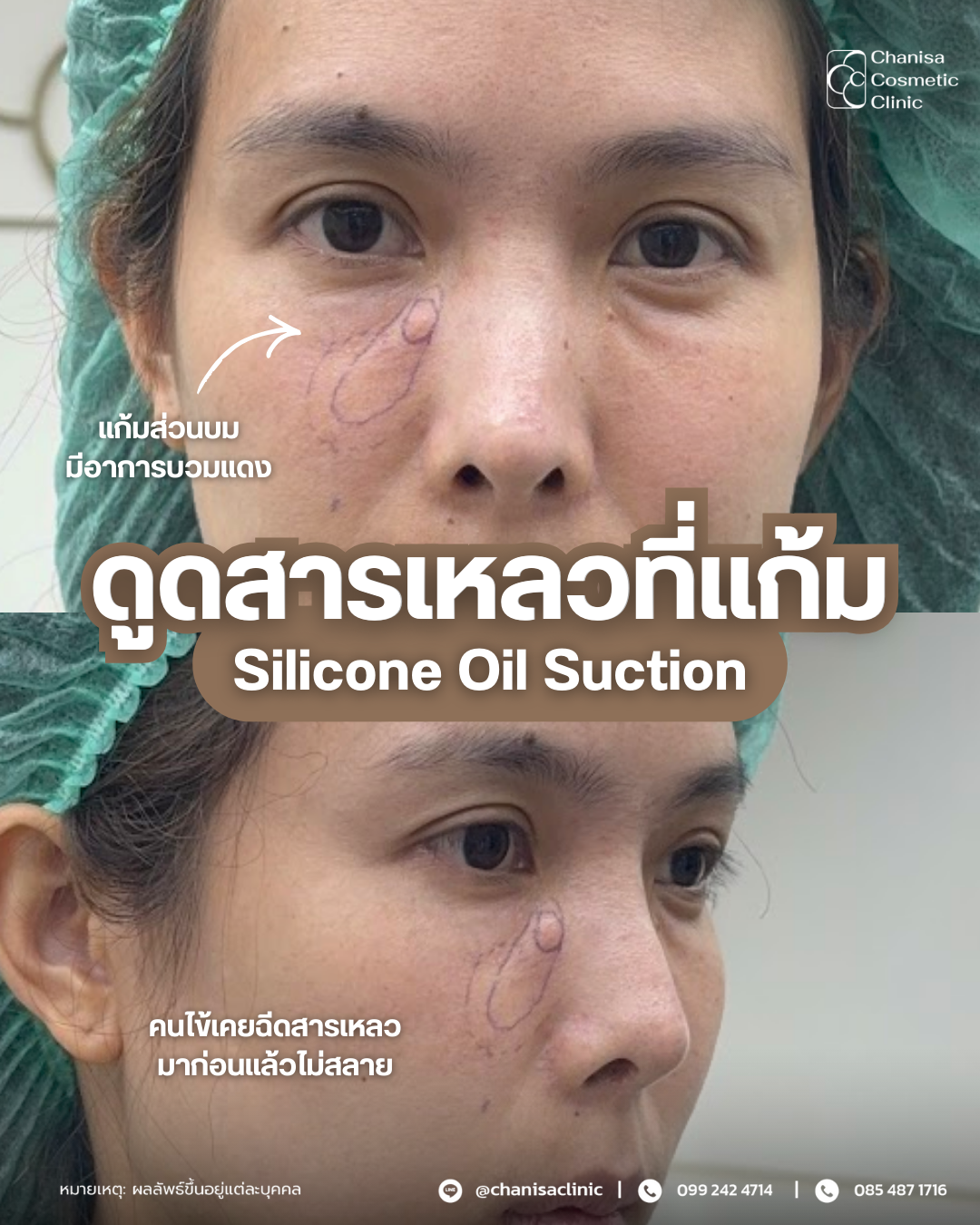
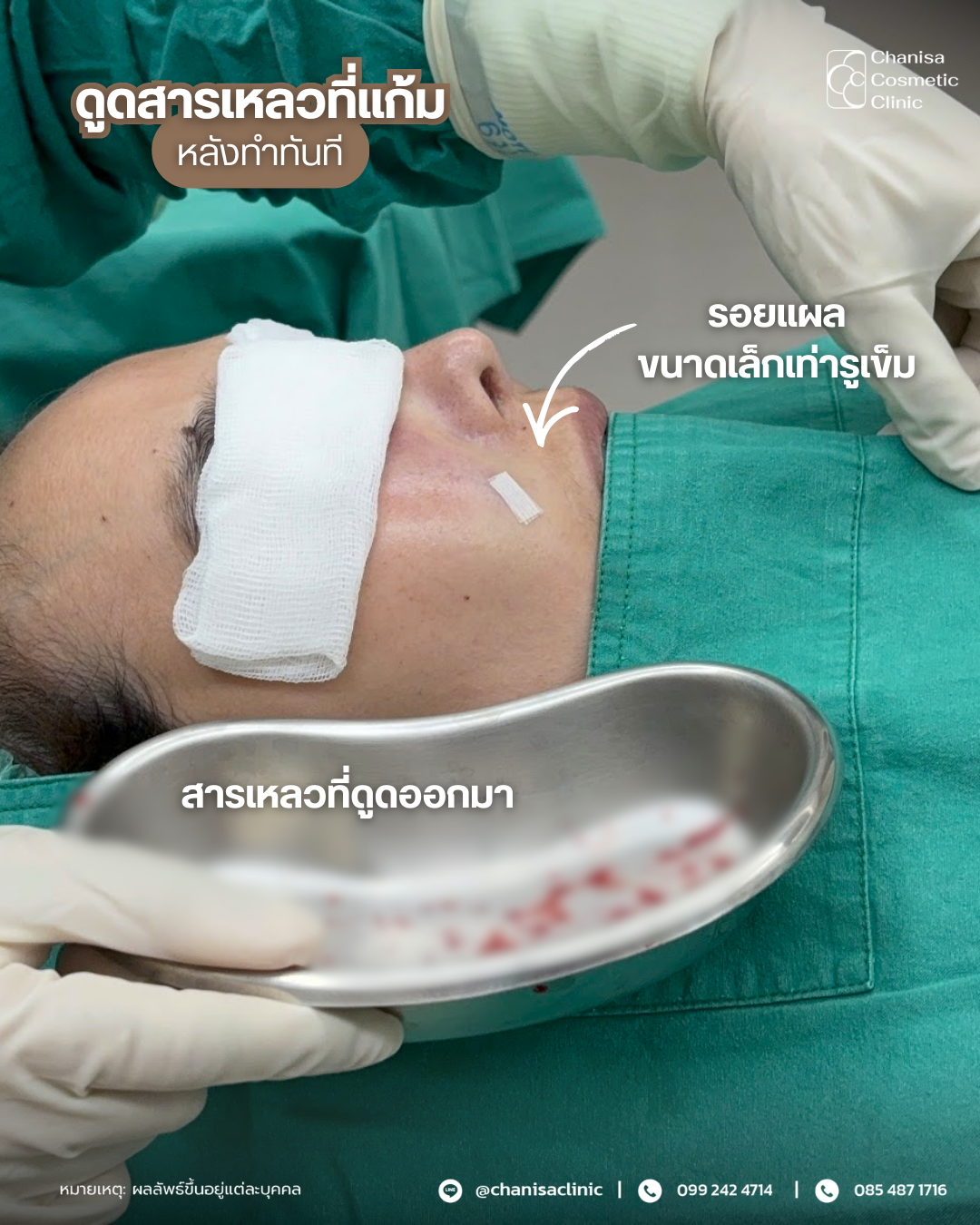
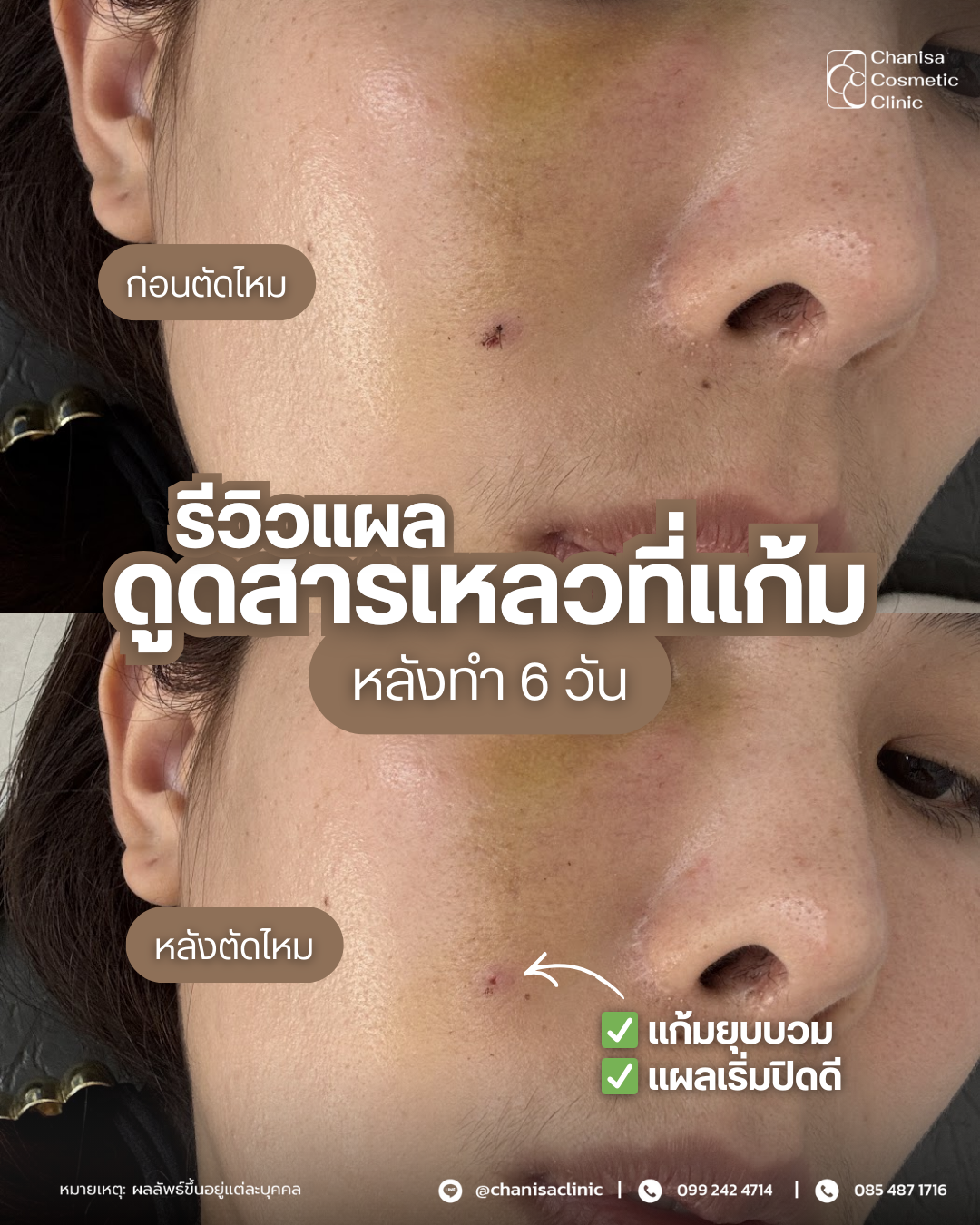
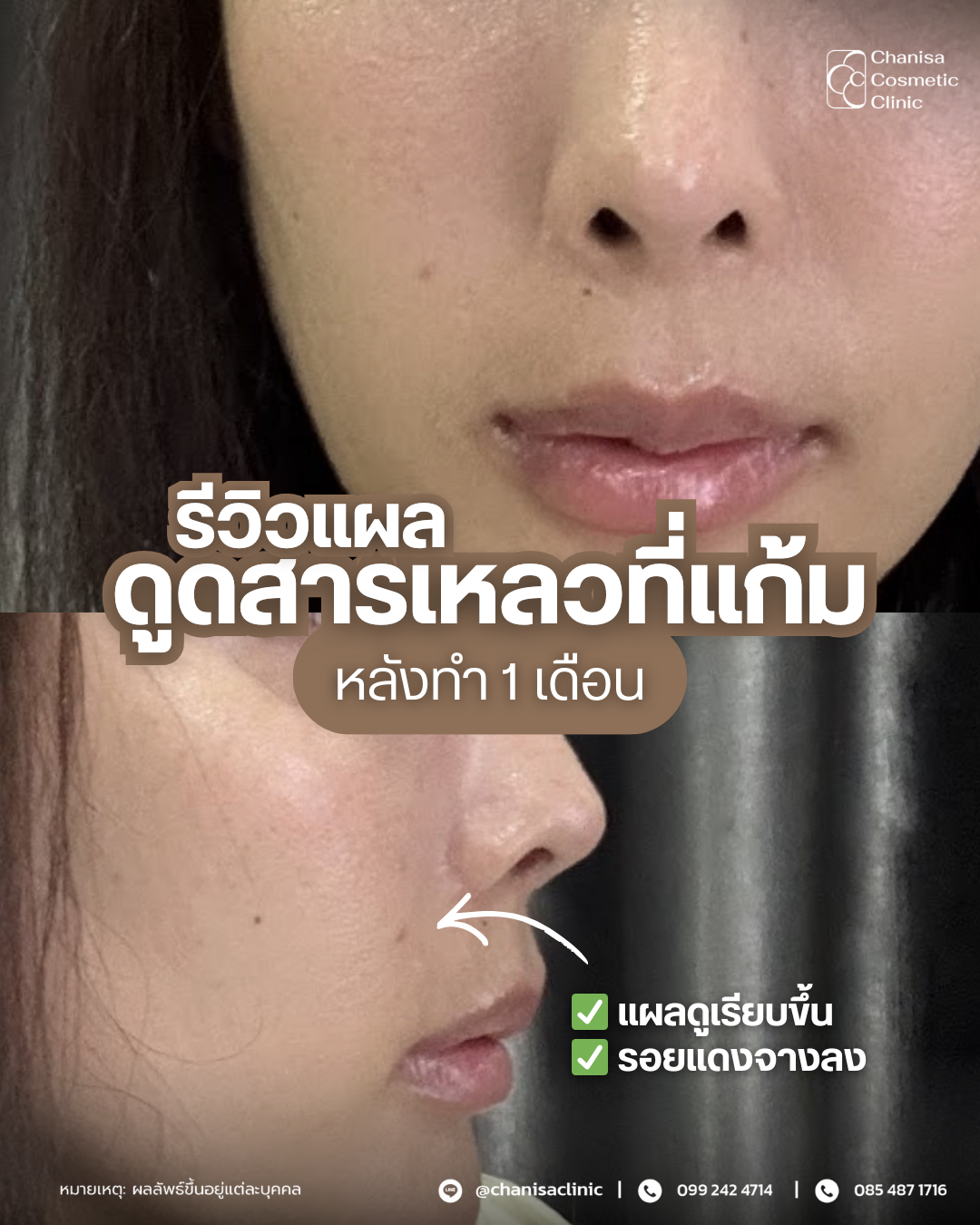
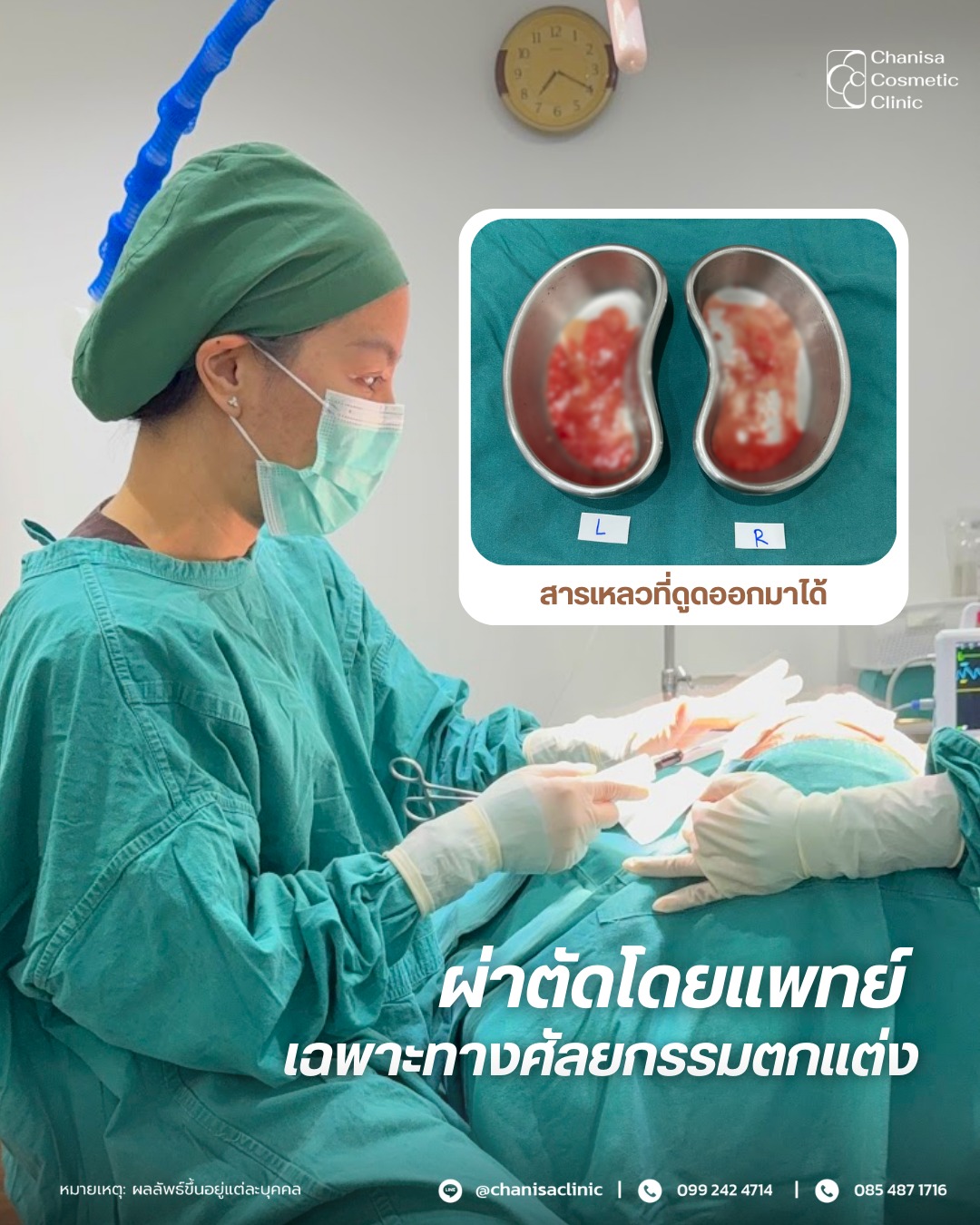
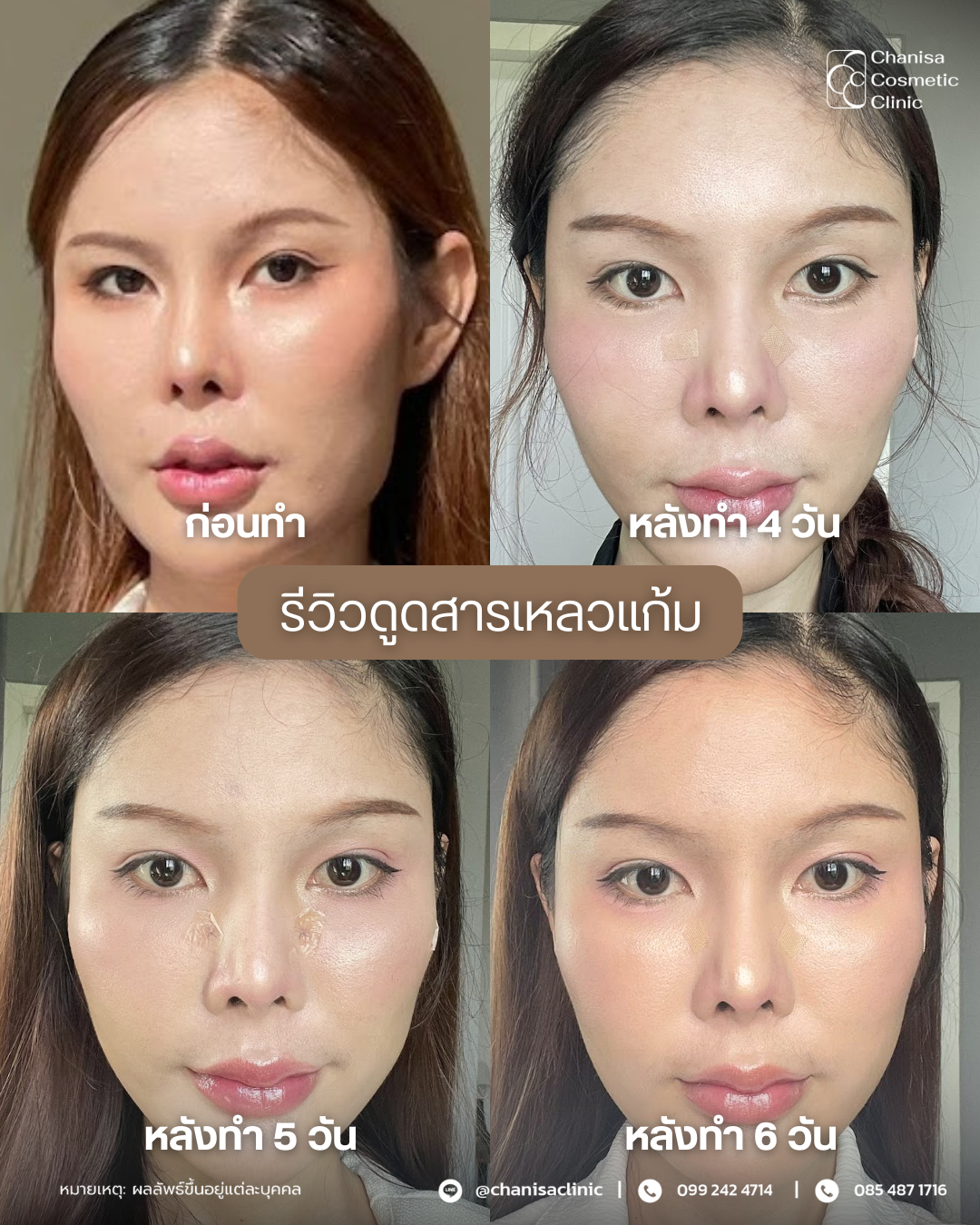
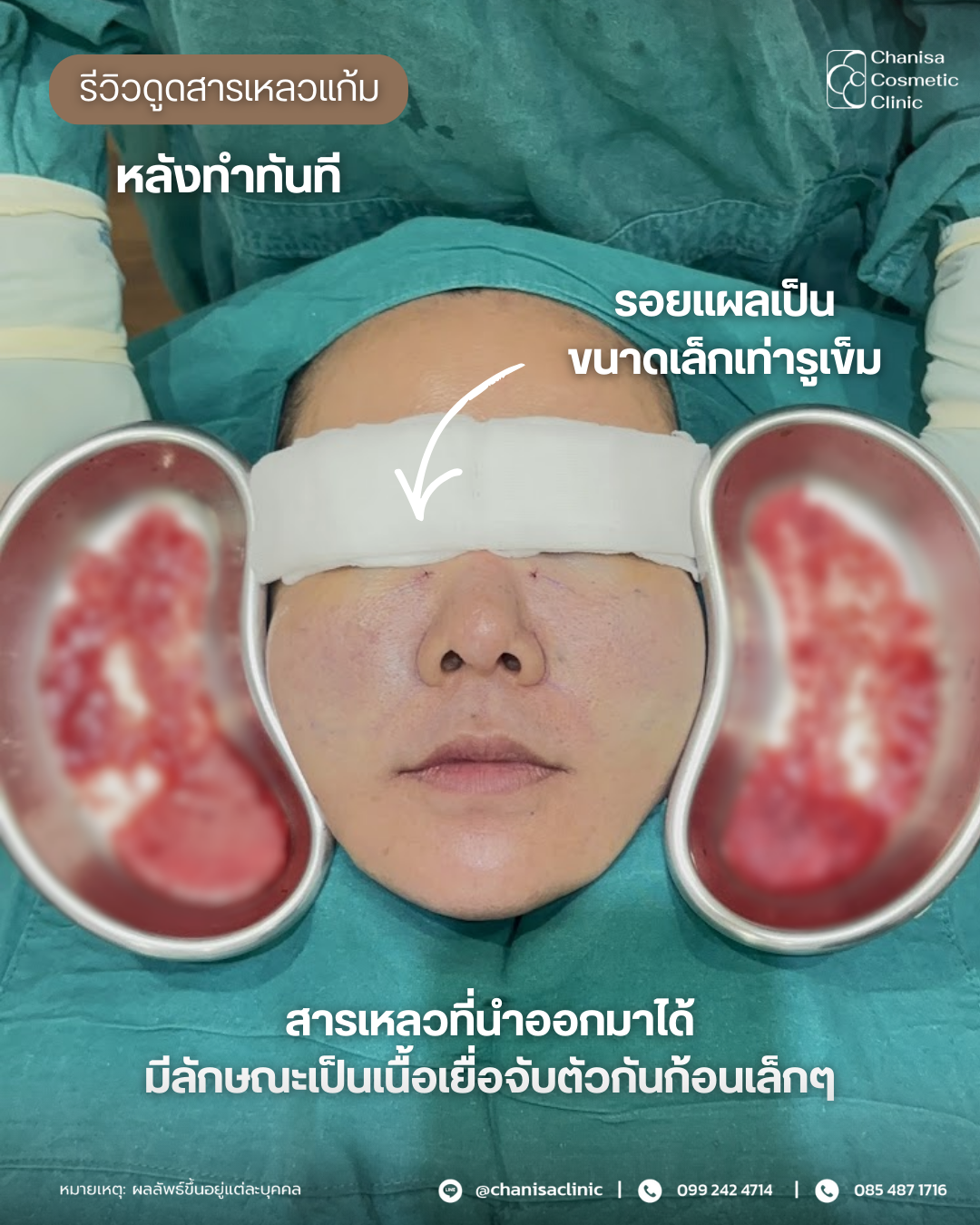
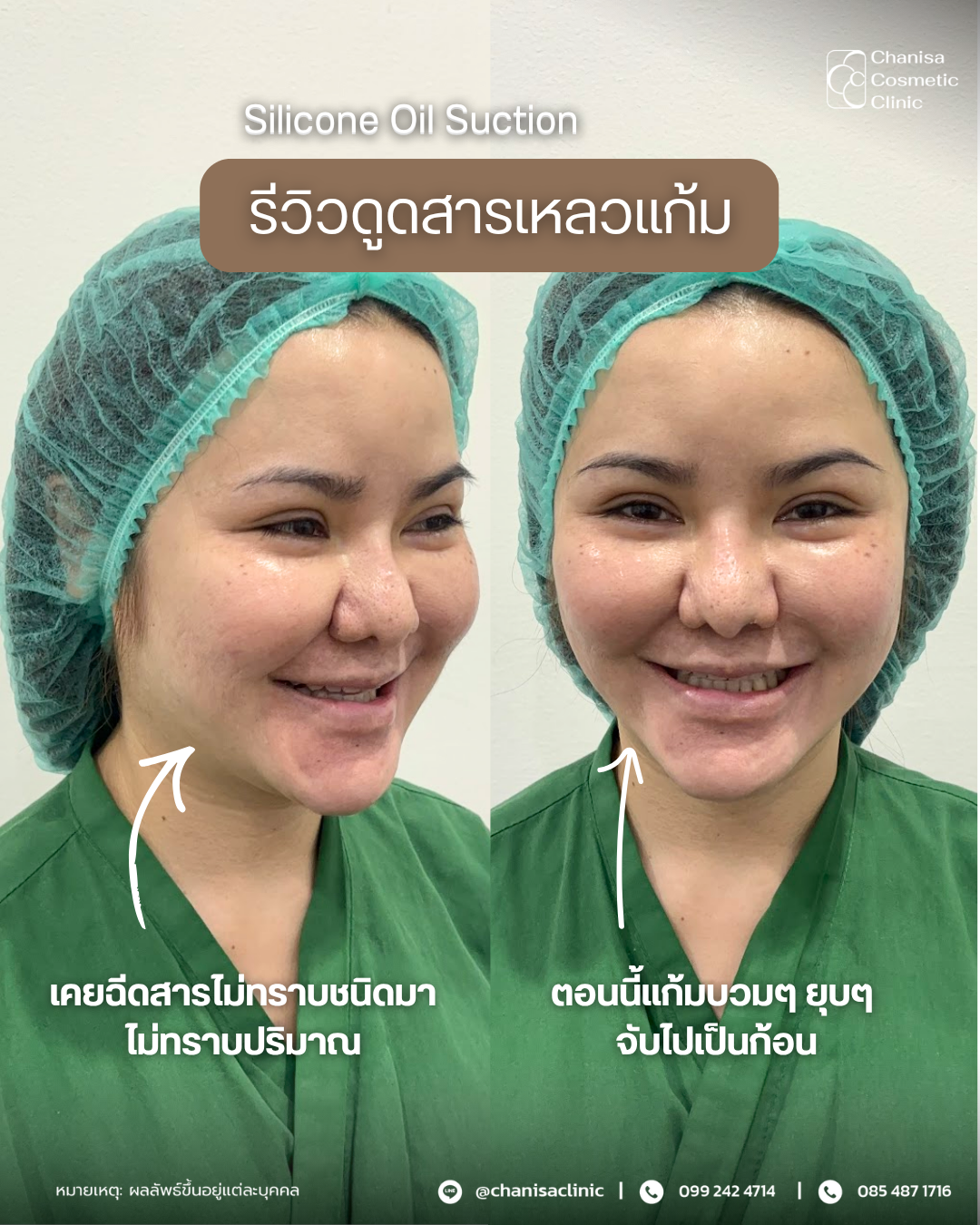
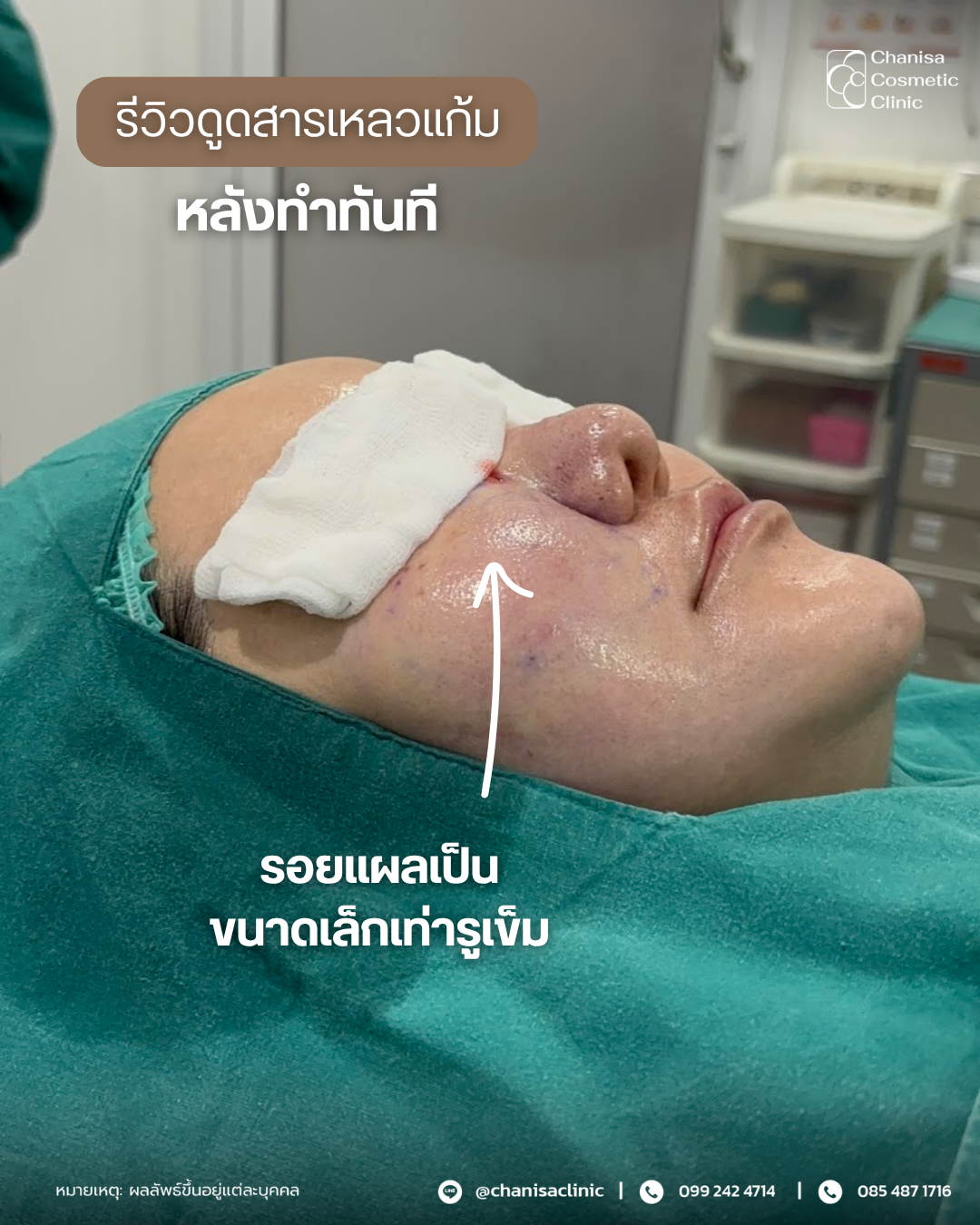
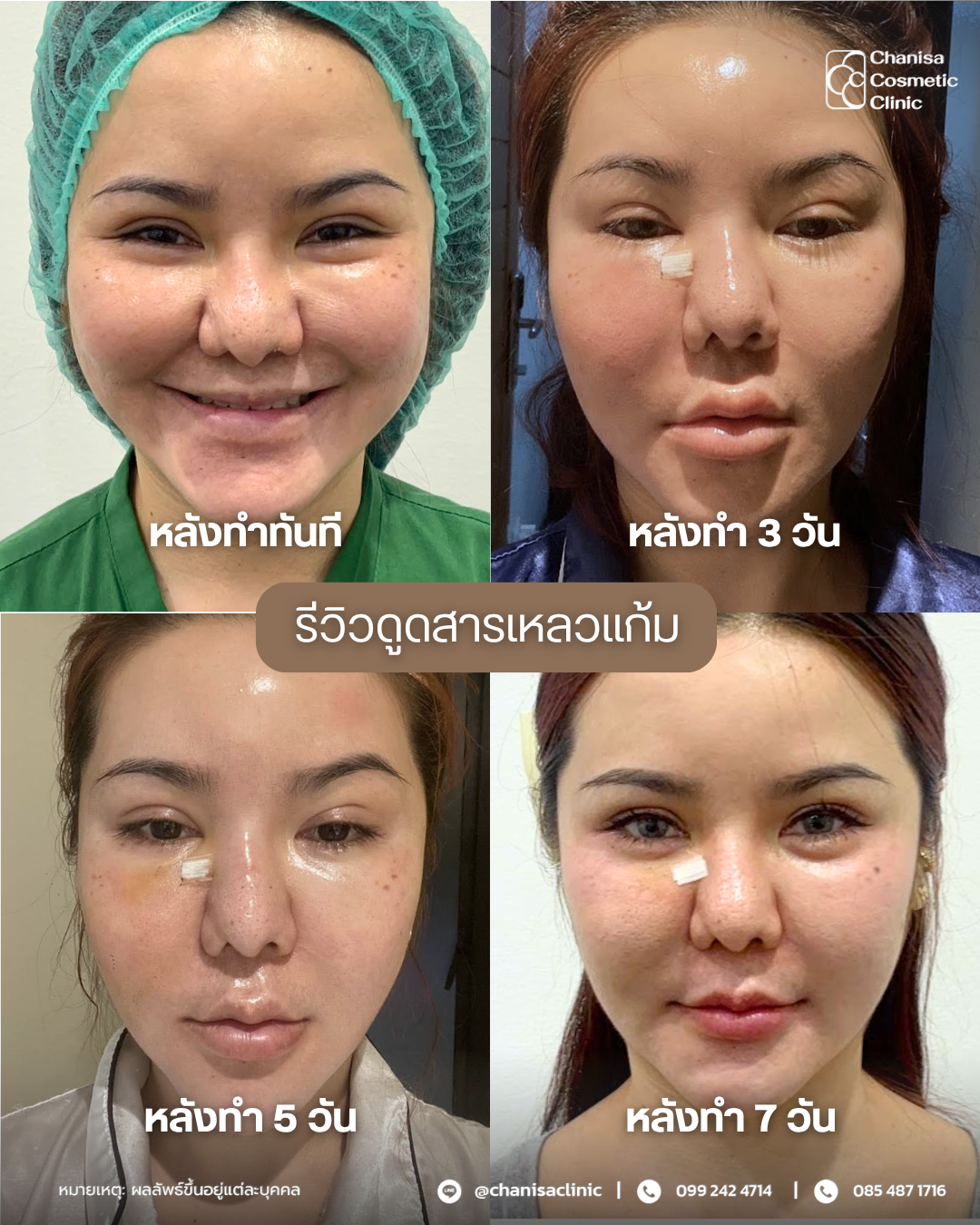
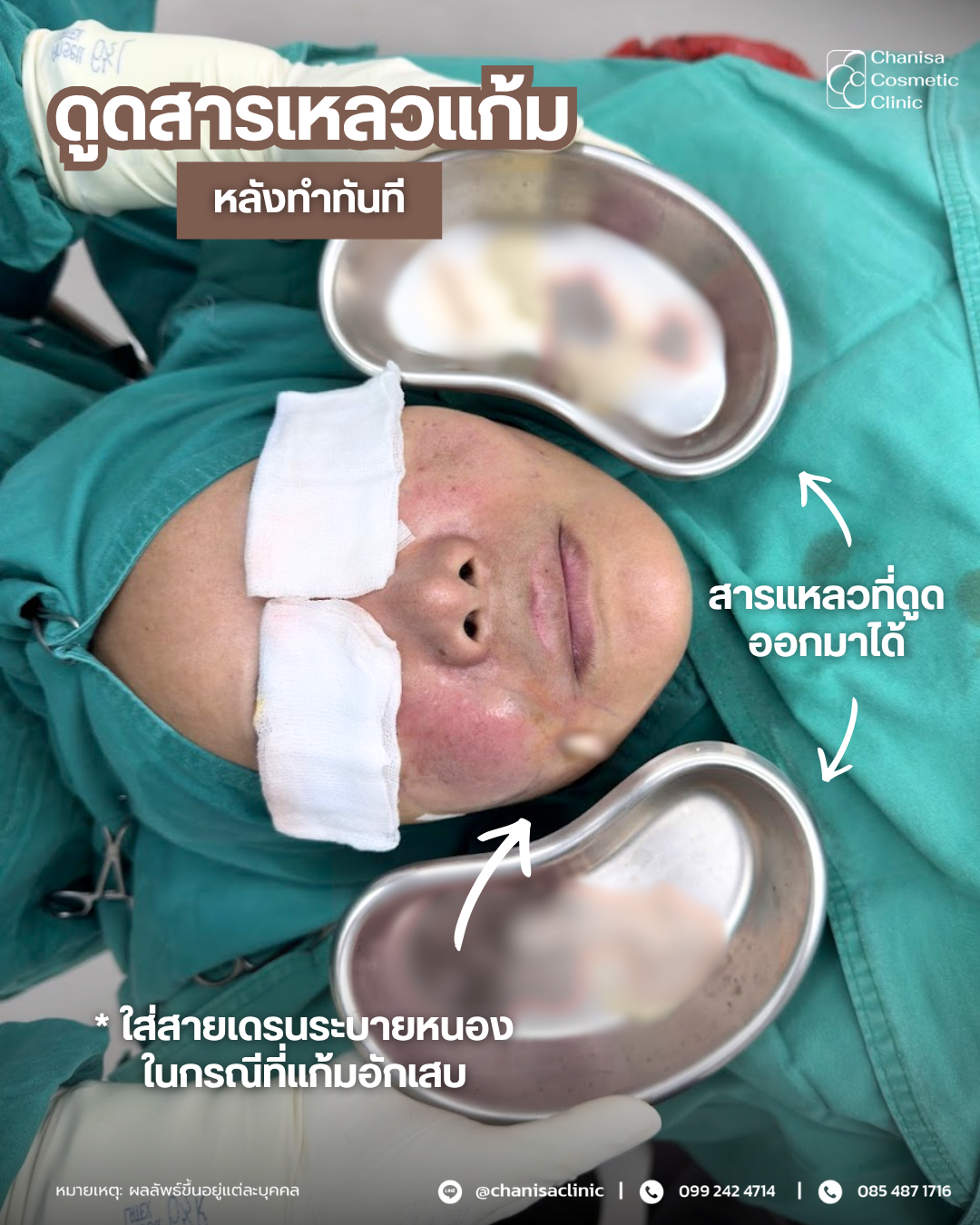
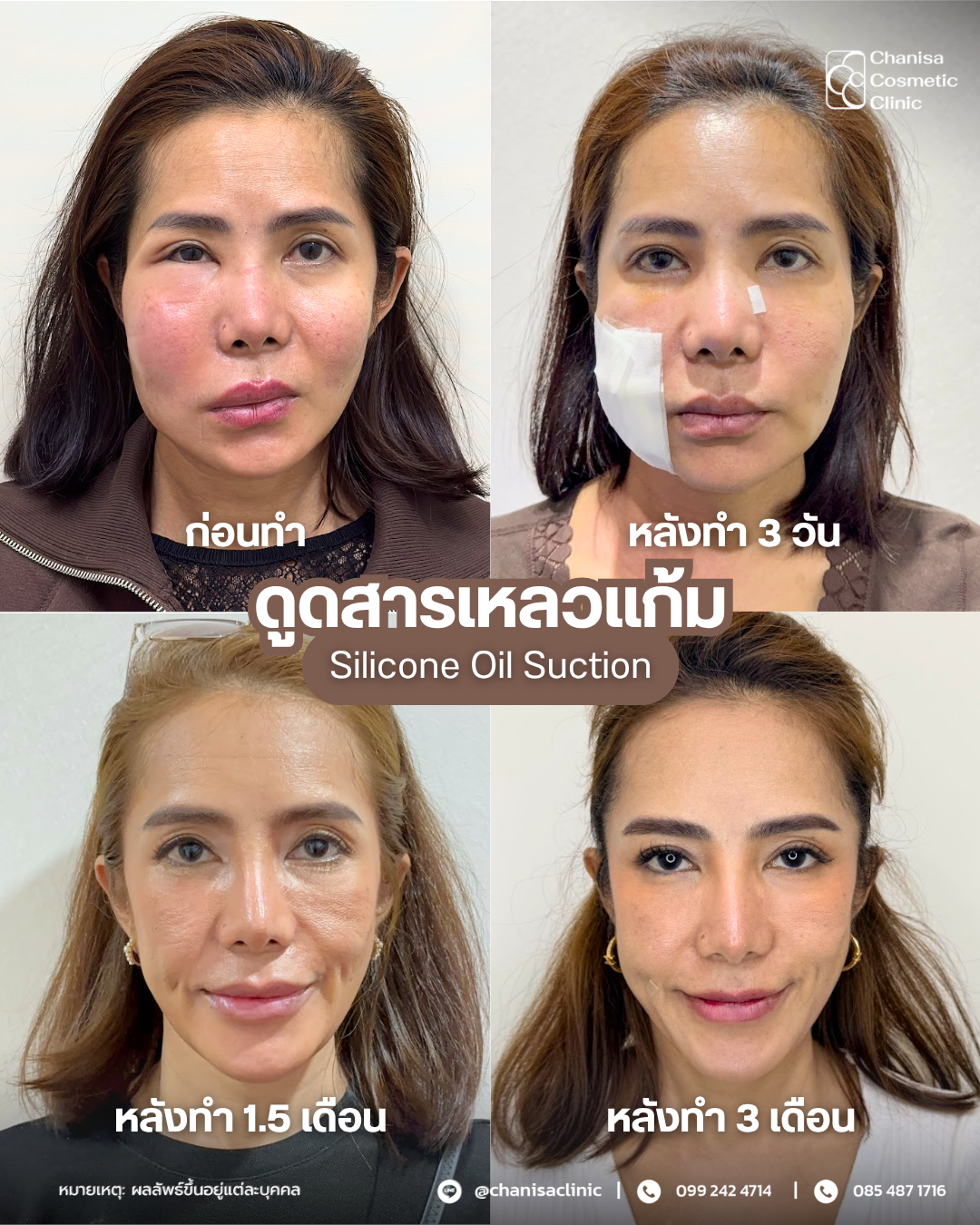
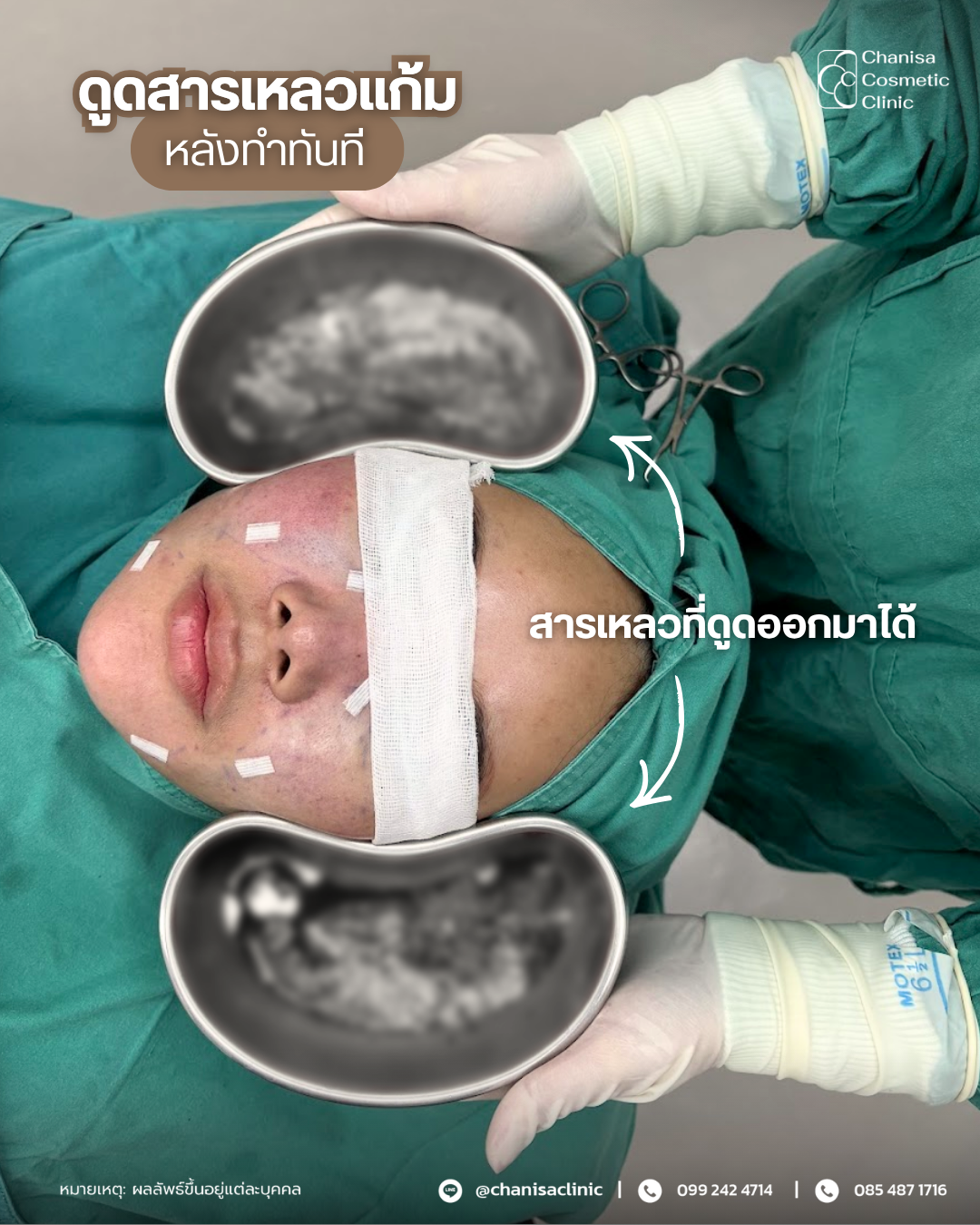
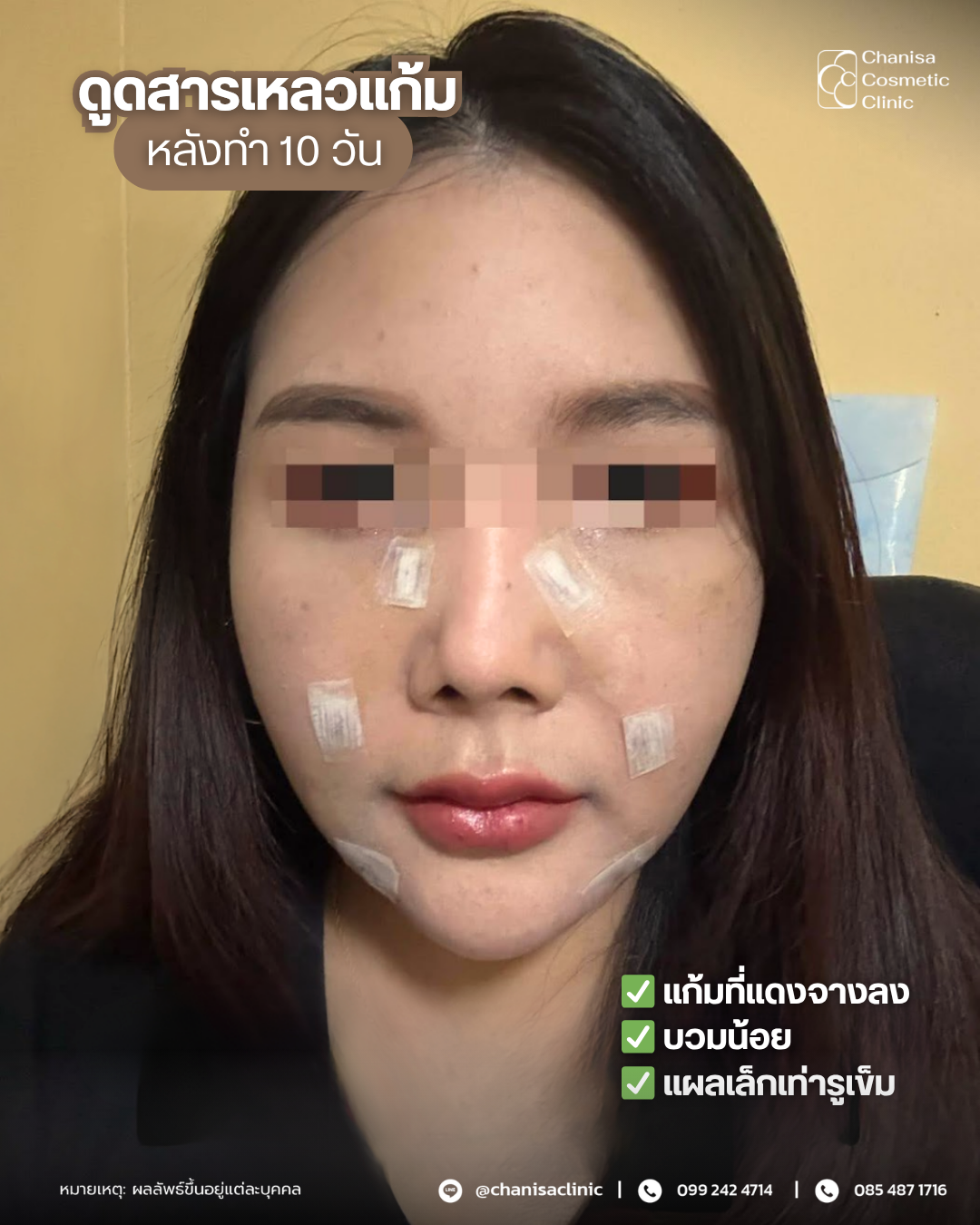
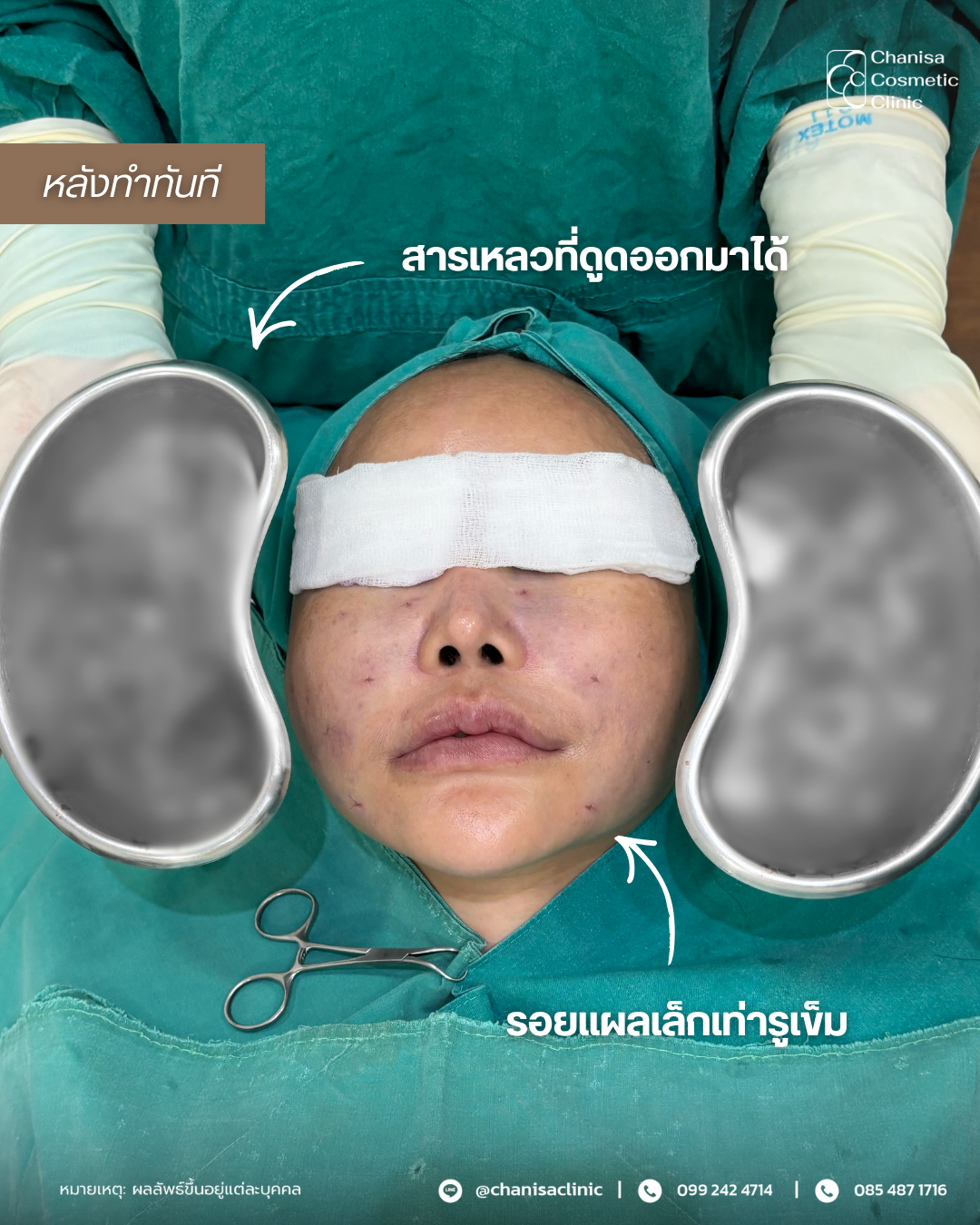
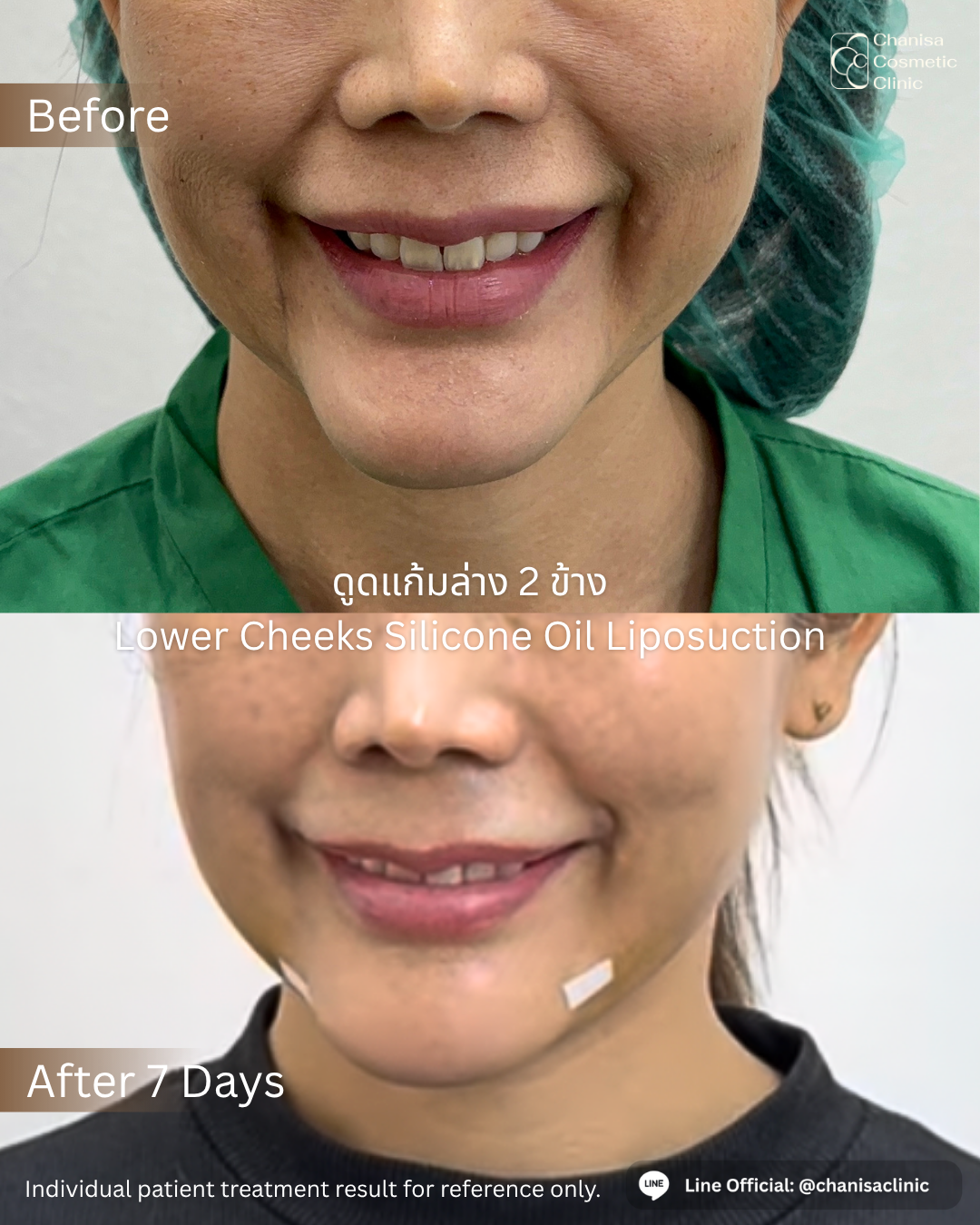
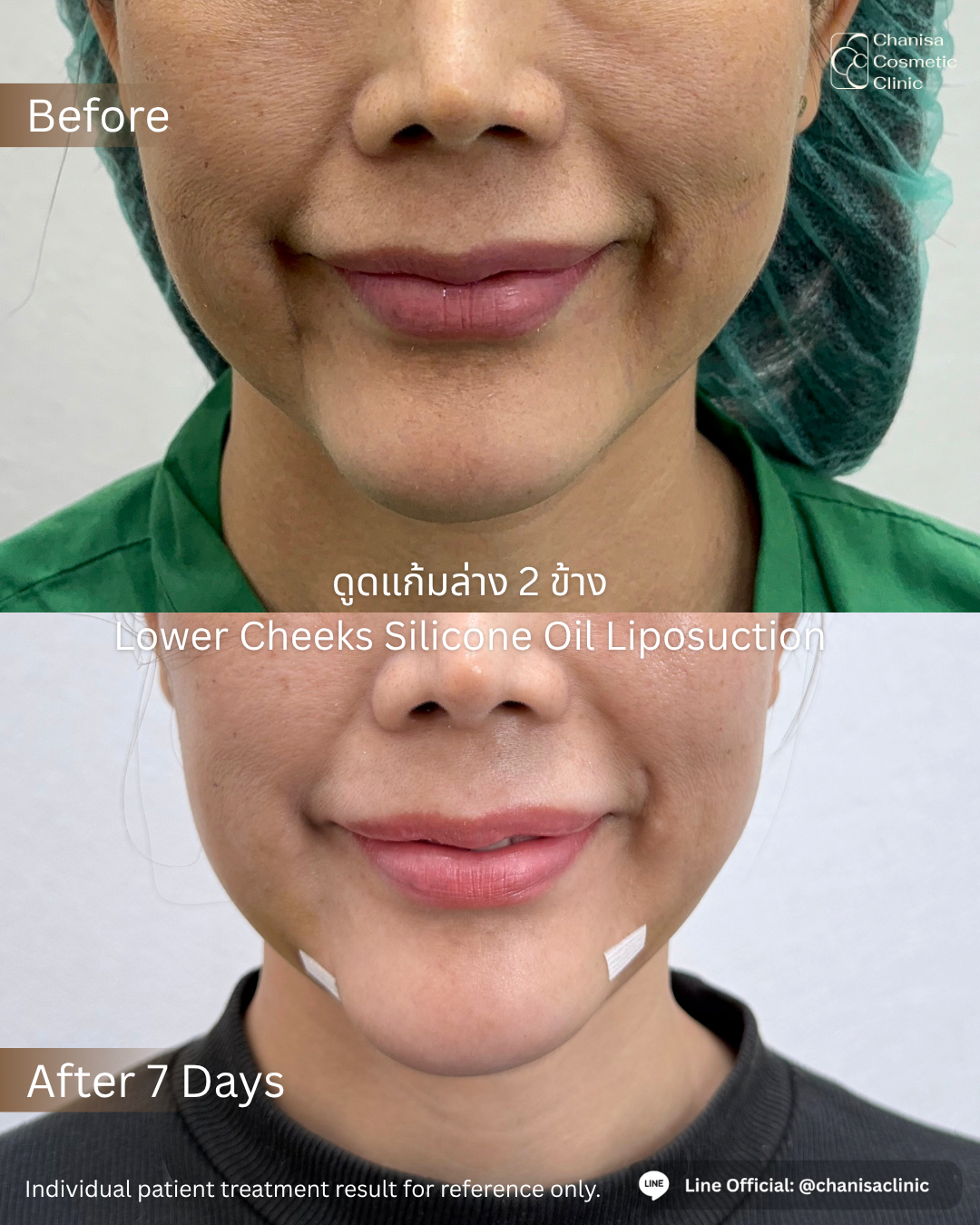
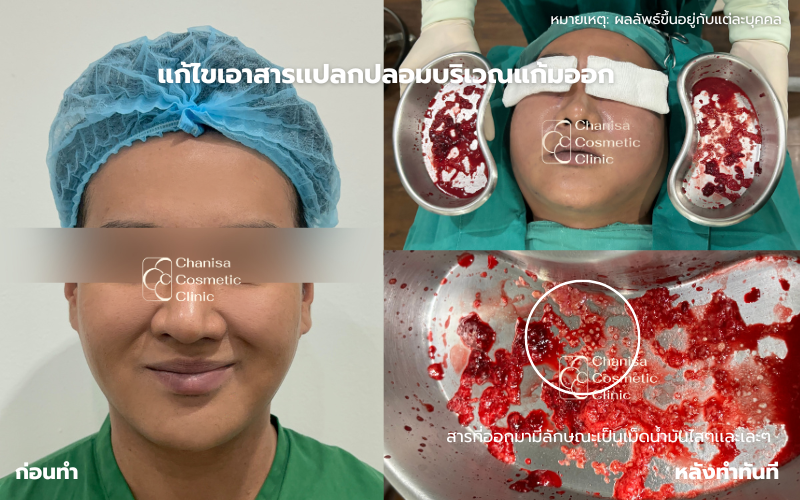
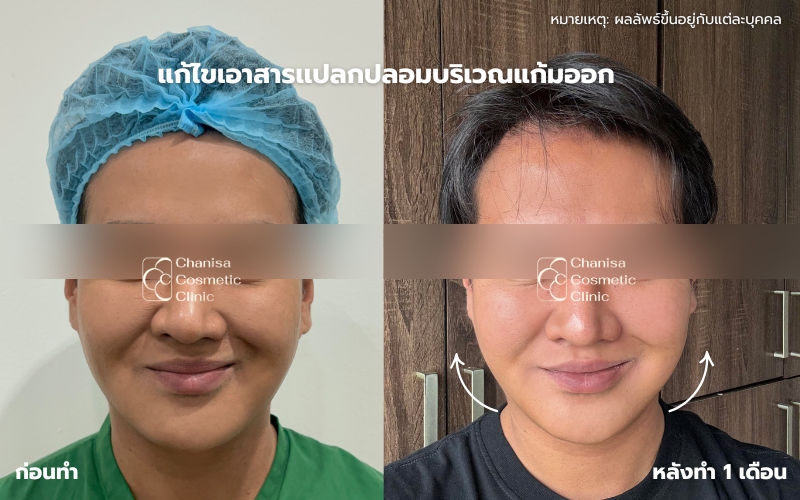
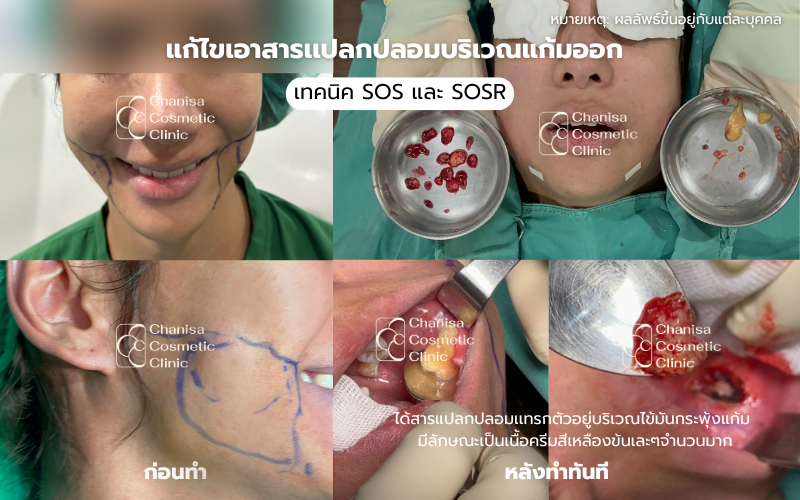
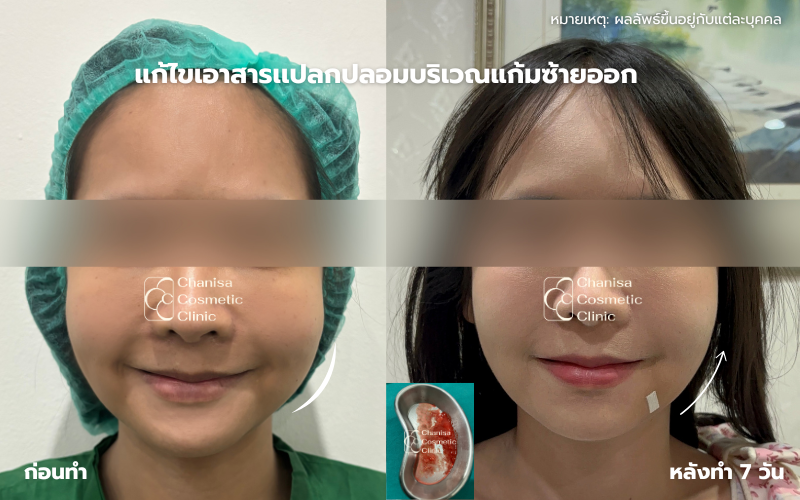
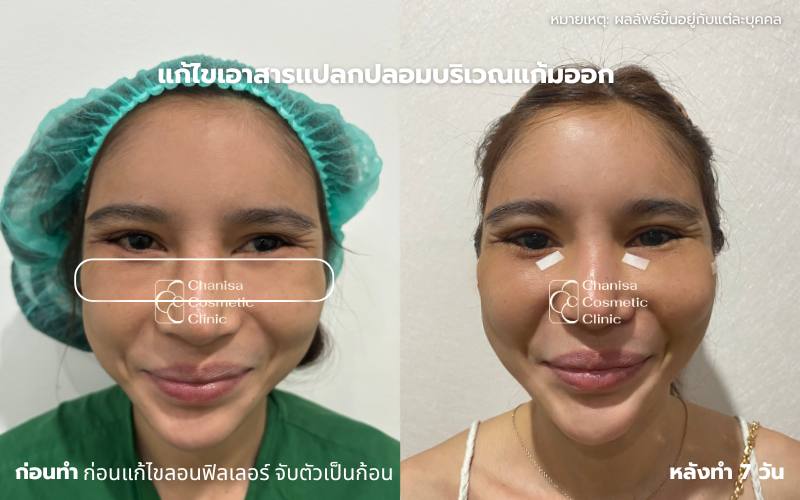
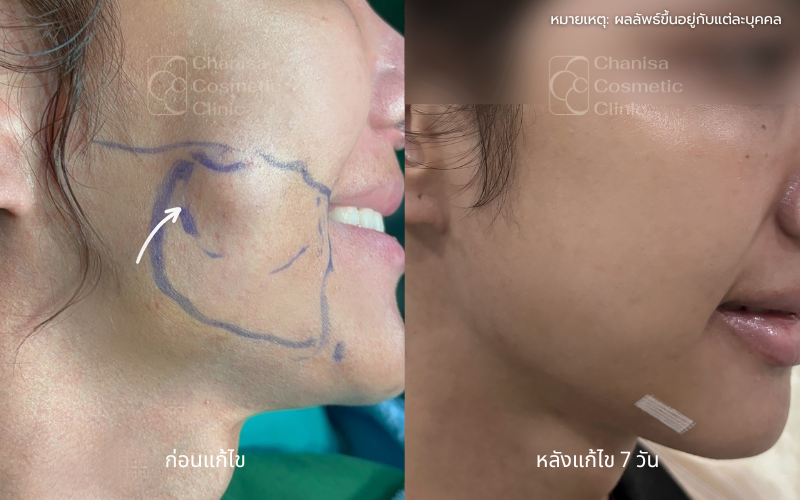
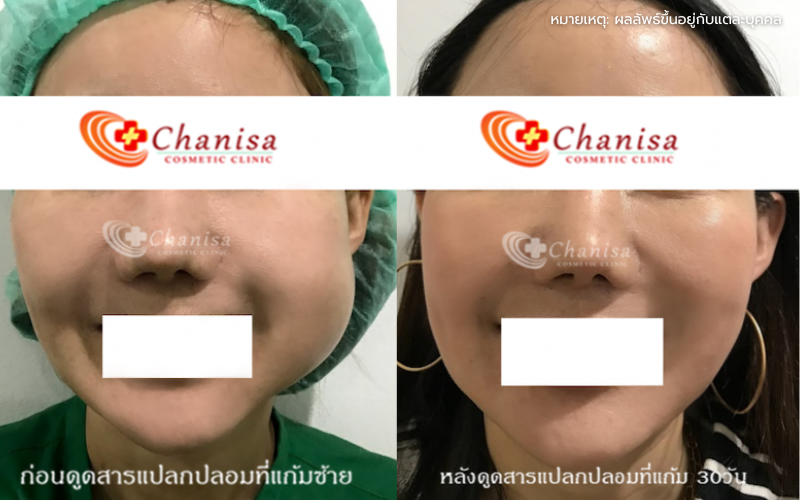
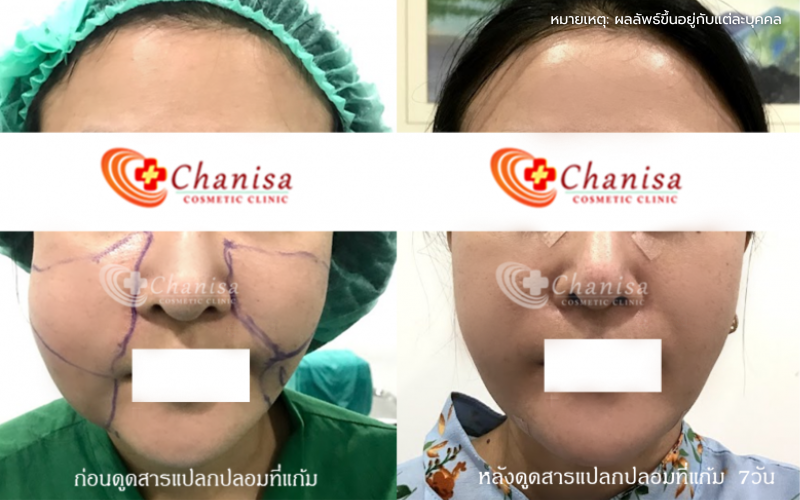
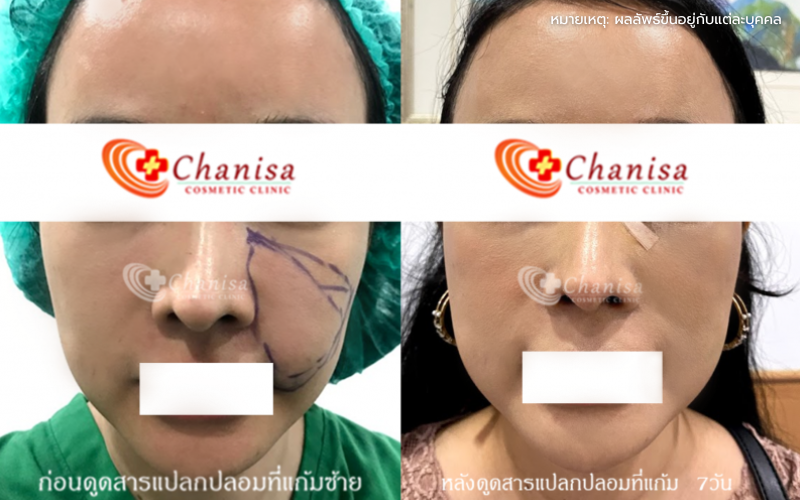
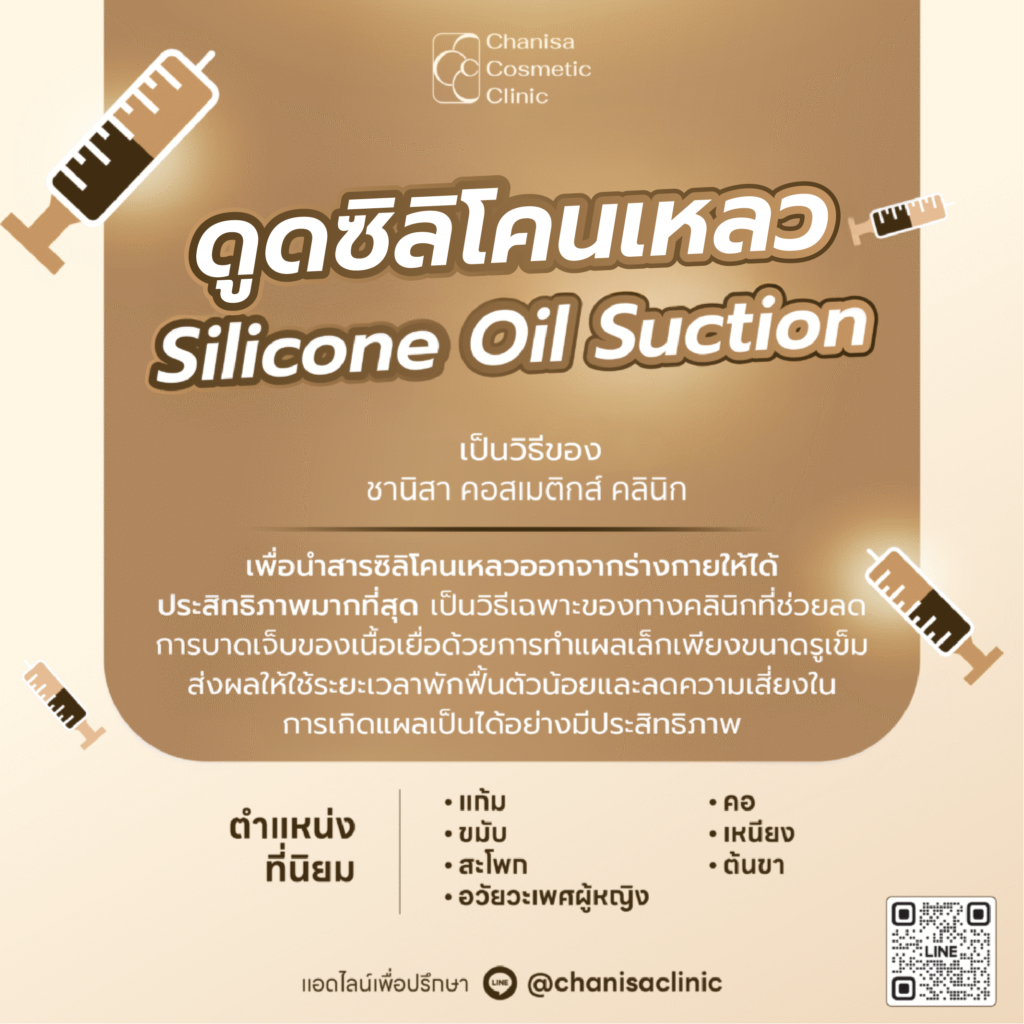
1. Liquid Silicone SuctionSilicone oil Suction (SOS) This method removes liquid material and is suitable when the foreign-material lumps have not yet hardened significantly. The clinic’s technique helps minimize tissue damage by using an incision as small as a needle puncture. This means less recovery time and effectively reduces the risk of scarring.


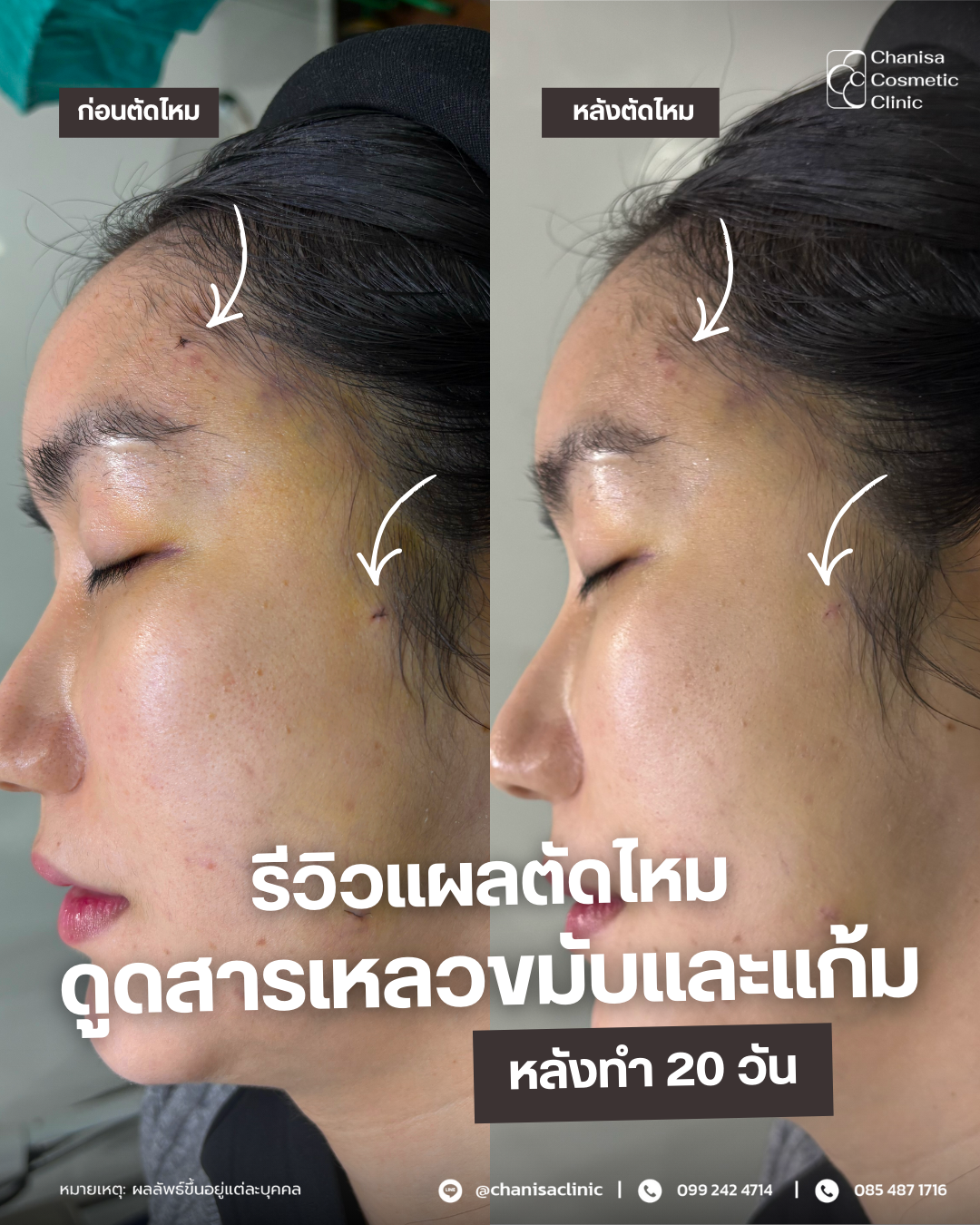
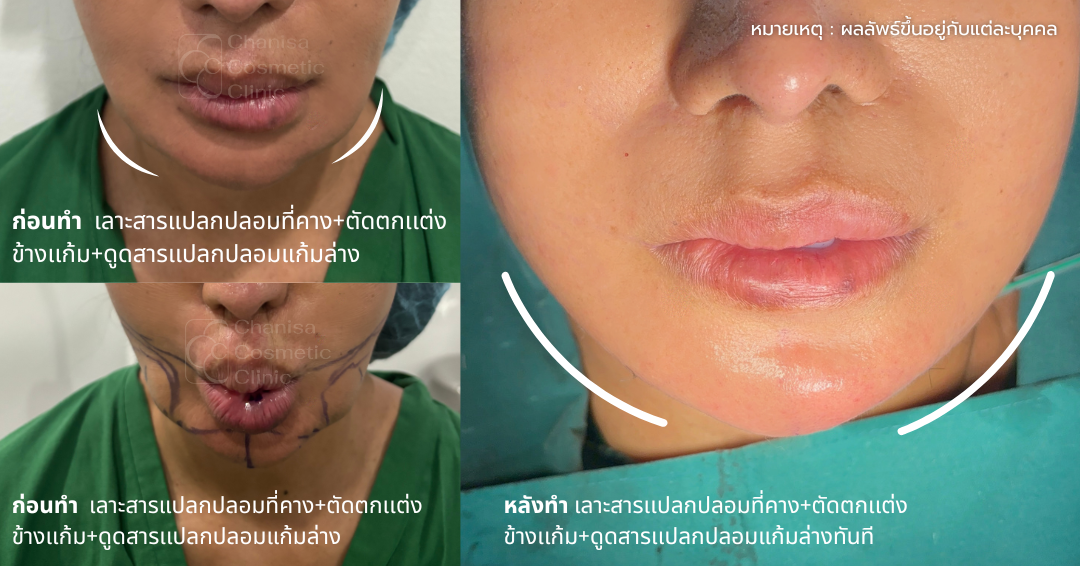
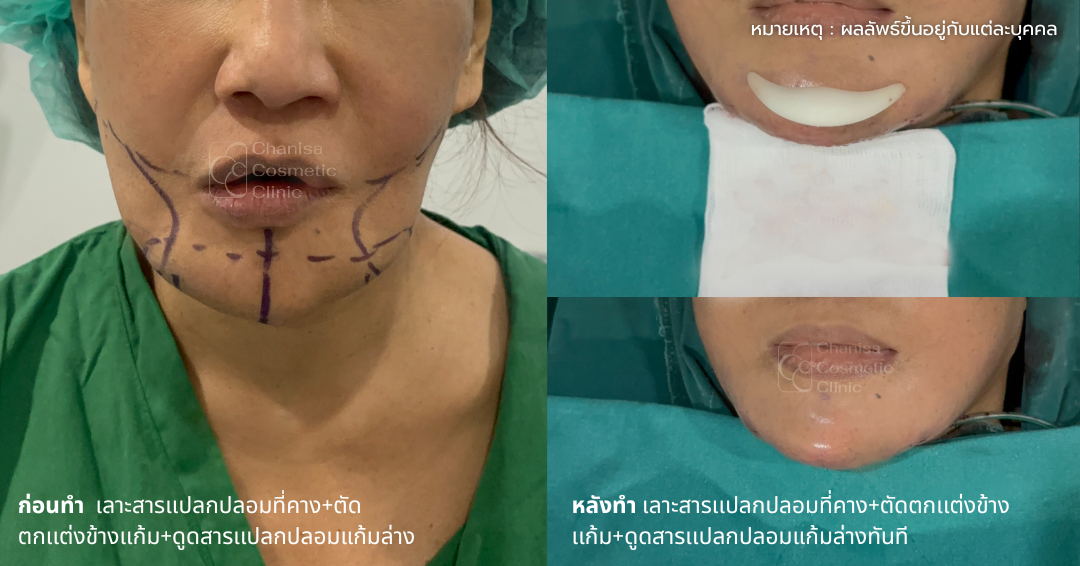
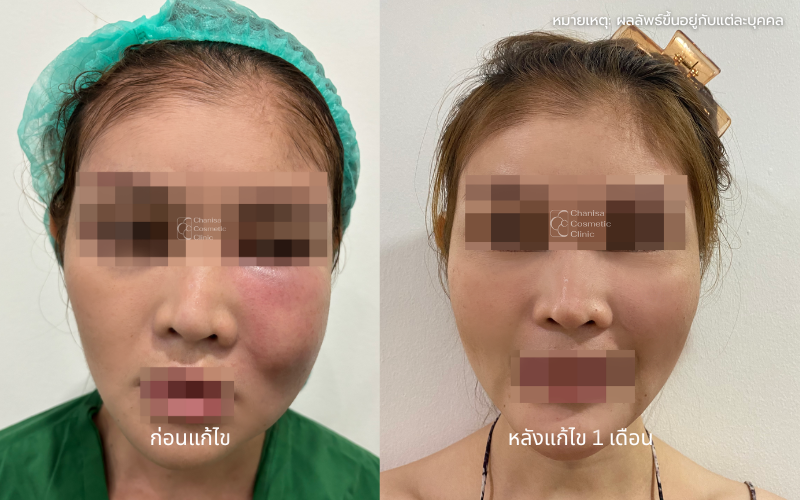
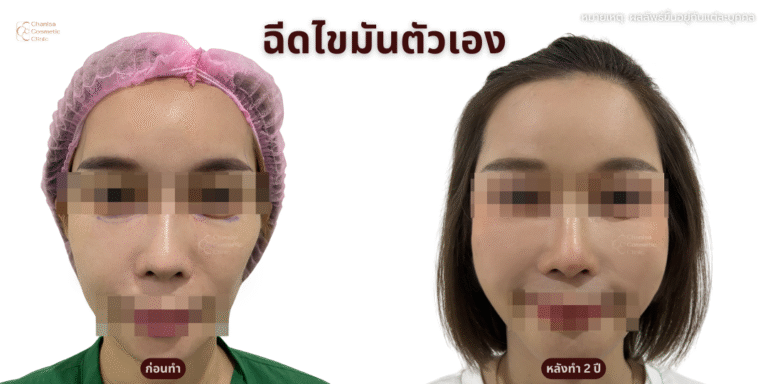
Note: Results vary from person to person.
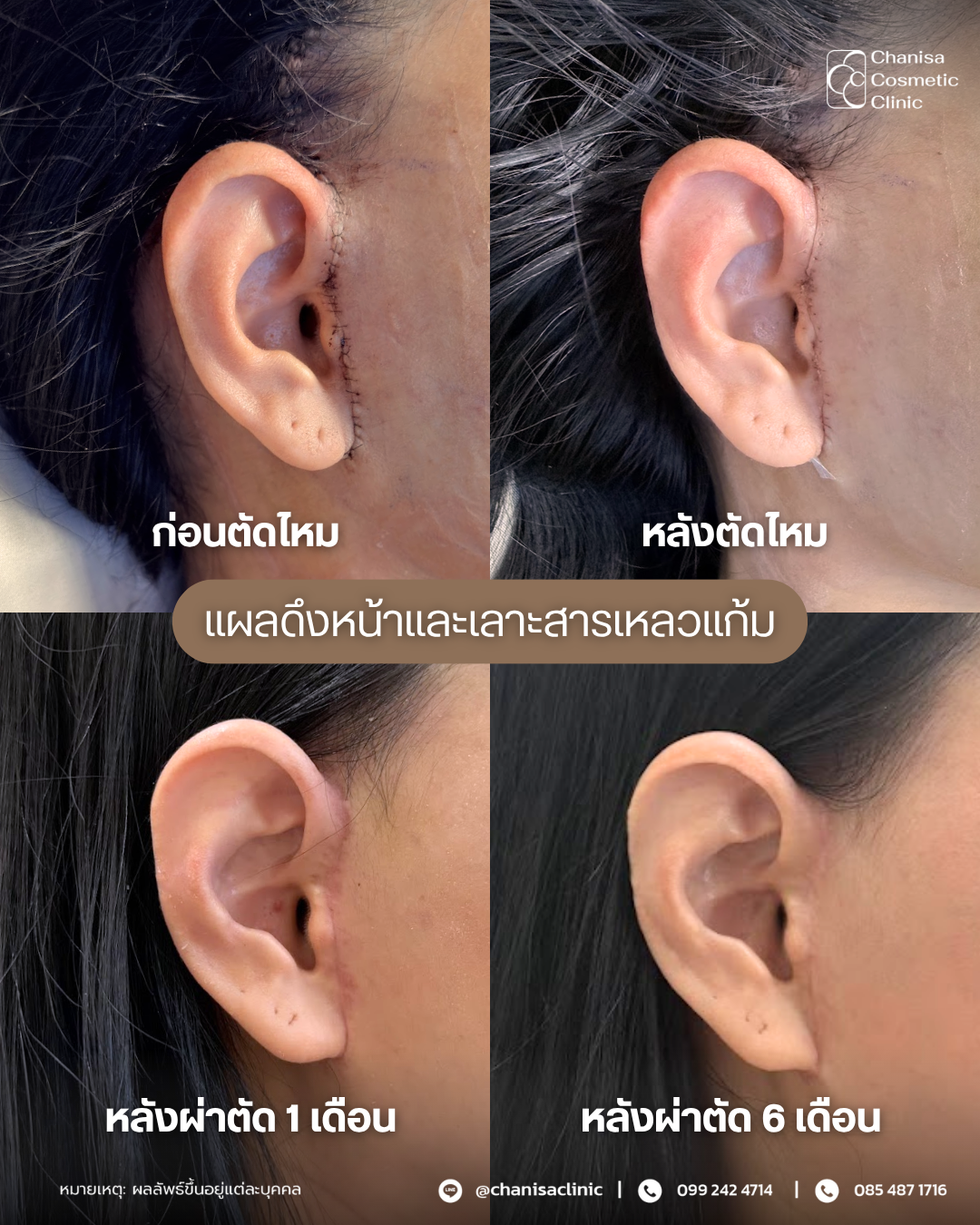
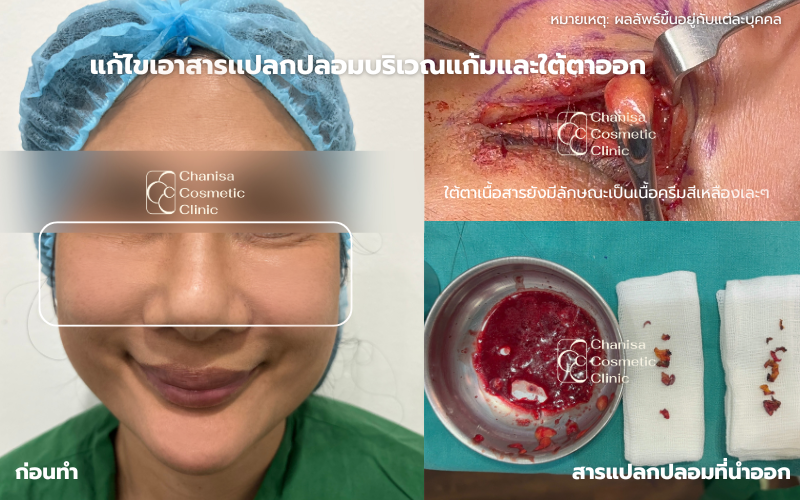
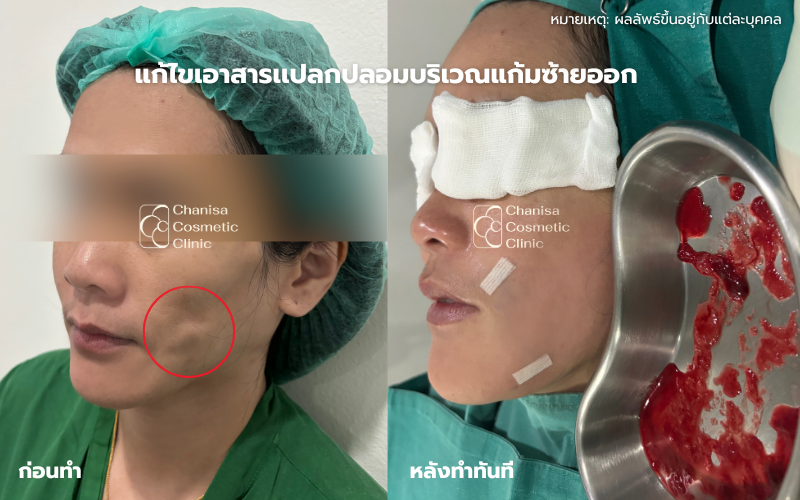
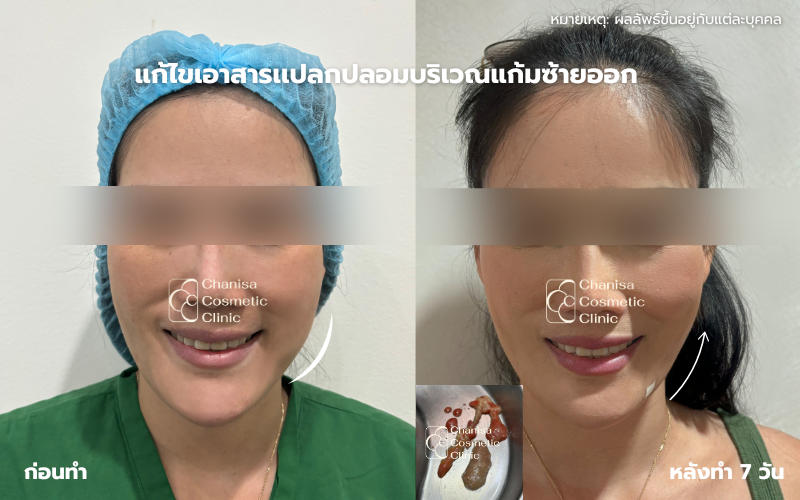
2. Surgical Excision of Liquid SiliconeSilicone oil Suction Removal (SOSR) The doctor may recommend this procedure for clearly defined lumps or areas of chronically inflamed tissue. The clinic can remove the liquid material effectively and precisely, with a focus on safety. Incisions are also carefully concealed to blend naturally with the patient’s anatomy, and meticulous suturing helps create a smooth, natural-looking scar.

Benefits of Removing Liquid Material from the Cheeks
✔️ Effectively removes liquid material
✔️ Slimmer-looking face with less cheek fullness
✔️ More defined, slimmer-looking facial contours with a natural appearance
✔️ Helps minimize tissue damage
✔️ Tiny incision, just the size of a needle puncture
✔️ Minimal recovery time
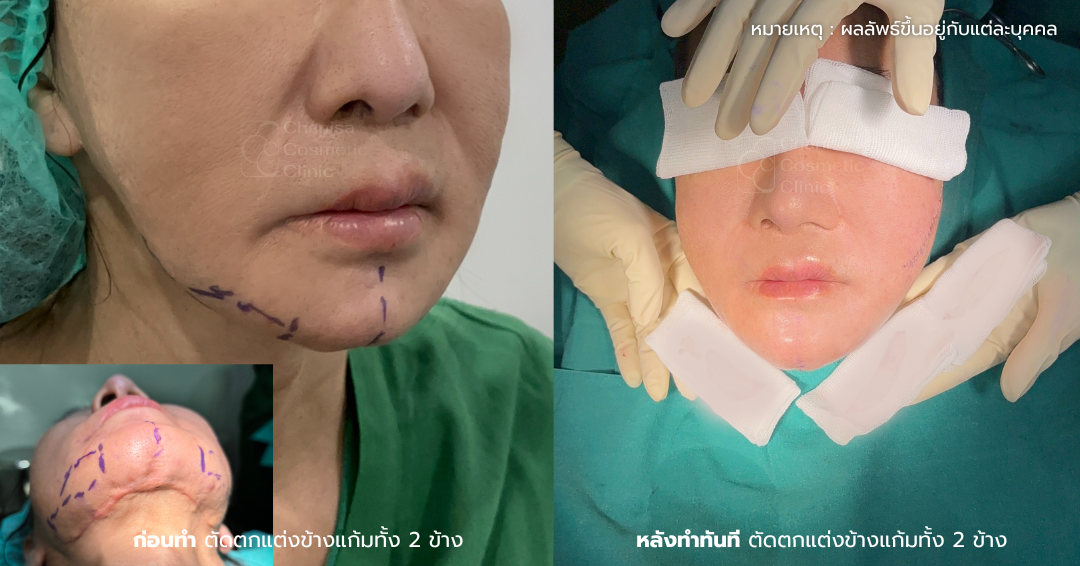
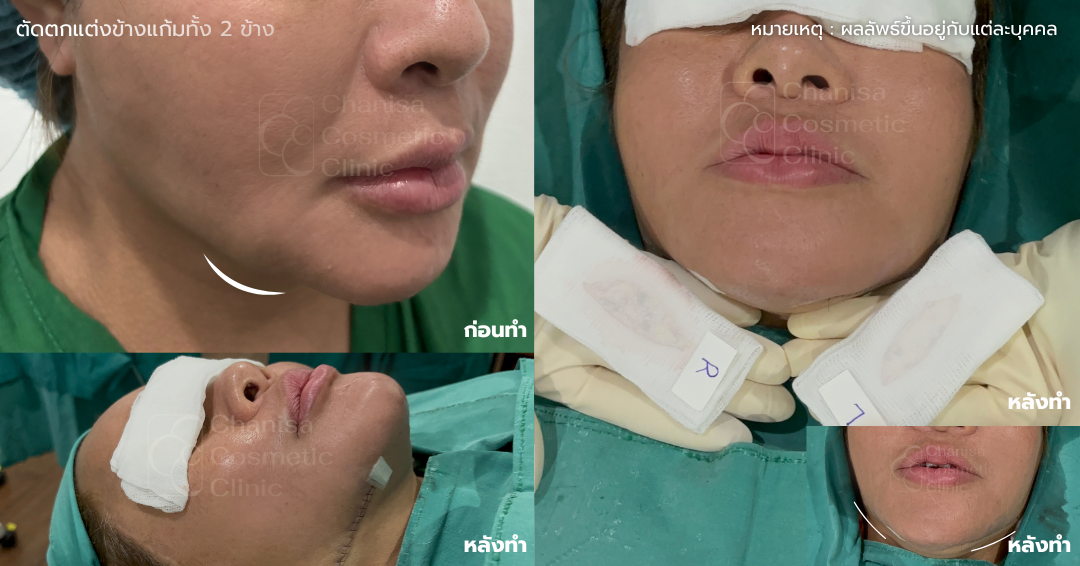
Cheek/Chin Reduction
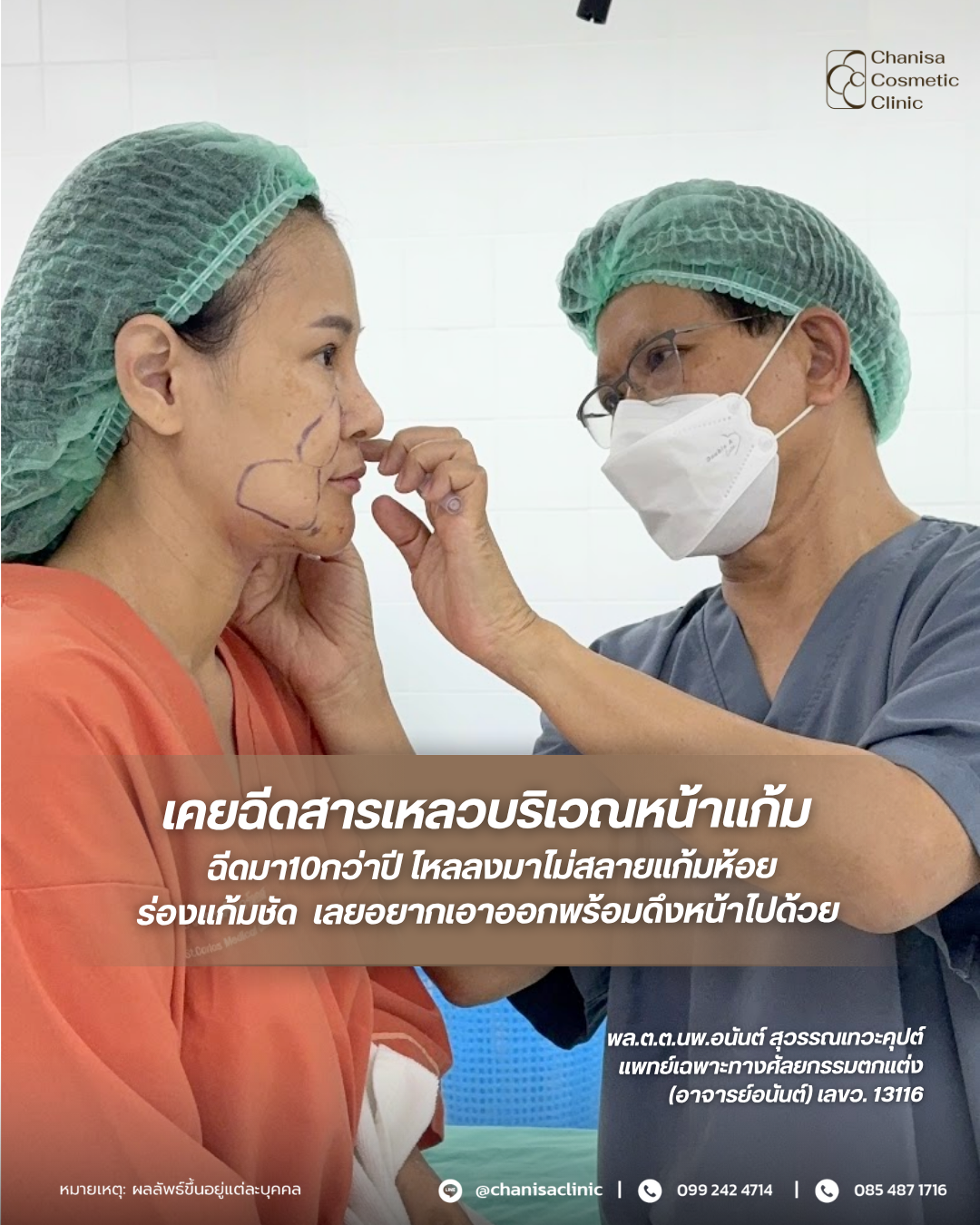
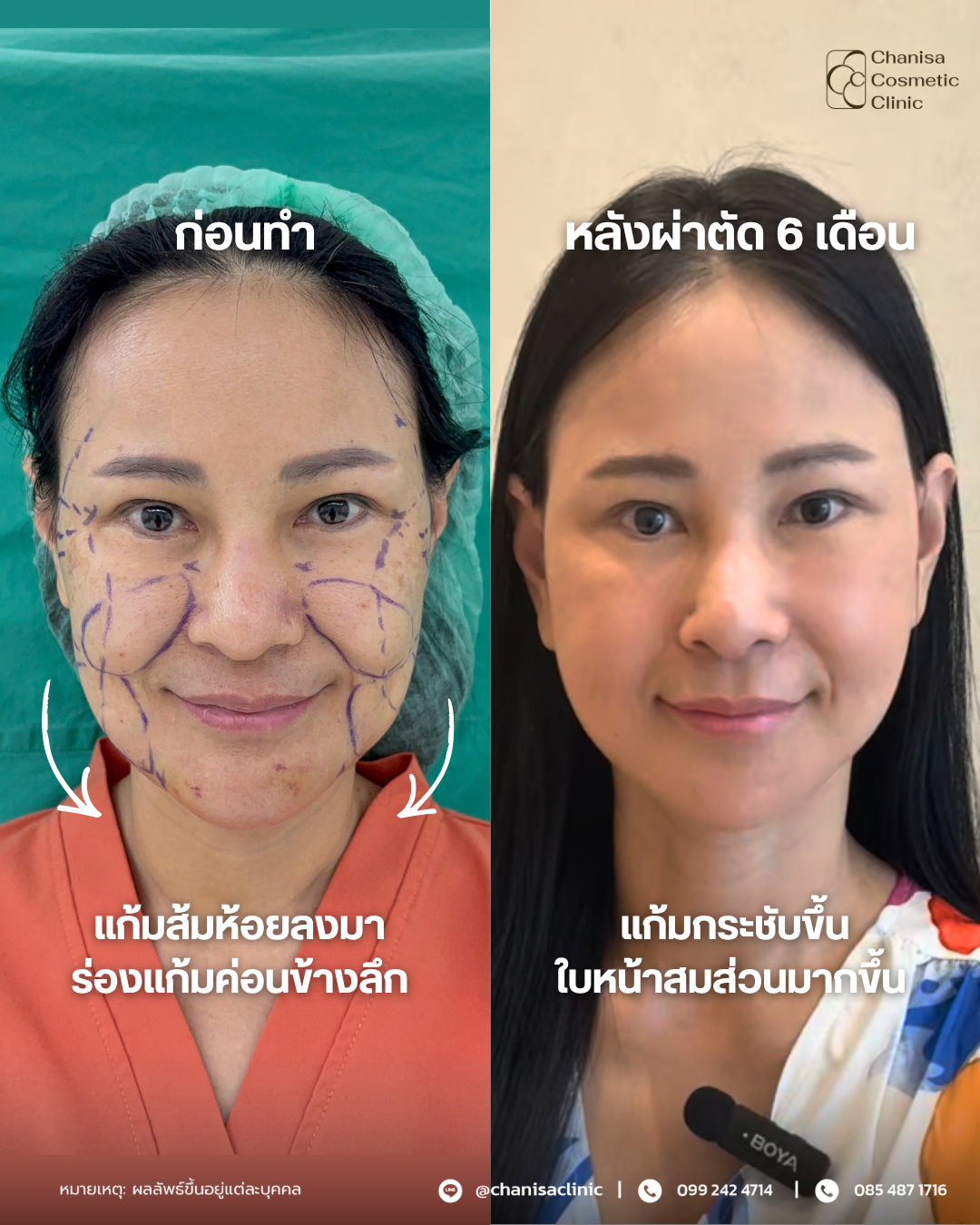
Correction of liquid material in the cheeks or chin can be combined with cheek or chin reduction to create more defined facial contours and a more balanced, natural-looking appearance. The incisions are concealed beneath the chin on both sides, following the patient’s anatomy. The incision size depends on each patient’s concerns and individual goals.

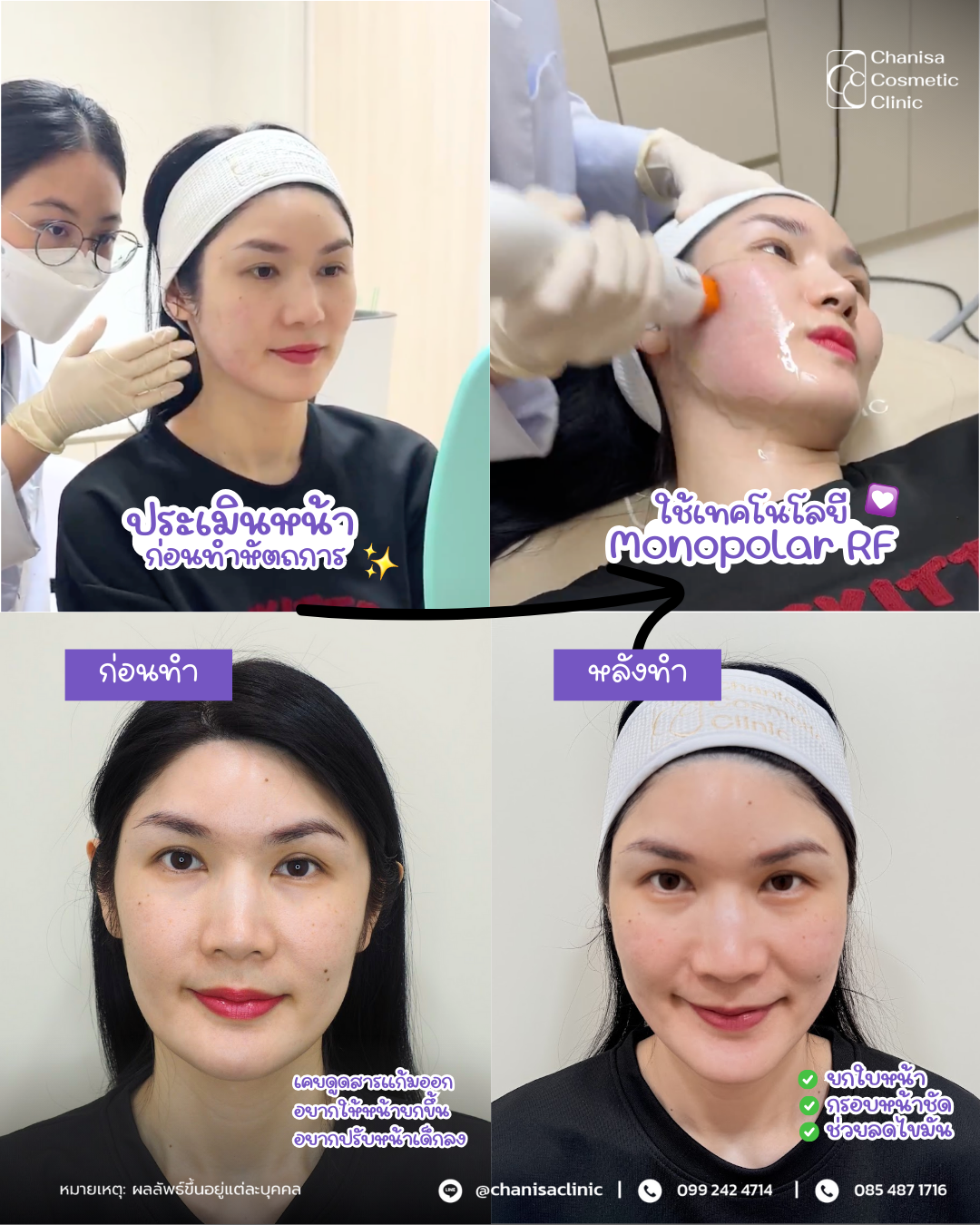
After liquid silicone is surgically removed or suctioned out, the treated area may sag or become sunken. Further correction may be needed using various methods, such as fat injections, thread lifting, filler injections, or a facelift.


Steps for Removing Foreign Material and Lifting the Cheeks
- The doctor assesses the patient’s facial concerns, including wrinkles, raised areas, and liquid silicone that has clumped into firm nodules or lumps in the cheeks and other affected areas.
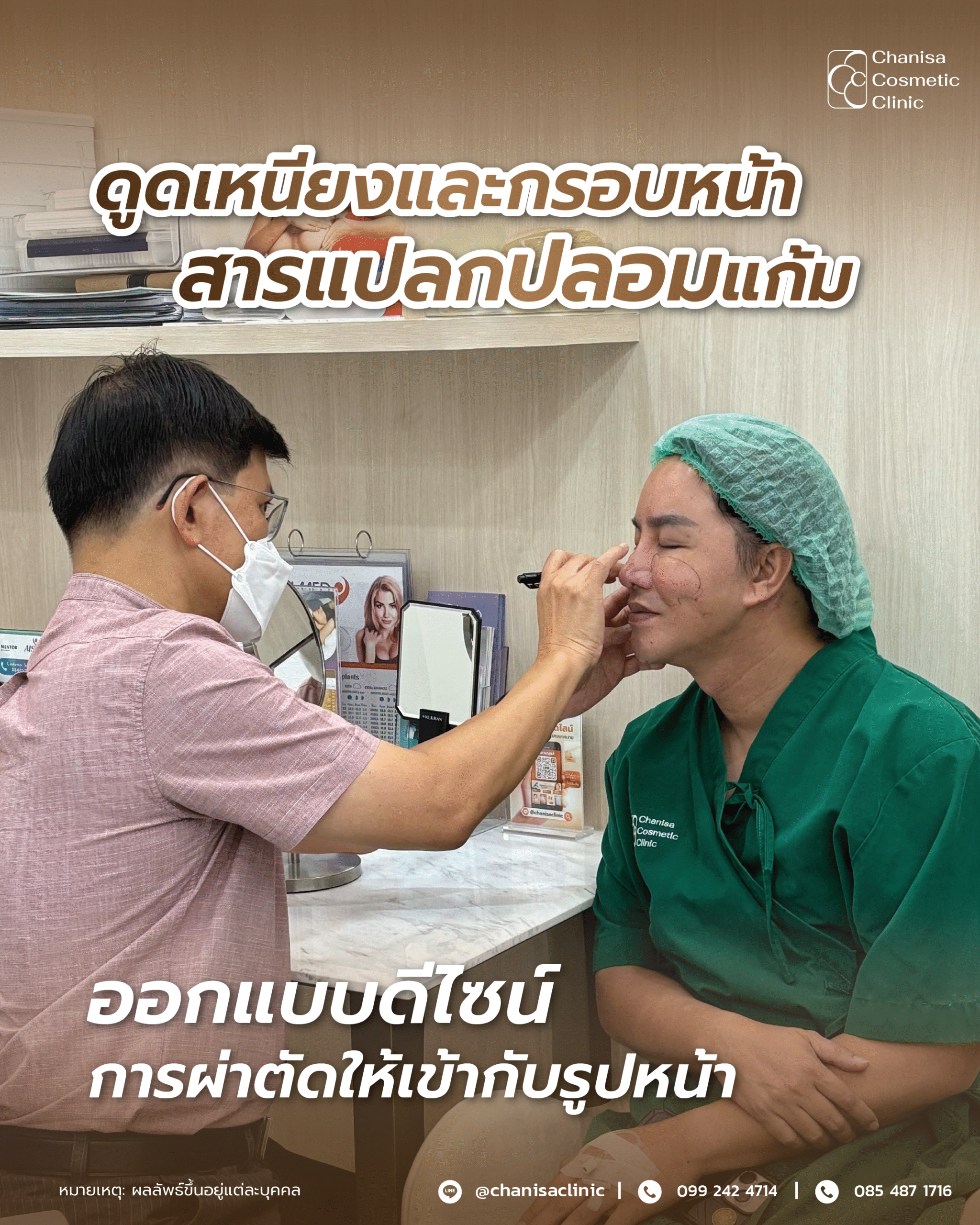
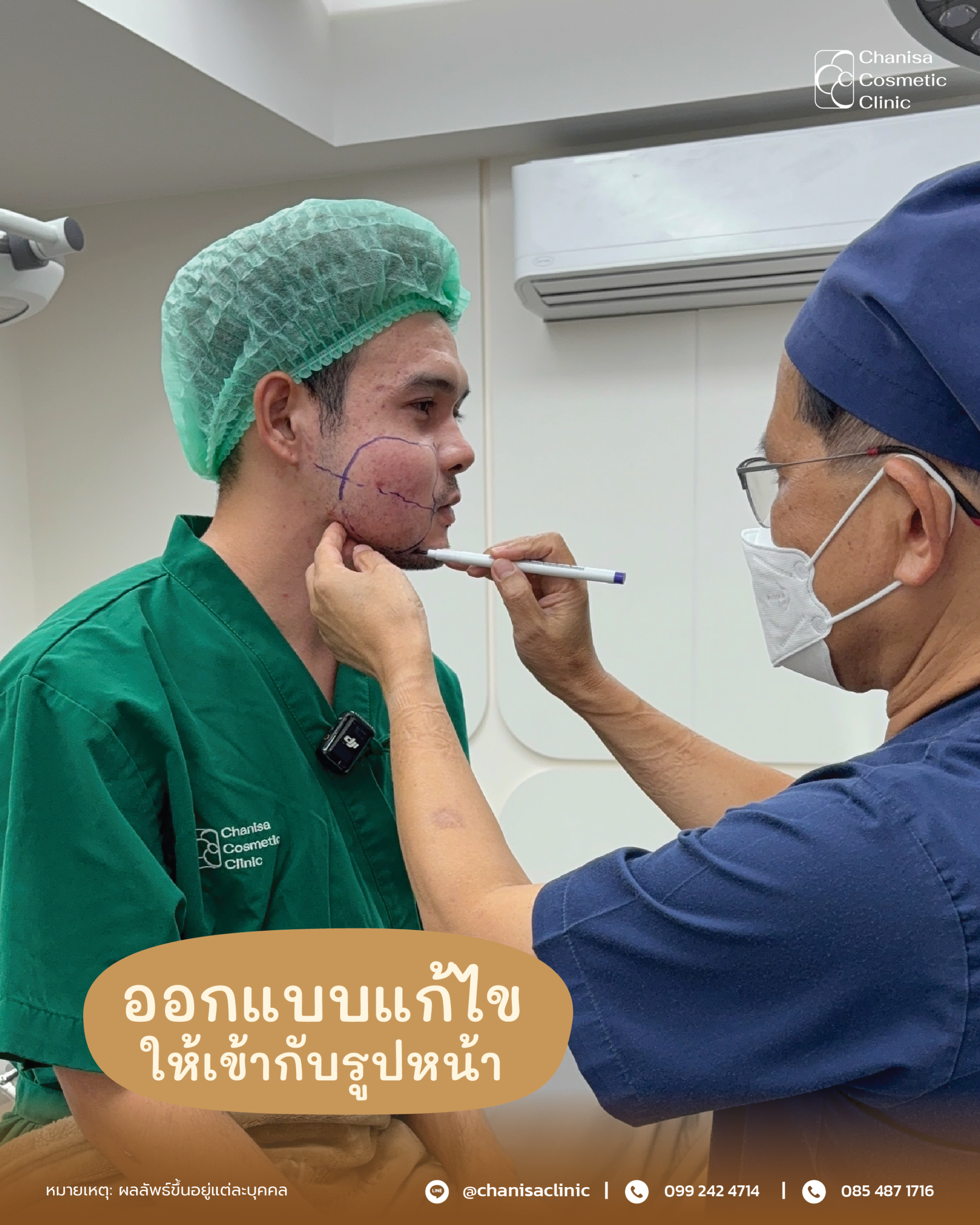
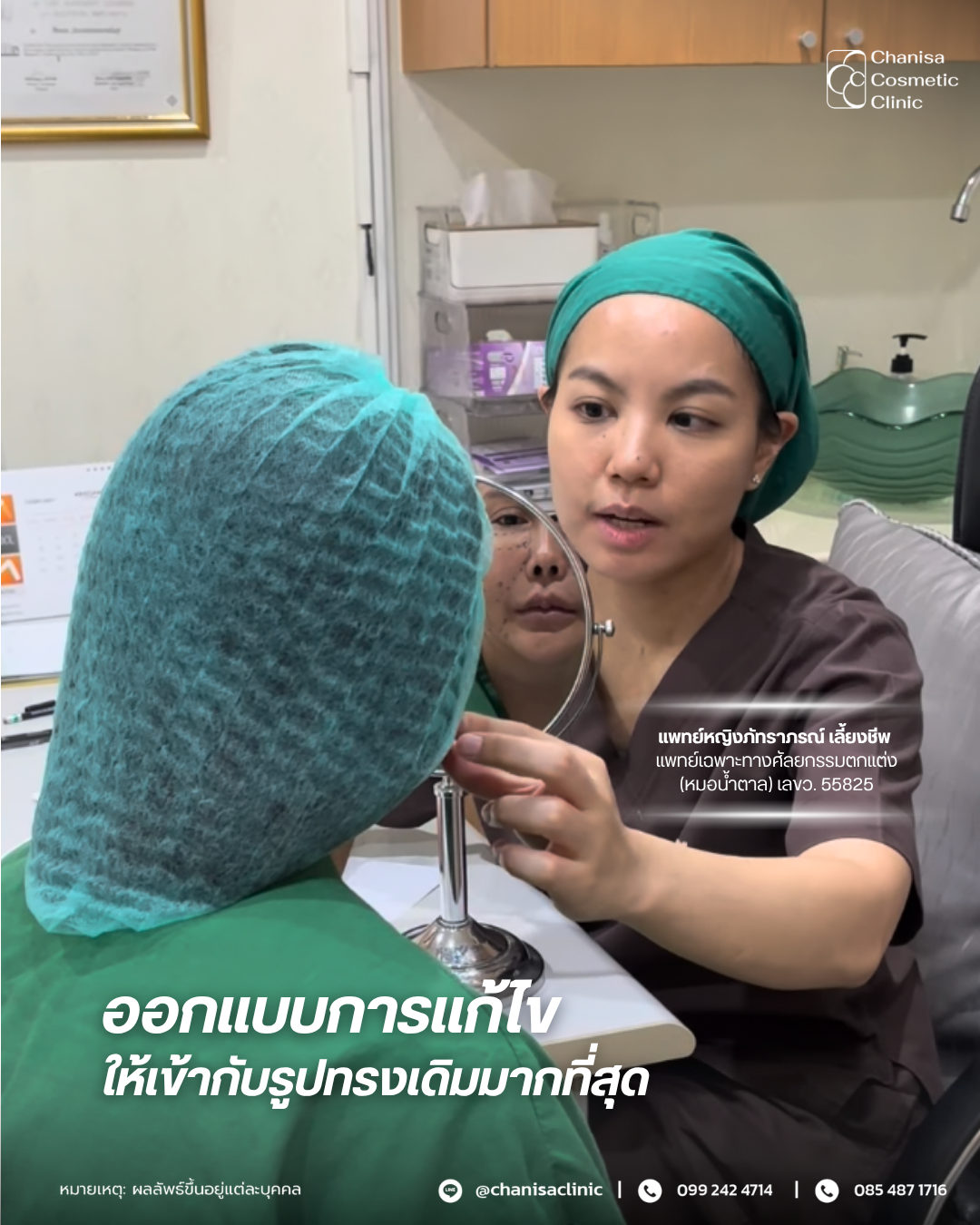
- The doctor marks the areas where some of the foreign material attached to the skin will be broken down and removed by suction.
- A specially formulated solution is injected to separate the foreign material from the skin.
- The doctor marks the areas to be lifted, including the cheeks, outer corners of the eyes, and temples.
- The doctor makes incisions and separates the skin from the foreign material attached to it and from some of the facial connective tissue (the SMAS layer).
- Some of the foreign material that can be accessed is removed during the facelift. The SMAS layer is lifted and secured with sutures to strong connective tissue at the temples, tightening the underlying cheek area for an effective lift.
- The doctor lifts and removes excess sagging skin.
- Once the skin has been properly reshaped and tightened, the doctor closes the incision by suturing the tissue layers in sequence.
The Process for Correcting Liquid Silicone in the Cheeks

Video: Liquid Silicone Correction Surgery in the Cheeks

1. Excision of Liquid Silicone from the Cheekbones, Cheeks, and Around the Eyes

2. Suctioning Liquid Silicone from the Upper Cheek

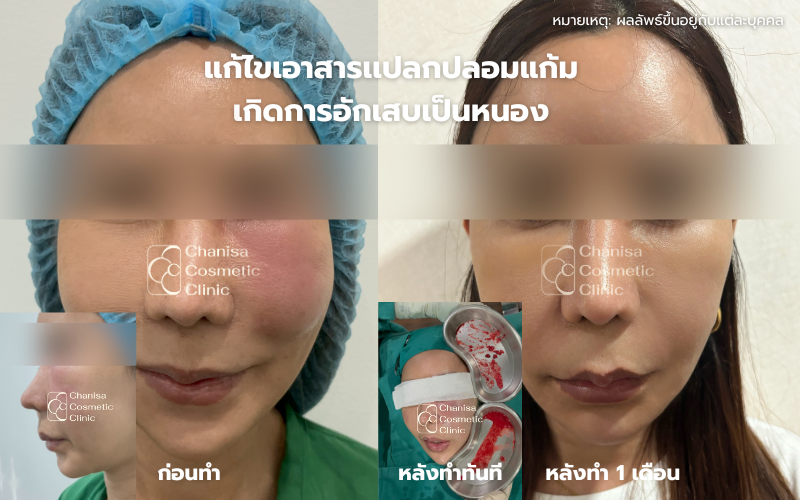
3. Suctioning Liquid Silicone from an Inflamed Area of the Cheek