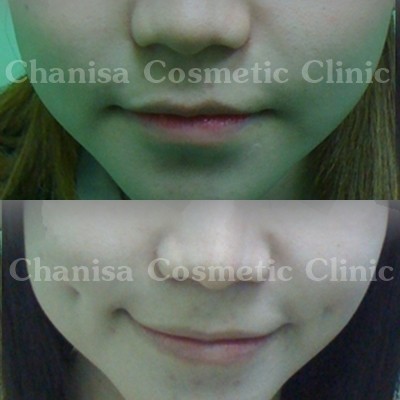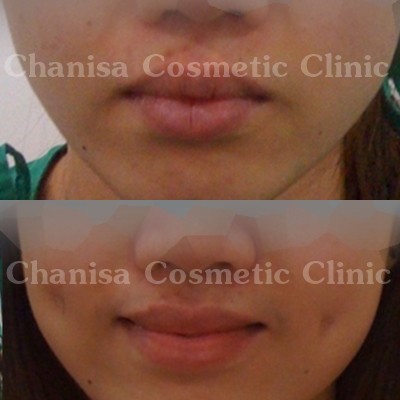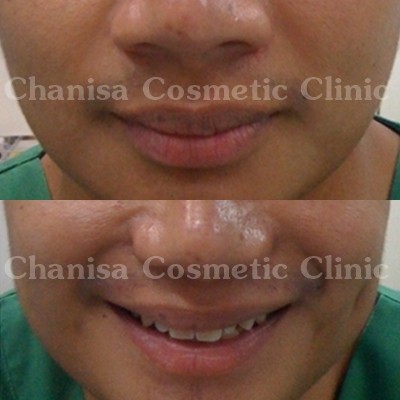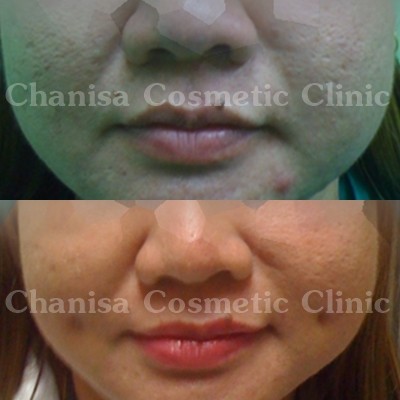
Dimples
A natural indentation on the cheek, a dimple forms where the cheek skin is attached to the underlying cheek muscle, which helps move the mouth. Therefore, when the muscle moves, such as when smiling or talking, it pulls the skin inward at that point, creating a dimple.

Dimple Surgery
The procedure creates an attachment between the skin and the cheek muscle to mimic a natural dimple. The tissues are sutured together and kept attached for a period of time, allowing the body to form fibrous tissue that permanently anchors them.
Dimple Location
In general, the doctor lets the patient choose the location of the dimple. A small-tipped object is pressed against the cheek, and the patient tries smiling until they find a position they like. If the patient is unable to decide, the doctor can offer guidance. Asian dimples are typically located at the intersection of two imaginary lines: one drawn vertically down from the outer corner of the eye and the other horizontally from the level of the corner of the mouth. This intersection is considered an attractive location for a dimple.
General Characteristics of Dimples
1) Dot style creates just a small indentation.
2) Line style usually creates a vertically elongated dimple, about half a centimeter long. Both styles can be done.
Postoperative Care
• After surgery, a dimple appears immediately and remains visible even when you are not smiling Then, about 1–3 months after the procedure, it appears only when you smile. The incision inside the mouth takes about 1–2 weeks to heal.