V-Line Surgery

Facial Slimming or V-Line Surgery
V-line surgery reshapes the face to create a narrower, gently rounded, more tapered chin and an oval-shaped face. It narrows and slims the lower face through two procedures, or either one of them, as follows:
Step 1. Jaw reduction surgery (cutting the jaw angle and removing the outer portion of the bone).
Step 2. Reducing the width of the chin bone.
Treatment Methods
Jaw reduction is considered a relatively simple, uncomplicated procedure, with a short recovery period and good results. The lower-face structure that creates a broad appearance has two main components: a protruding angle of the lower jawbone and the chewing muscle attached to that angle, which is thicker than normal.
- In cases of a large jaw the surgeon removes only the protruding bone, leaving the muscle intact. Importantly, reports indicate that once the protruding bone is trimmed, the attached muscle can shrink on its own.
- For patients with both a large jaw and a large chin jaw reduction alone may not make the face much slimmer because the chin area remains wide. For facial contouring or V-line surgery, the tip of the chin bone is shaped into a T by shaving down the thicker portion while leaving some bone in place. This can improve the result of the surgery; the chin tip changes shape, making the face appear slimmer.
Jaw Surgery Methods
Jaw surgery is performed under general anesthesia so the patient is unconscious and does not feel pain during the operation. In general, there are two methods. The first is performed externally through the skin directly over the angle of the jaw, while the other is performed inside the mouth.
- Extraoral jaw surgery This method involves making an incision directly over the jaw angle to reach the mandibular angles on both sides, then using a small surgical saw to cut at the desired locations. Swelling after surgery is generally mild, but this method is now less popular because it can temporarily affect the nerve supplying the corners of the mouth. Most importantly, it leaves surgical scars (approximately 2–3 cm) on both sides.
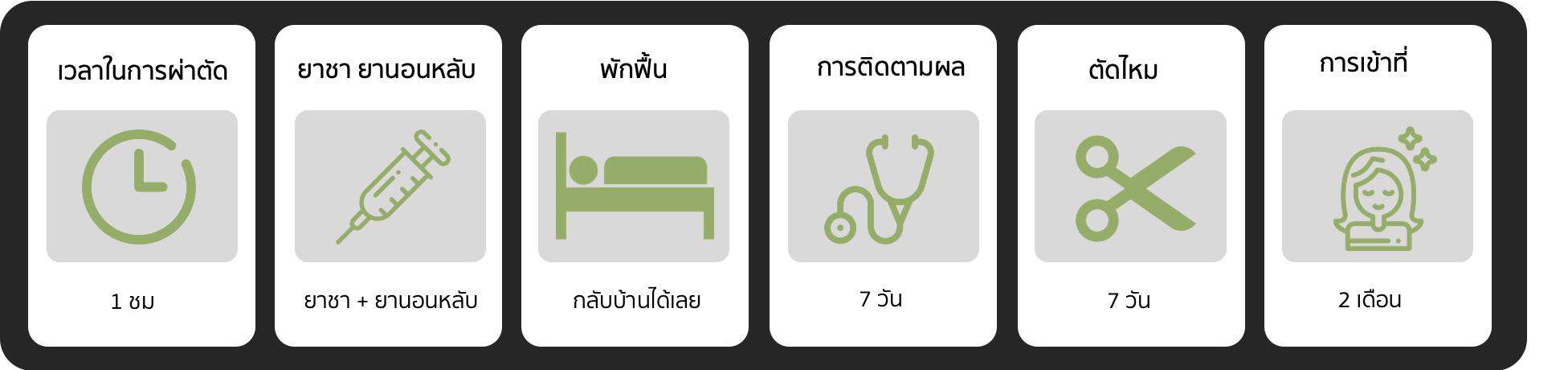
- Intraoral jaw surgery This method involves making an incision through the gum behind the molars to reach the mandibular angle, avoiding the nerve supplying the muscles at the corners of the mouth. It also allows reshaping along the entire jawbone, as the incision can be longer without concern about a visible scar; the incision is hidden in the gum behind the last tooth. Jaw surgery performed through the mouth causes swelling, especially during the first 5–10 days. At first, swelling may make it difficult to open the mouth widely because of tightness in the surrounding tissues. As the swelling gradually subsides, the mouth can be opened progressively wider. To prevent stiffness in the joint, regularly open the mouth to move the jaw joint. There may also be some wound pain during the first 3–4 days. Some patients may experience a slight feeling of ear fullness due to vibrations during surgery; this is temporary. After about 2–3 weeks, facial swelling begins to subside and the face starts to settle into shape. The desired facial contour is generally achieved around 4–6 weeks after surgery.
Care After Jaw Surgery
- Avoid eating on the first day after surgery to prevent food debris from irritating the wound.
- Initially, avoid hard foods. Have milk, fruit juice, and soft foods, then gradually return to a regular diet.
- Try to open your mouth frequently to move the jaw joint, prevent it from becoming stiff, and help prevent jaw locking.
- Apply a cold compress to the cheeks for about 7 days.
- The wound inside the mouth is usually closed with dissolvable sutures, so they do not need to be removed.
- Rinsing frequently with clean water helps wash away blood from the wound.
- A drainage tube is usually left in place for about 1–2 days.
- Bruising may appear on the neck and under the chin after surgery. On the seventh day after surgery, a warm compress may be used to help reduce the bruising.
- The face generally settles within 2–3 weeks, although swelling at the jaw angles may persist for 1–2 months.
The V-Line Procedure