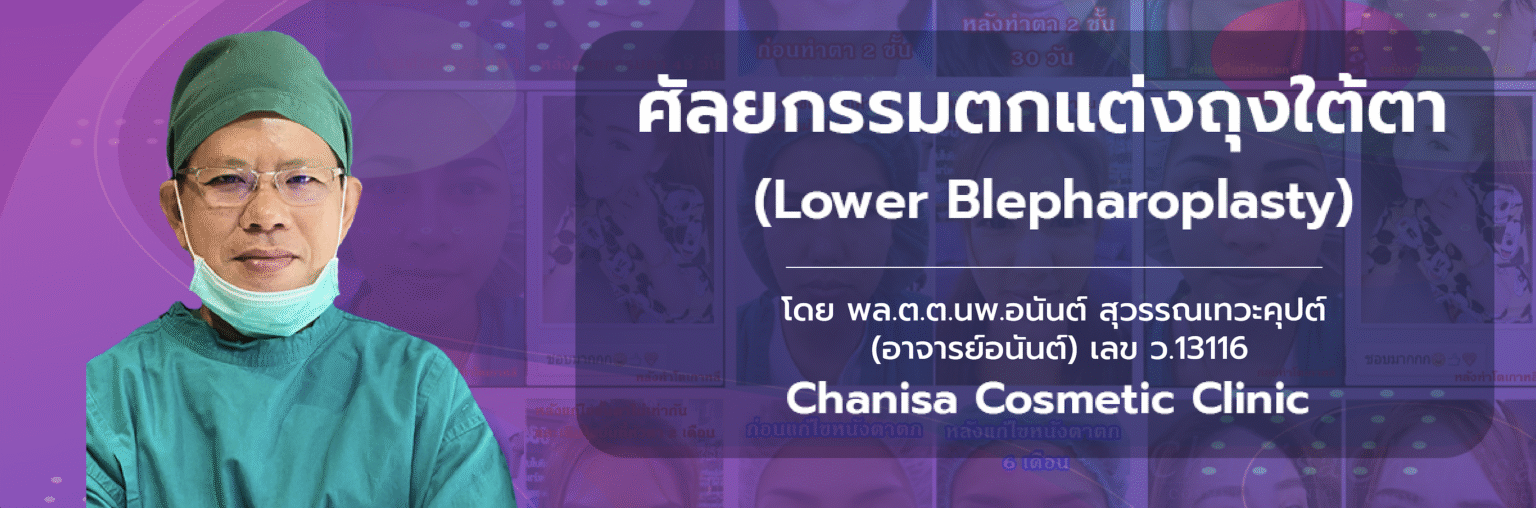
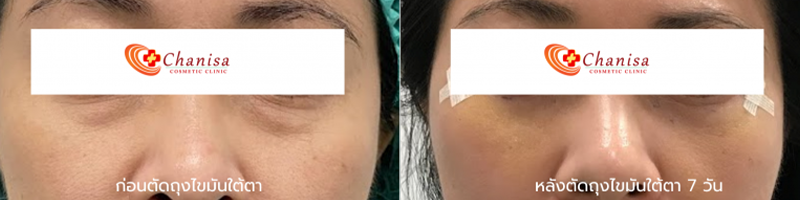
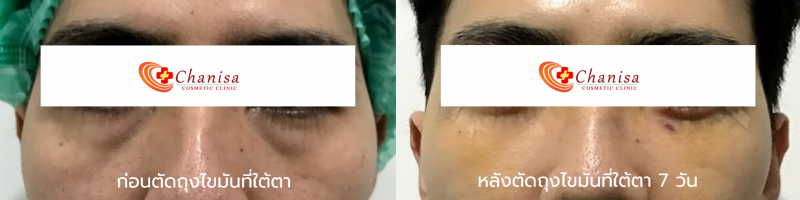
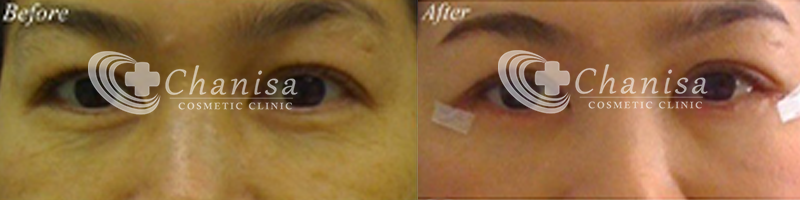
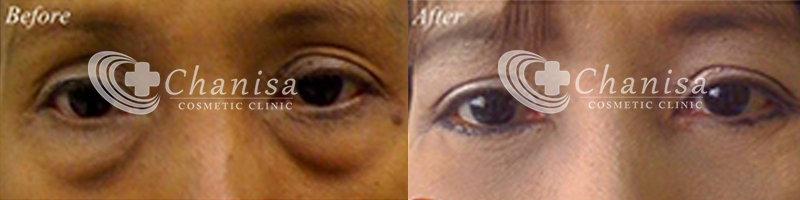
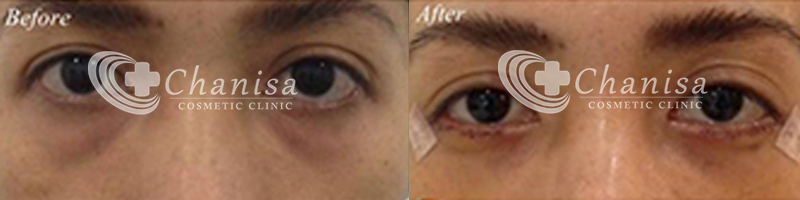
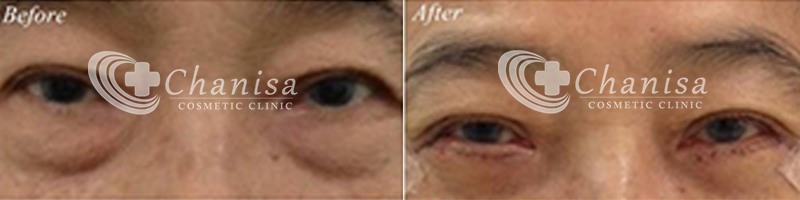
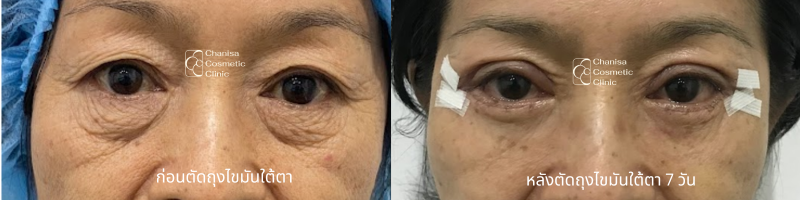
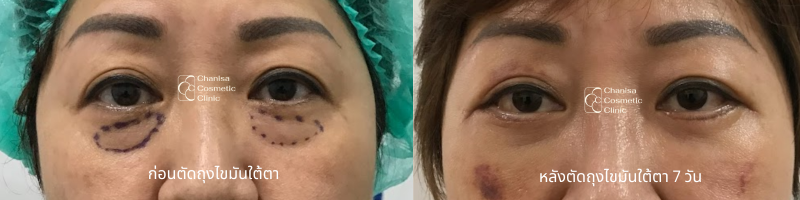
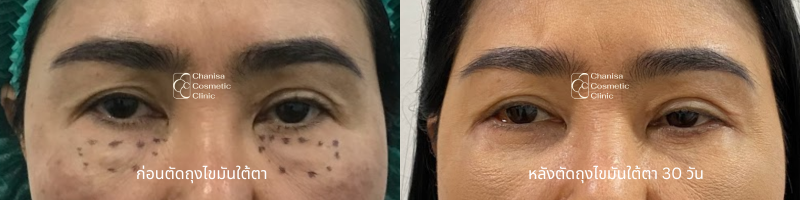
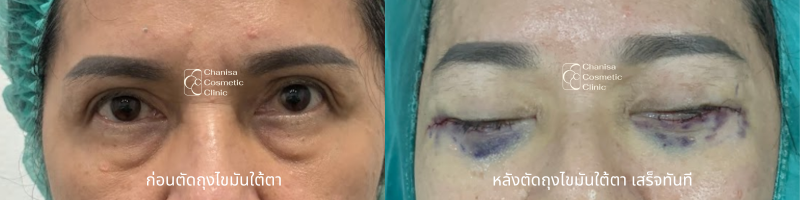
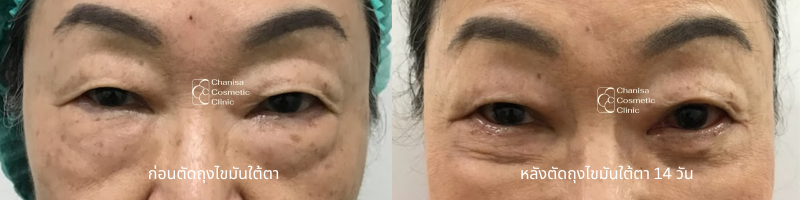
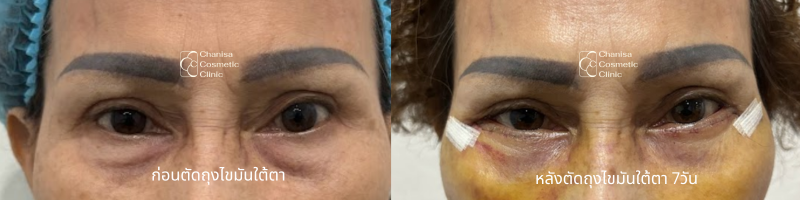
Under-eye bags occur when fat in the lower eye socket bulges outward, making the lower eyelid look puffy and unattractive. They are most commonly seen with age, as the skin begins to sag, but some people develop them at a young age. The most effective way to reduce under-eye bags is to surgically remove the fat and correct laxity in the lower eyelid skin and muscle. Liposuction under the eyes cannot be performed because the area is close to an important organ: the eye.
There Are Two Surgical Methods
Method 1: External incision An external incision is made in the skin along the lash line. One drawback is that a scar may remain next to the eyelashes, but once healed, it is usually barely visible or blends in smoothly. This method can remove excess skin, fat, and muscle, helping reduce wrinkles under the eyes.
Method 2: Lower eyelid fat removal through the inner eyelid lining allows the surgeon to remove fat from inside the eyelid. This method is suitable for people with lower eyelid fat pads but no drooping or loose eyelid skin. Its advantages include no external incision and the ability to address fine wrinkles. However, it cannot remove excess eyelid skin or crow’s feet. The surgery is performed using electrocautery or a laser.
Surgical Procedure
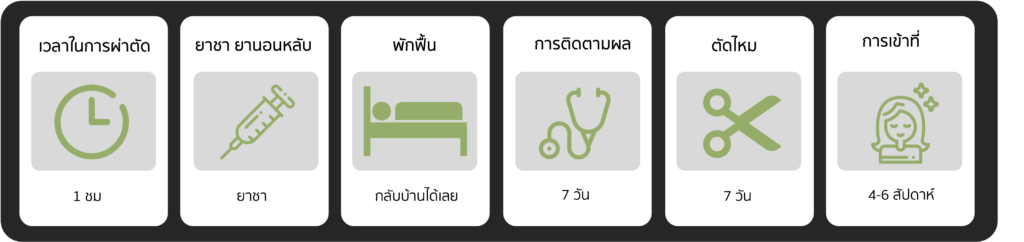
Anesthetic is injected into the lower eyelid area, sometimes with mild sedation.
A long, straight incision is made in the lower eyelid just below the eyelashes to remove excess fat beneath the lid.
The lax muscle and skin of the lower eyelid are trimmed and sutured to create a smooth, firm contour.
The incision is closed with fine sutures placed close to the lower lashes.
Postoperative Care
To reduce swelling, sleep with your head elevated and apply cold compresses to both eyes four times a day for approximately 3–7 days.
Take all medication as prescribed. If you have an allergic reaction, such as itching, a red rash, nausea or vomiting, or chest tightness, stop taking the medication immediately and see a doctor promptly.
Return to have your stitches removed 5–7 days after surgery.
After the stitches are removed, your eyes may remain swollen for about 2 weeks to 1 month. The incision should heal and look natural in about 3 months.
If bruising occurs, you may apply warm compresses starting 2 weeks after surgery, 2–3 times a day for approximately 3–5 days.
If you notice any unusual symptoms around the incision, such as significant eye redness, irritation, or the wound opening, see a doctor immediately.
You may wear contact lenses after 7–14 days.
Avoid alcohol and smoking for 2 weeks after surgery.
Possible Complications
The eyelids may not close completely. On the first day, you may have difficulty closing your eyes fully, but after a few weeks, you should be able to close them completely.
Dryness or a gritty sensation in the eyes may cause excessive tearing and blurred vision. This can happen if too much skin and fat is removed from the lower eyelid, causing it to retract. These symptoms are usually temporary and resolve within a few days or weeks.