Breast Reduction
Breast Reduction Surgery
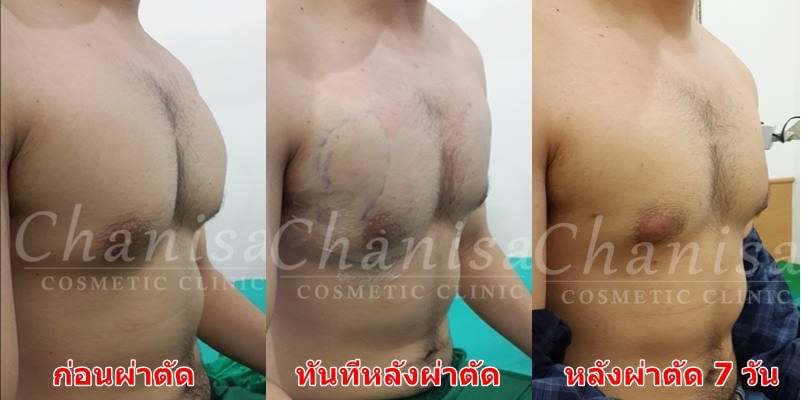
This surgery is commonly performed for people with abnormally large breasts, and may be needed by both women and men. In women, abnormally large breasts (breast hypertrophy) may develop during puberty or later, or after breastfeeding. Breast enlargement may persist after breastfeeding has stopped, or may be caused by certain tumors. In men, abnormally large breasts (gynecomastia) often develop during adolescence. Many cases resolve on their own, but some do not. In adults, certain liver diseases may cause breast enlargement, as can taking hormones in preparation for gender transition.

Treatment
- Liposuction under local or general anesthesia
- Breast surgery under general anesthesia
Surgical Methods
There are many techniques for breast reduction, depending on the surgeon, but all require an incision around the areola. Before surgery, the surgeon measures the breasts and marks the incision sites, the position for repositioning the nipples to a near-normal level, the amount of breast tissue to be removed, and the incision pattern to be used. The two main techniques commonly used for breast reduction are:
1. Surgery through an incision around the areola
This procedure is selected only for patients with small breasts and breast skin that is not so lax that it cannot retract sufficiently on its own over time. Typically, patients have breast sizes around Cup A to B. The advantages are minimal scarring; scars are usually well concealed and often barely visible in the long term. A disadvantage is that the skin may contract unevenly. If the skin is also relatively lax, excess breast skin may remain in some cases.
2. Surgery involving removal of breast skin
This method is used for patients with fairly large breasts and a substantial amount of excess skin. If only the breast tissue is removed, the remaining skin will sag, leaving an uneven chest rather than a flat, typically male chest contour. This can be difficult to correct. Therefore, excess chest skin must also be removed and the area closed smoothly, and the nipple and areola must be repositioned (nipple and areolar graft). This method leaves an unavoidable anchor-shaped scar on the chest (inverted T-shaped scar). Nipple sensation is reduced compared with method 1 (an incision around the areola), and healing takes longer. Surgical drains remain in place for 2–4 days, and the patient stays in the hospital for 2–4 days until they are removed. The patient can then continue recovering at home until the stitches are removed, which may be between days 7 and 12.
Possible Complications
As with any surgery, possible complications include problems during anesthesia, wound separation, surgical-site infection, tissue necrosis, nipple numbness, and partial or complete nipple necrosis. These issues should always be discussed with a surgeon before surgery for abnormally large breasts.
Surgical Procedure