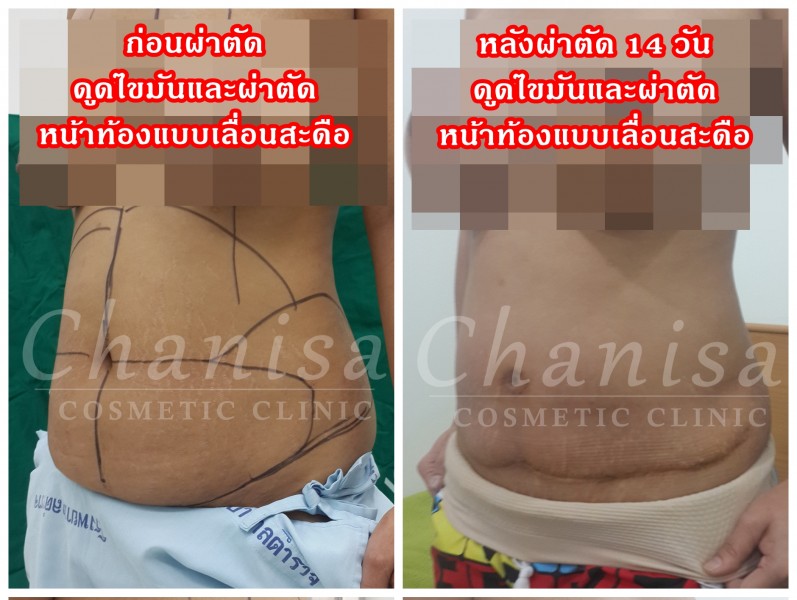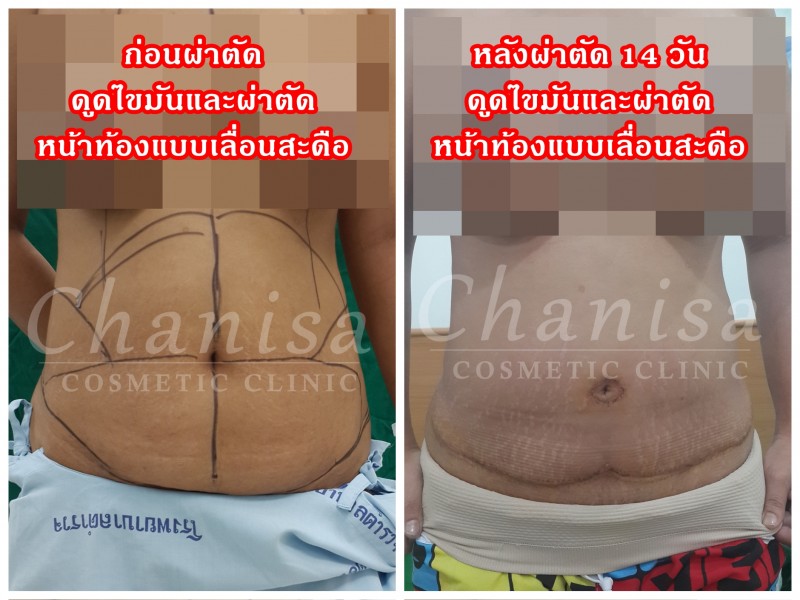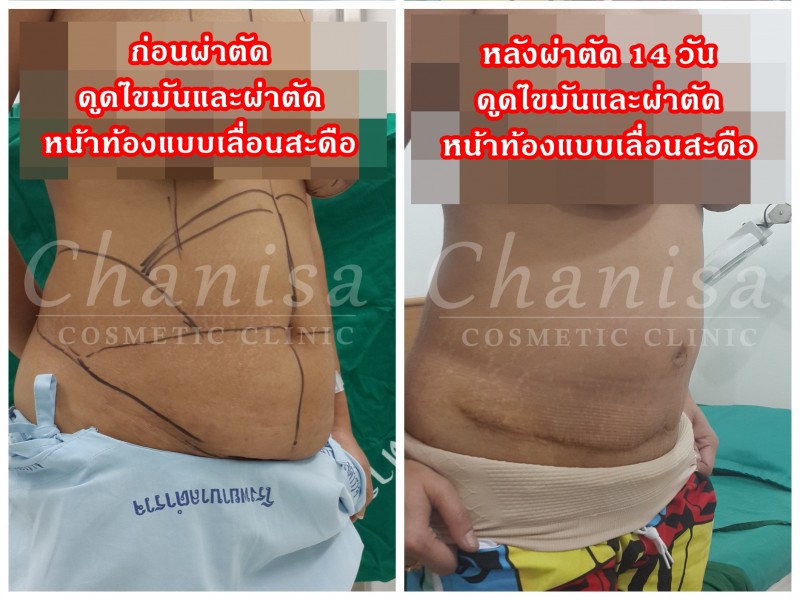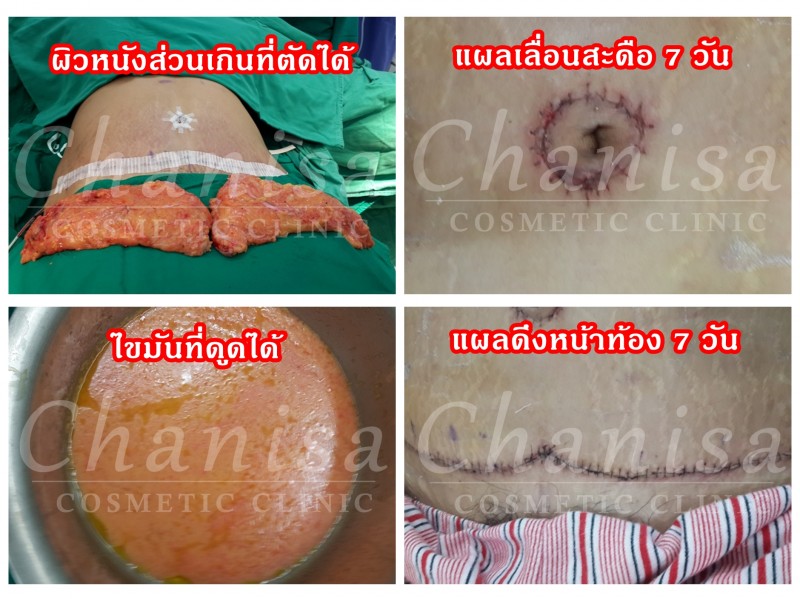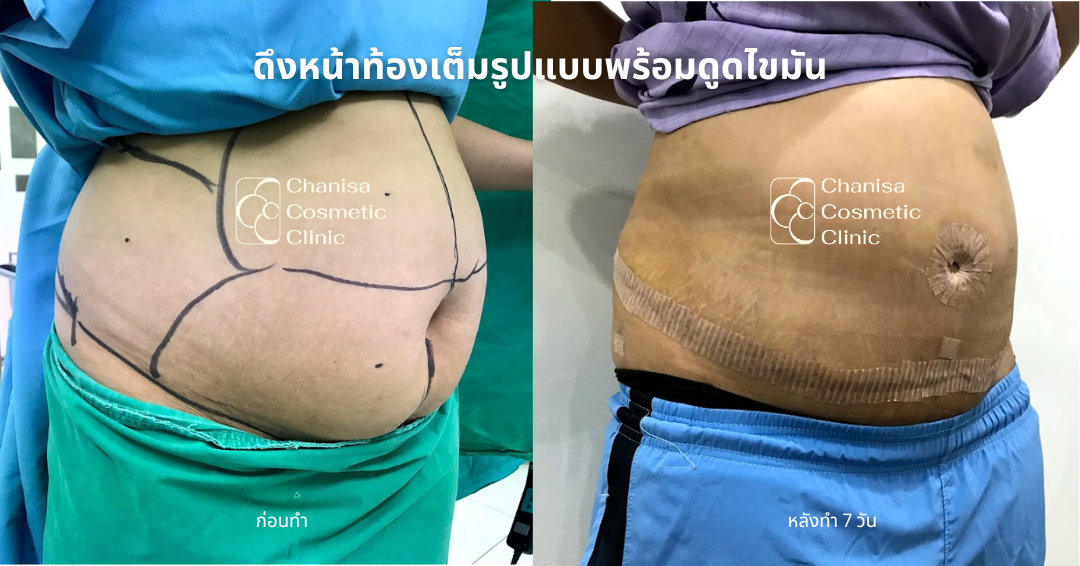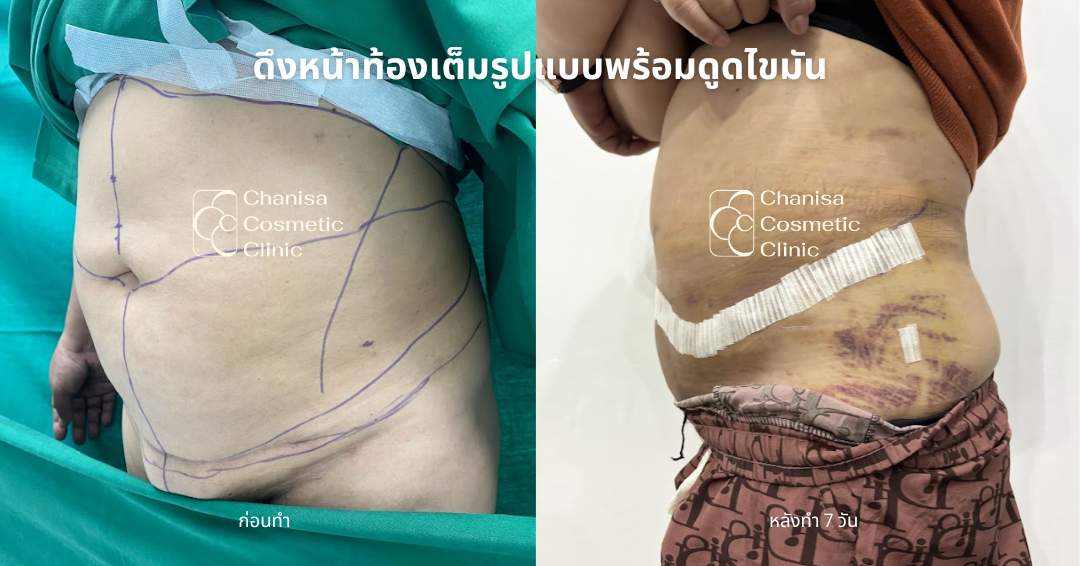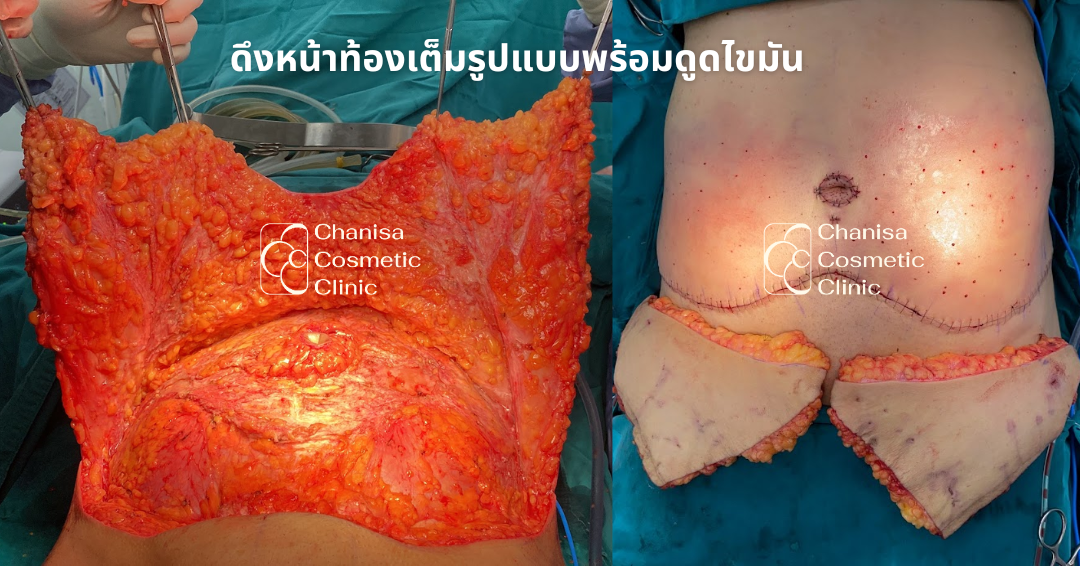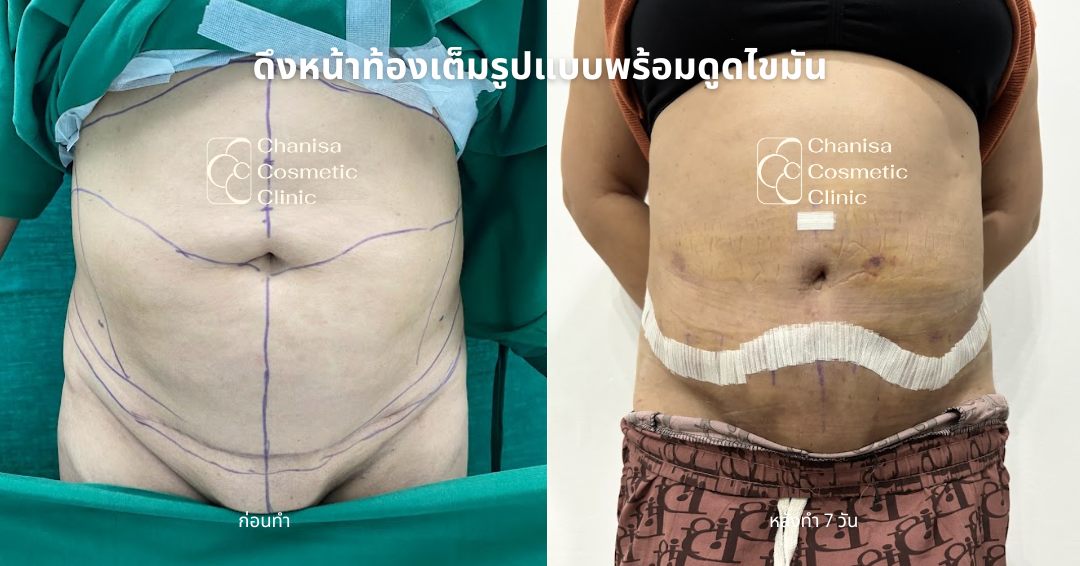
Tummy Tuck
Who Is a Suitable Candidate for a Tummy Tuck?

Preoperative Consultation
1. The amount of fat to be removed
2. Whether you would also like liposuction
3. The appropriate surgical method to use
4. The desired appearance of the navel
5. Discuss the size and length of the scar with the doctor
What Are the Different Types?
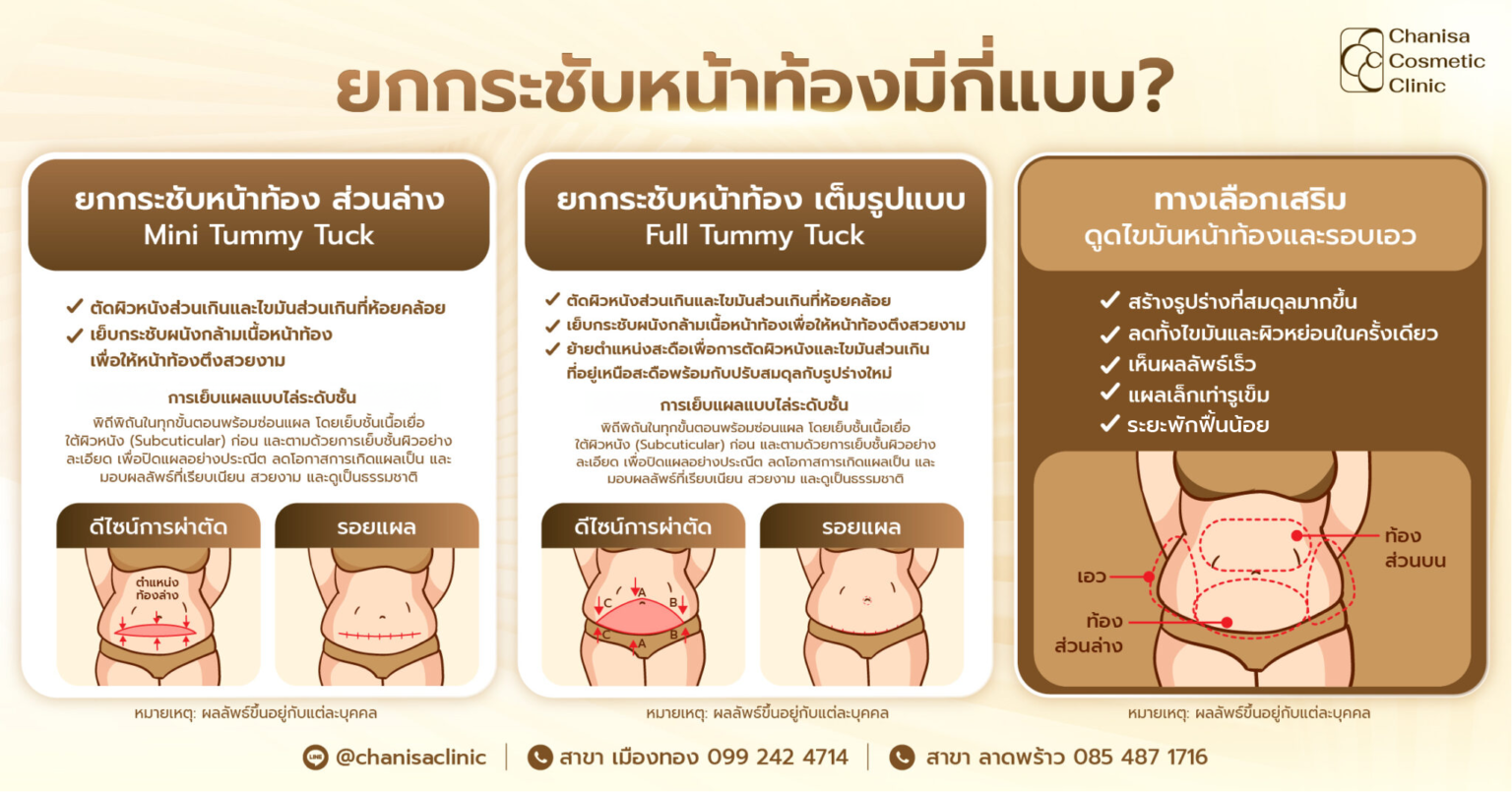
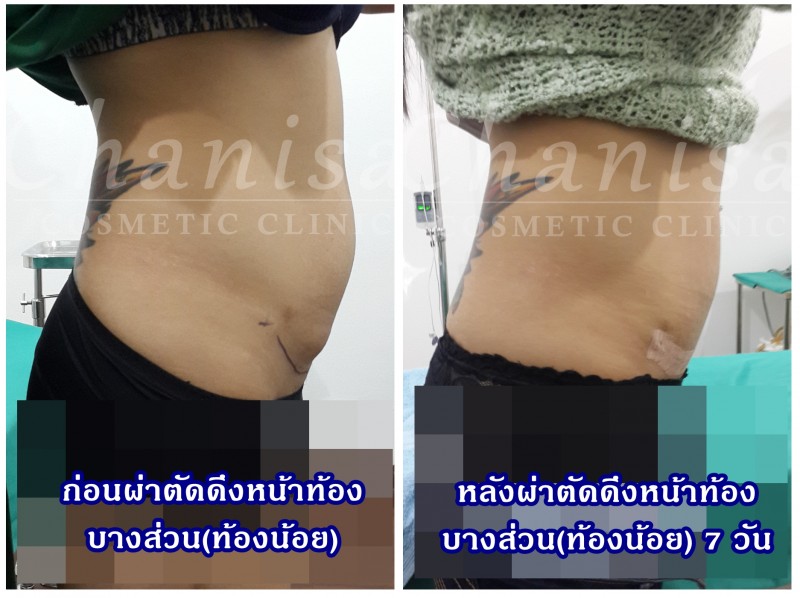
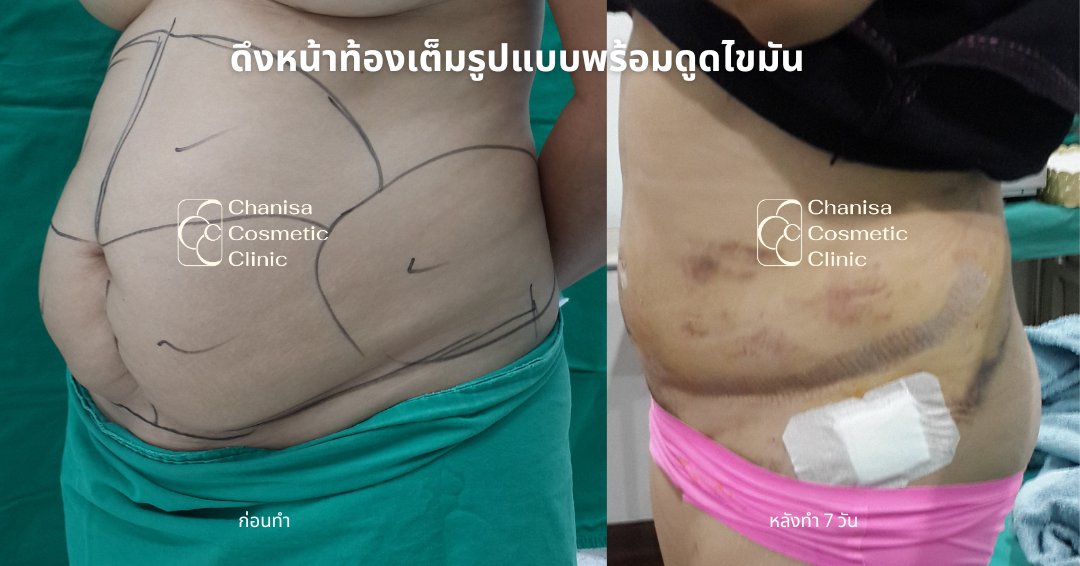
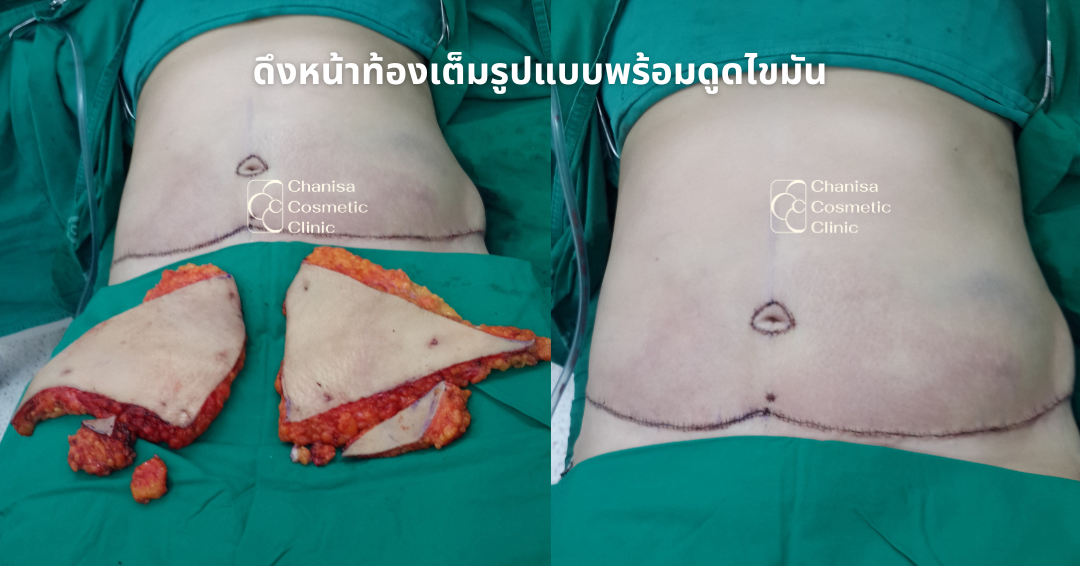
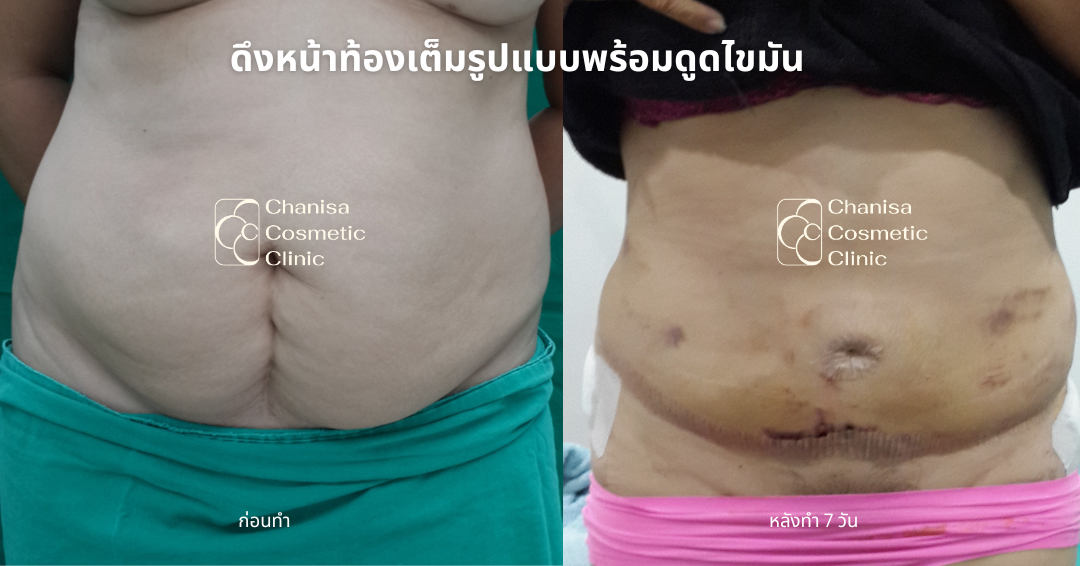
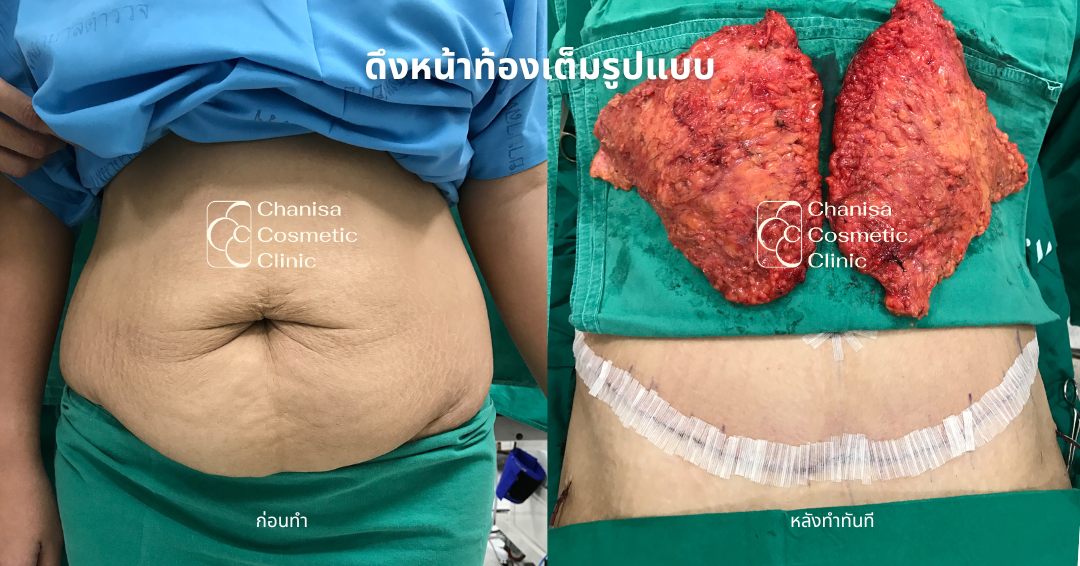
Type 1: Mini tummy tuck for lower-abdominal laxity (Mini Tummy Tuck) This procedure focuses on tightening only the lower abdomen below the navel. It works well for people who have never been pregnant or whose skin has become loose after weight loss. Only excess skin and fat are removed, and the navel does not need to be repositioned.
The preoperative consultation usually covers the following details
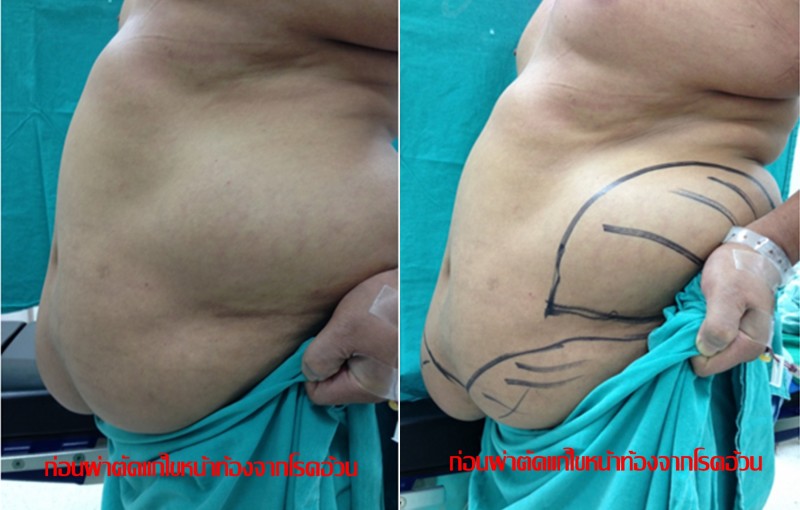
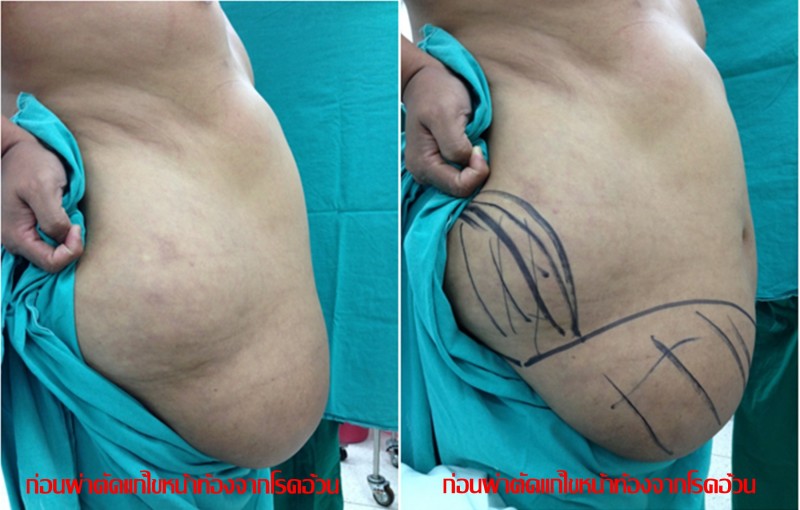
1. Laxity of the lower abdominal wall. If there is excess skin and significant sagging, the skin can be pulled together while the patient is bent forward to assess how much tightening is possible. If the skin cannot be brought together, care may be needed not to remove too much. This assessment can determine the appropriate tension for patients without complicating factors. For people with a thick layer of fat, diabetes, or a smoking habit, care must be taken not to pull the skin too tight, as they are at greater risk of delayed wound healing, wound separation, or infection.
2. Laxity of the upper abdomen. After surgery, the skin above the navel is pulled down toward the pubic area. If there are stretch marks above the navel, the marked skin will be moved to the area above the pubic hairline. For a Type 2 procedure, if the upper abdominal skin and muscles are very loose, more skin above the navel than usual may need to be removed as well.
3. Laxity of the abdominal muscles. In some people, the skin is not very loose, but the abdomen protrudes because of significant muscle laxity. A tummy tuck also involves tightening the abdominal muscles to reduce laxity in the abdominal wall. Extra care is needed for people with respiratory problems.
4. Liposuction. People with a thick layer of fat often have bulges on the sides of the body after the excess fat is removed because fat remains along the flanks. Liposuction may also be needed to improve the body contour. If liposuction is used to reduce the thickness of tissue in the upper abdomen, care may be needed because this area contains blood vessels that supply the skin below.
5. Previous surgical scars. All existing abdominal scars must be considered when planning the position of the new incision, including whether the previous scar will need to be removed in its entirety.
Postoperative Care
1. After surgery, stay in the hospital for at least 1–2 days. Lie in a bent position and urinate into a catheter while in bed.
2. On the second day, you may walk around the bed while bent over. It may take about 1–2 weeks before you can stand up straight.
3. Once the doctor removes the drainage tube, you may shower. Pat the incision dry afterward.
4. Swelling will be at its worst during the first 3 days, then subside over 2–4 weeks. It should go down fully within 3 months, with the final results settling within 6 months.
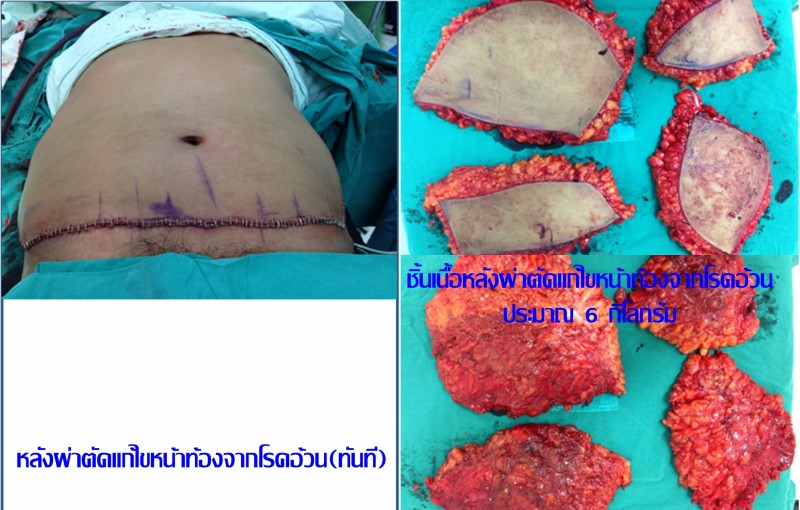
5. The incision will be noticeable at first and should gradually improve over 6 months to 1 year.
6. After returning home, keep the incision dry. If gauze is still covering it, do not remove the gauze yourself.
7. The doctor will schedule removal of your stitches after 7 days and have you apply a scar sheet for about 4 weeks.
8. Once the pain subsides, start walking slowly to help reduce swelling.
9. Wear an abdominal binder for at least 6 weeks to support your abdomen.
10. Take medication as prescribed. Do not take aspirin-based pain relievers.
11. You may feel numbness around your abdomen for about 6 months or longer. This is normal, and sensation should gradually improve.
12. During recovery, if you need to cough, sneeze, laugh, or have a bowel movement, hold a pillow firmly against your abdomen to reduce strain on the muscles in that area.
13. Avoid foods that cause constipation. Eat vegetables and fruit and drink plenty of water to help prevent constipation.
14. Avoid alcohol for 3 weeks after surgery, as it may cause lymph fluid to collect in the incision.
15. Do not smoke for at least 2 weeks after surgery, as smoking slows wound healing.
16. Sleep with your head and knees elevated, using two pillows under your head and one under your knees.
17. The scar may become raised. You may massage the incision area morning and evening for about 10 minutes each time.
18. Wear snug-fitting underwear for about 1 month to help achieve a good shape and reduce swelling.
19. Avoid heavy work or strenuous exercise for 6 weeks.
20. Do not lift anything heavier than 2–5 kg for 6 weeks.
21. Avoid exercises that strain the abdominal muscles, such as sit-ups. Refrain from strenuous exercise for about 6 weeks.
22. Do not soak in a bathtub until your stitches have been removed.
23. Follow-up appointments to check the abdominal incision will be scheduled every month. If you develop a raised scar, injections may sometimes be used to treat it.
24. If you are planning to have another child, you should not undergo a tummy tuck, as your abdomen may sag and develop stretch marks again after childbirth.