Chin Contouring
Flat Chin
Causes
- The chin shape may have been designed in a way that is unsuitable for the patient’s underlying tissue and overlying skin. For example, if the tissue or skin is thin or insufficient, it may not provide adequate support.
- The patient’s original chin bone structure may have been large or deformed.
- The patient may have previously undergone one or more chin-shaping procedures, surgery to remove foreign substances such as liquid silicone, chin bone surgery, or surgery following a chin fracture caused by an accident. These factors may cause contracture and hardening of the chin tissue and skin, and some tissue or skin may be missing.
- Other factors may need to be assessed on a case-by-case basis.
Treatment
In general, treatment should be based on the actual condition of the tissue and skin around the chin, the chin bone structure, and the patient’s history of previous surgeries. Areas that are lacking should be filled, while excess tissue should be removed or reduced according to the surgeon’s findings. The appropriate revision method should be discussed and agreed upon by the patient and the surgeon. The main treatment options include:
1. Using the patient’s own tissue, such as fat injections to restore volume.
- Advantages: It uses the patient’s own tissue and generally does not cause complications.
- Disadvantages: It offers limited contouring, and the fat may be reabsorbed.
2. Chin bone osteotomy, suitable for people with an adequate chin bone structure—not one that is very small or short.
- Advantages: The shape is easy to adjust, the result is permanent, and the risk is low.
- Disadvantages: It is major surgery and requires general anesthesia.
3. Chin augmentation with a silicone implant, suitable for patients with healthy, normal tissue.
- Advantages: It is quick and straightforward, uses local anesthesia, and can provide a reasonably good shape depending on the patient’s tissue condition.
- Disadvantages: The silicone implant may shift during the initial period, or inflammation may occur as a reaction to the implant.
4. Filler injections, suitable for people who want quick results.
- Advantages: No surgery is required, and recovery time is short.
- Disadvantages: The results are not permanent because the filler may break down, and only a limited degree of reshaping is possible.
Protruding Chin
Causes
- Hereditary factors
- This may result from surgery in which the chin shape was not designed to suit the patient’s facial proportions, causing the chin to protrude or droop abnormally, regardless of the type of procedure.
- This may result from injections of foreign substances, such as liquid silicone or non-dissolving fillers. Over time, these may migrate, causing the chin to sag and form hard, nodular lumps.
- This may result from accidents involving the soft tissue, skin, chin bone, or teeth, which can cause structural deformity.
Treatment
In principle, treatment should address the cause of the patient’s protruding chin. Possible approaches include:
- If the cause is hereditary or due to an accident, treatment may involve reshaping the bone and soft tissue.
- If the cause is surgery that was not suited to the patient’s facial shape, revision may involve reshaping the chin and using an appropriate material.
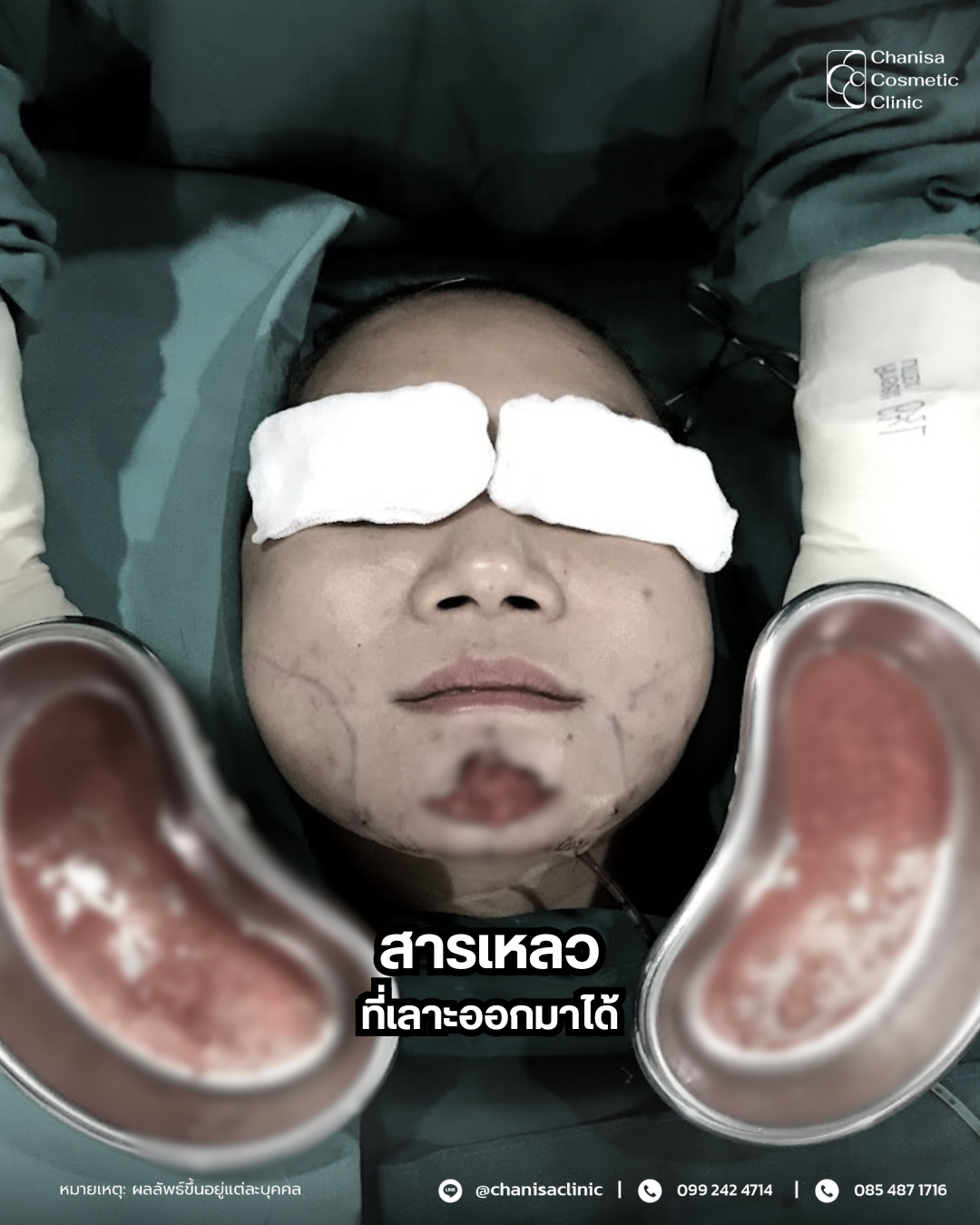
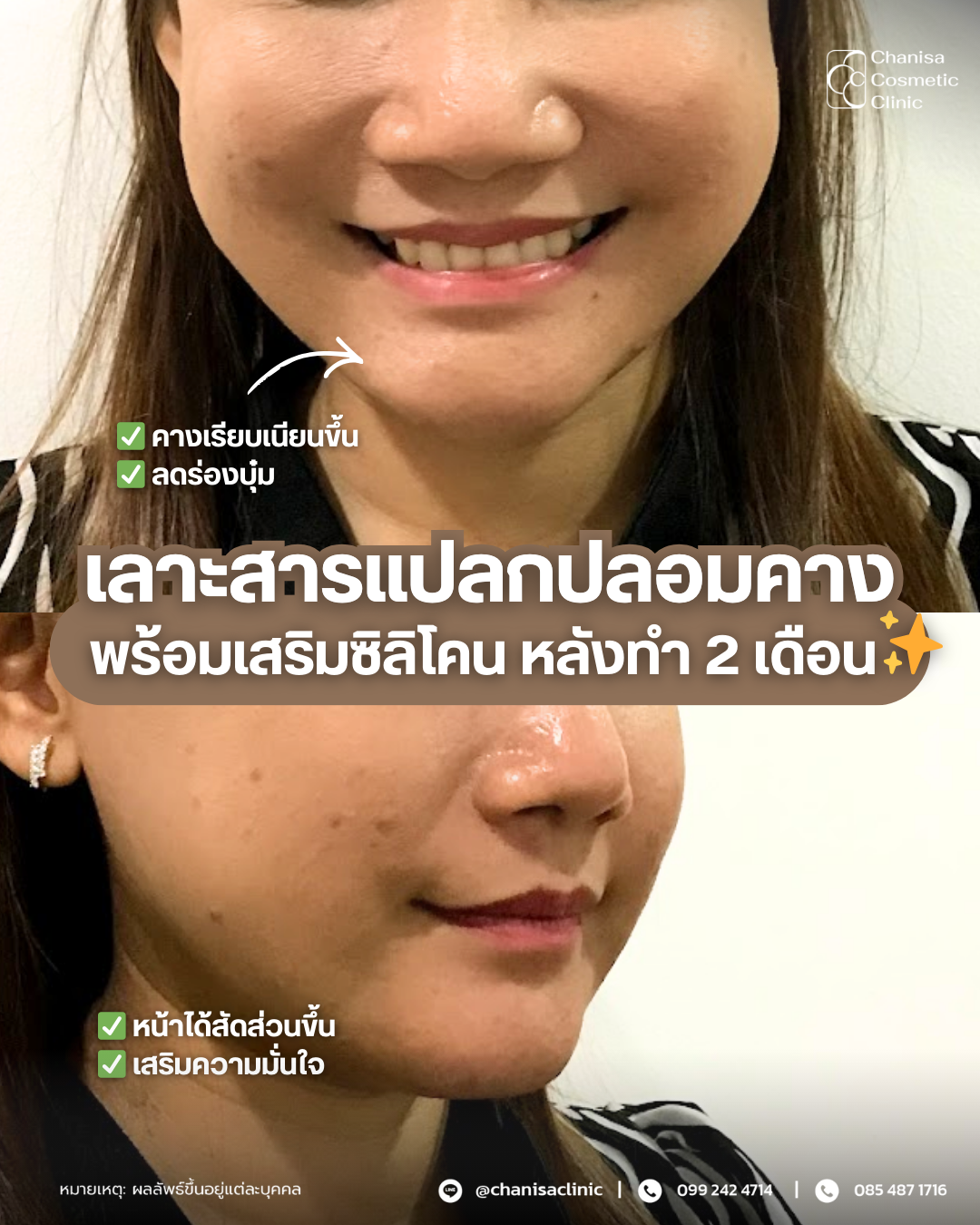
- If the cause is injections of foreign substances, surgery may be needed to remove the substance causing the problem. The chin shape can then be reassessed and supported with a silicone plate or another type of silicone implant after removal.
Dimpled or Short Chin
Causes
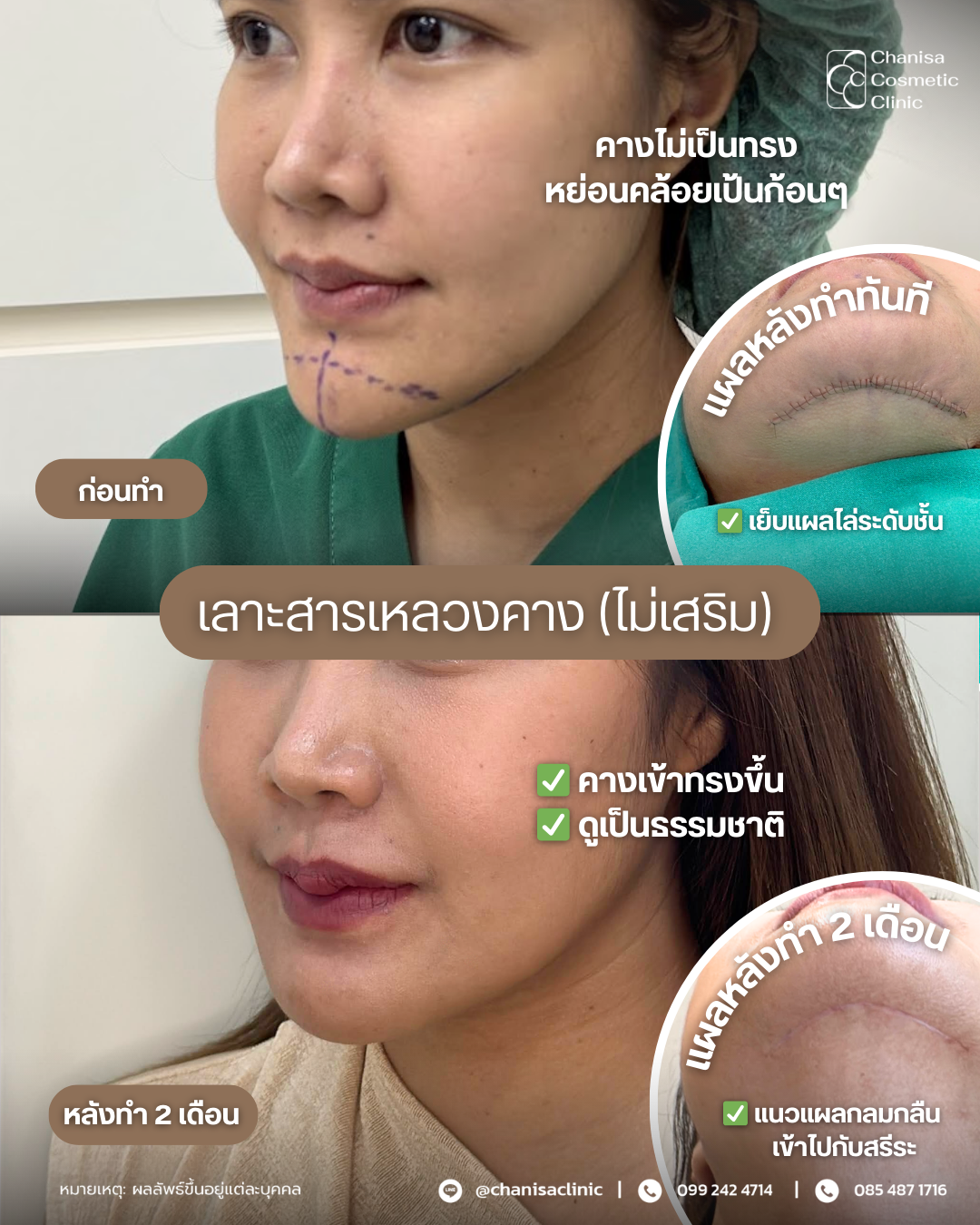
These conditions may occur after chin surgery, whether chin augmentation, chin reduction, or surgery to remove foreign substances. They may cause patients concern and lead them to seek revision. These cases are usually not major problems, and the likelihood of successful correction is relatively high, provided the treatment plan is discussed with a surgeon.
Treatment
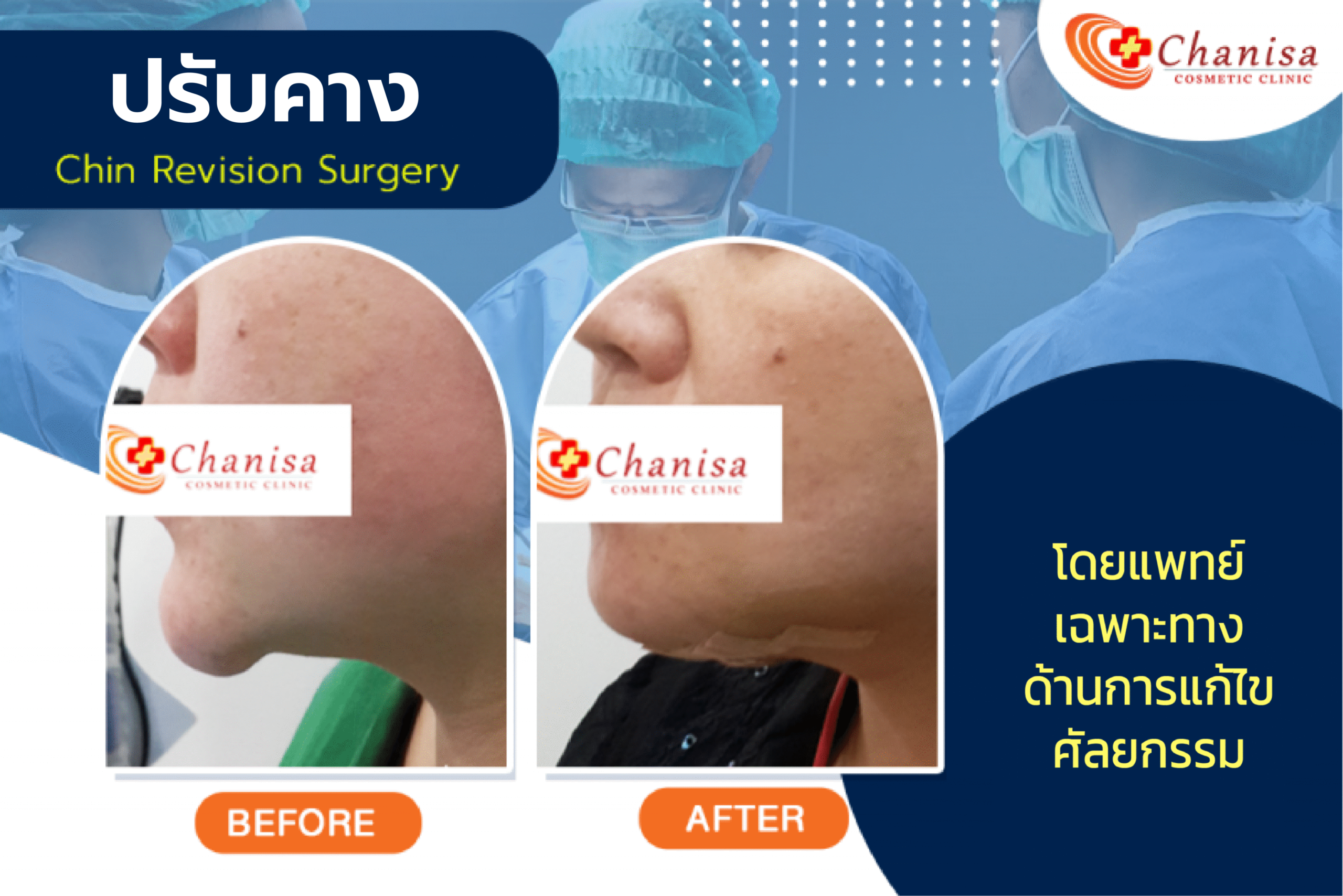
When revising a chin with ongoing inflammation or silicone extrusion, patients have usually experienced warning signs beforehand. These may include excessive tightness, skin that is too thin or translucent, the shape of the implant showing too clearly, or inflammation accompanied by symptoms such as swelling, redness, warmth, clear fluid, or pain. If these symptoms persist for too long, the implanted silicone may eventually protrude through the skin. The best approach is to see a doctor as soon as symptoms begin; early treatment can improve the outcome and may prevent significant damage to the chin’s shape. If extrusion or inflammation has already occurred, treatment may require several steps in a specific order and may not be completed in one session. Discuss the treatment plan with your surgeon. It may involve removing the silicone implant and allowing the tissue to rest before considering chin contouring, or grafting tissue and fat when the implant is first removed to prepare the tissue for future augmentation. These steps should be decided together with the treating surgeon, as the chin may otherwise become severely deformed.
Chin Deformity Caused by Liquid Silicone
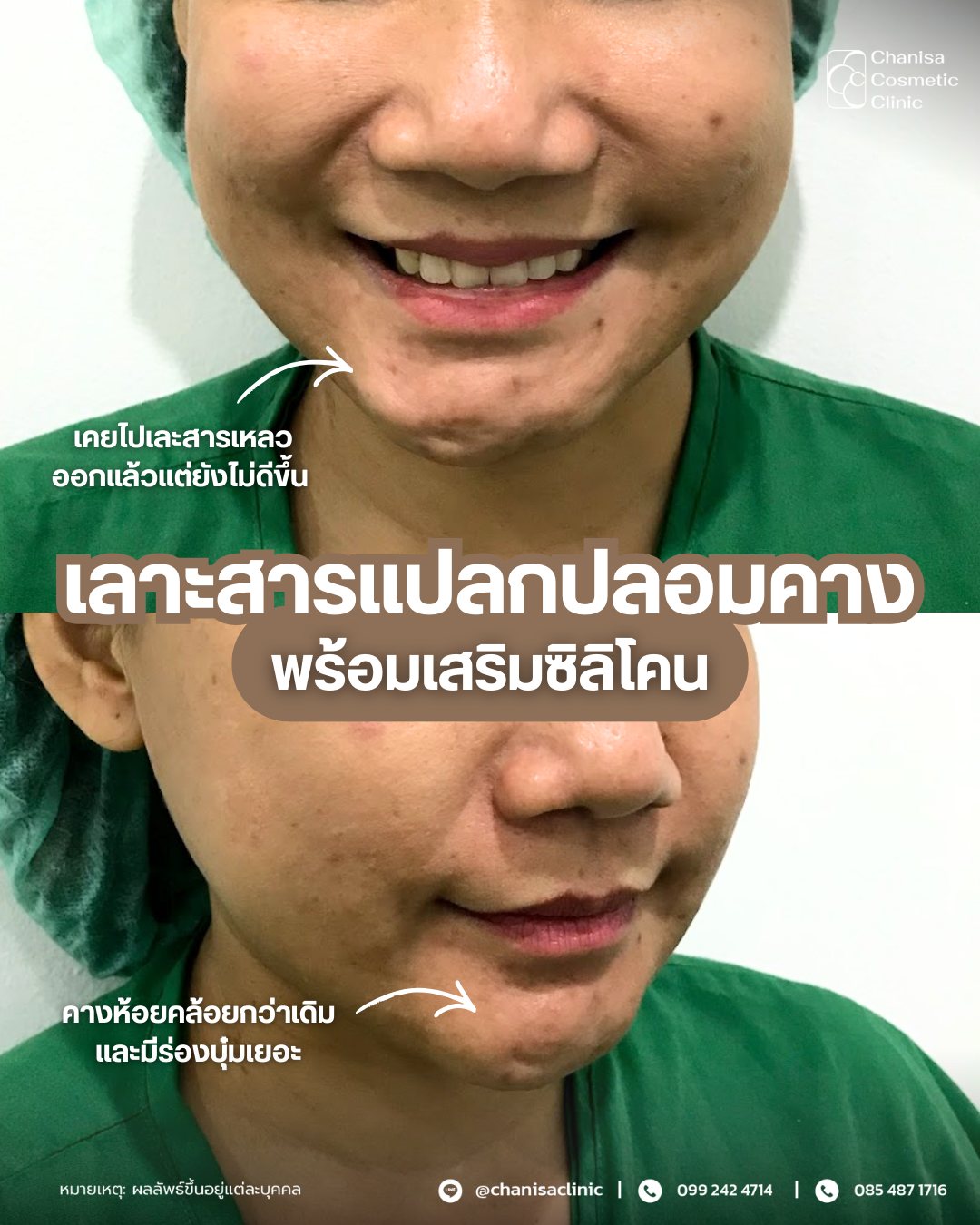
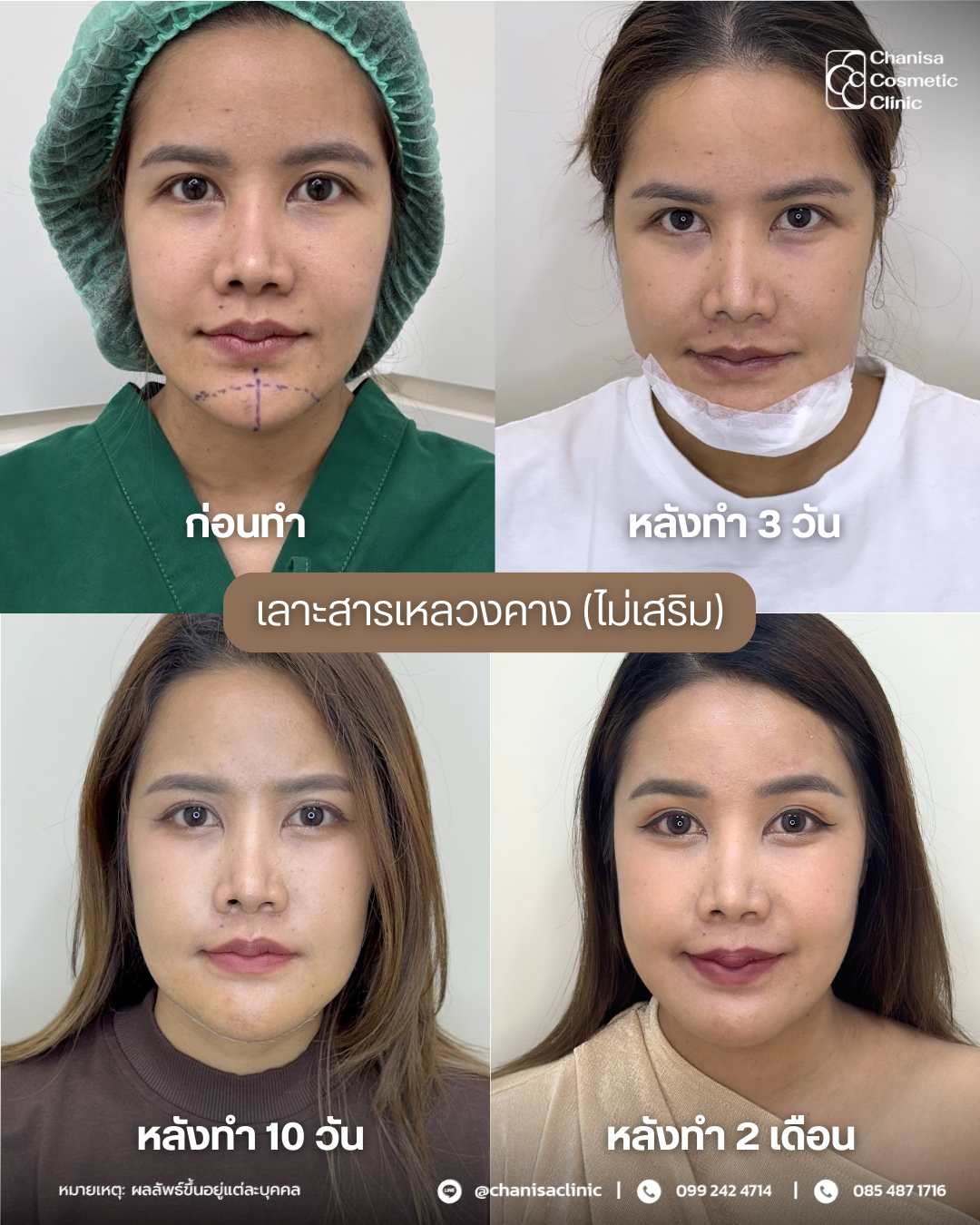
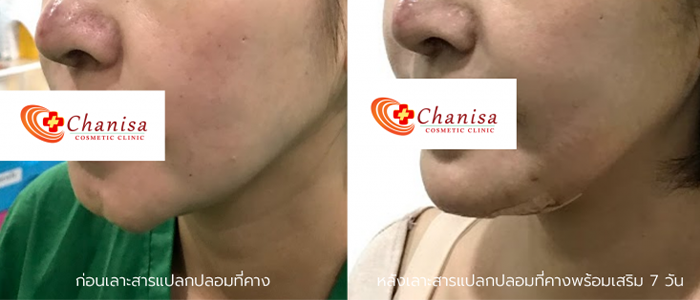
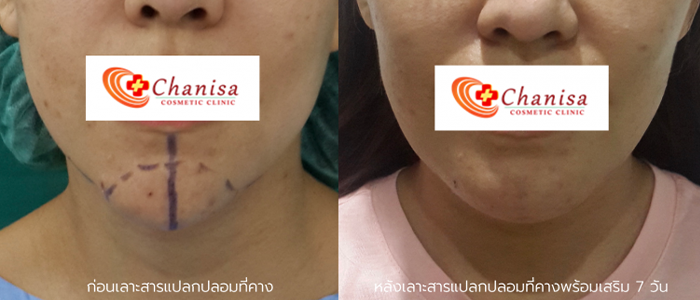
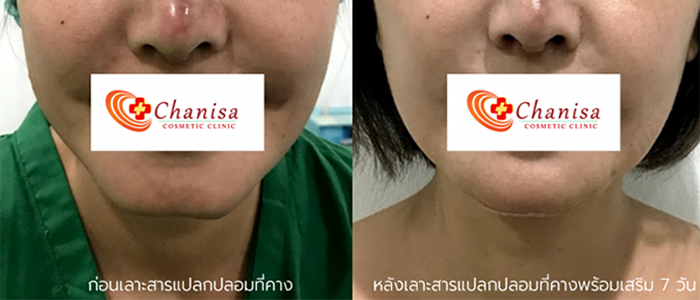
Injections of foreign substances, such as liquid silicone or other non-dissolving fillers, may cause long-term adverse effects. These can include facial skin becoming distorted, wavy, red, or uneven; abnormally enlarged pores; chronic acne that does not respond to treatment; and damaged skin that becomes red or dark. The chin may form hard lumps or nodules, become misshapen or bulge, look uneven, develop indentations, sag, or hang in folds. Some foreign material may also migrate into the area under the chin or alongside it, making the chin look enlarged and deformed. The shape of the chin and the area under it may become distorted.
Treatment
In general, patients who have received injections of foreign substances should be treated with care by the operating surgeon. Proper, systematic treatment from the outset gives the best possible results. Some cases may require further revision to refine the chin later, but this is more manageable when the initial surgery has been performed in a well-planned and systematic way. Chanisa Clinic follows principles for surgically removing foreign substances and has extensive experience treating these cases. Each patient receives detailed advice and information about the surgical approach, including the advantages and disadvantages of each option and what can be done based on their individual condition.
Chin Revision
Chin Contouring Procedure