Chin Augmentation

Chin Augmentation (Mentoplasty)
Chin augmentation is another type of cosmetic surgery used to refine the shape of the face, since chin size is one factor that defines the contours of the lower face. A short, small, flat, or recessed chin can make the face look round and short, make the middle of the face appear wide, and make the neck look fuller. These features may be considered unattractive, but they can be addressed with chin augmentation, which makes the shape of the chin more defined and gives the lower face better balance.
Three Treatment Options for a Short Chin
- Filler injections are available in two types: injections of the patient’s own fat or synthetic fillers (hyaluronic acid fillers).
- Sliding genioplasty (chin advancement) is another type of chin surgery. It is often performed for people with a very short chin that is set far back (lacking front-to-back projection).
- Silicone chin augmentation (Chin Augmentation) is suitable for people with a small or short chin (lacking vertical height), which can make the face look short and the lower part of the face appear shorter in proportion.
Silicone Chin Augmentation (Chin Augmentation)
This is chin augmentation surgery using a medical-grade silicone implant, which can be completely removed if the patient wishes to have it taken out or replaced. Silicone chin augmentation is suitable for people with a small or short chin (lacking vertical height), which can make the face look short and the lower part of the face appear shorter in proportion.
Chin Augmentation
✔️ Securely anchor the silicone implant with 6 fixation points
✔️ Concealed, discreet incision with layered suturing
✔️ Customize and shape the silicone implant for each case
✔️ Contour the implant to fit the bone for a natural look
✔️ Trim tissue and muscle for a smoother, more attractive result
How Silicone Chin Augmentation Is Performed
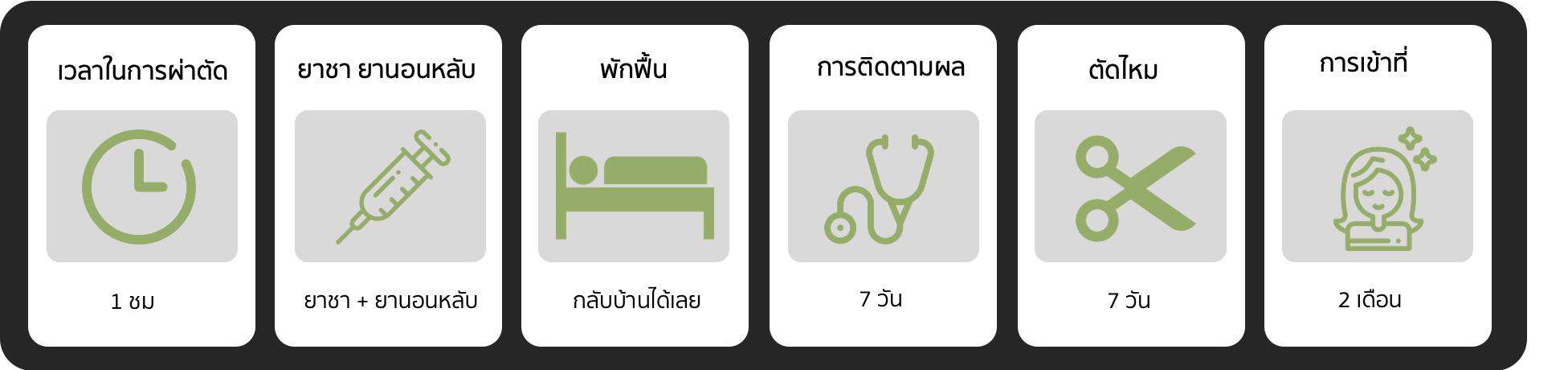
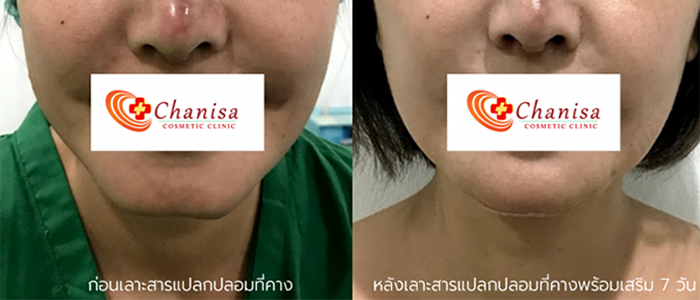
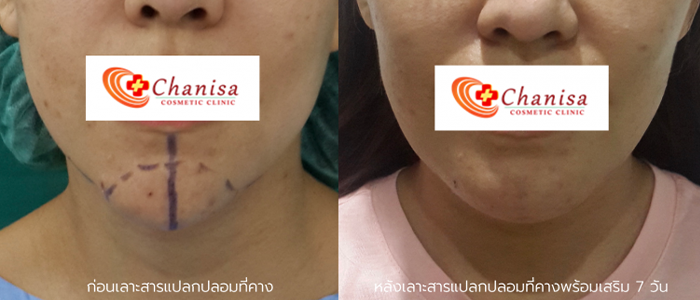
Silicone chin augmentation can be performed through an incision inside or outside the mouth. The face is cleaned before the procedure. The doctor measures and marks the boundaries of the chin area to be reshaped, ensuring the planned position is clearly defined. The silicone implant used for chin augmentation is shaped to fit the chin. The doctor then injects local anesthetic into the chin area, which becomes numb, and cleans the area again before making an incision to create an entry point for the implant, approximately 1.5–3 centimeters long. After creating a pocket beneath the muscle and close to the chin bone, following the planned boundaries, the doctor inserts the sterilized implant into the pocket. The implant sits on the existing chin bone in the desired position. The doctor then adjusts the implant’s shape and checks it until the chin has an attractive contour, before closing the incision with sutures.
Postoperative Symptoms
Most patients feel tightness around the incision. This gradually goes away on its own about one week after surgery. The doctor will leave the bandage on for approximately 2 to 3 days. During this time, patients should eat soft or liquid foods to avoid disturbing the wound, and may take painkillers and medication to reduce swelling.
Risks of Chin Augmentation
- The lips may feel numb because the incision is inside the lower lip. This symptom gradually improves on its own over time.
- The chin and surrounding area may become swollen and sore.
- Sensation in the chin may change, either temporarily or permanently.
- The silicone implant may shift out of place following impact to the face.
- The surgical wound may become infected.
Postoperative Care
- After surgery, patients can go home to rest and return for a follow-up appointment within 7 days.
- If the incision is inside the mouth, patients should eat liquid or soft foods that require little chewing after surgery to avoid disturbing the wound. Rinse with mouthwash or salt water after every meal to prevent food particles from getting stuck in the wound or causing infection if the mouth is not kept clean.
- Pain and swelling around the incision may occur for 3–4 days after surgery. If the pain is unusually severe, patients should return to see the doctor, who may prescribe pain relief and anti-inflammatory medication, as well as antibiotics to prevent infection. If a complication related to the surgery occurs, the doctor may consider removing the silicone implant.
- Sleep with your head elevated to promote blood flow and prevent blood from pooling around the wound.
- Avoid exercise and strenuous activities to prevent impact to the face.
- Light activities can usually be resumed within 5–7 days.
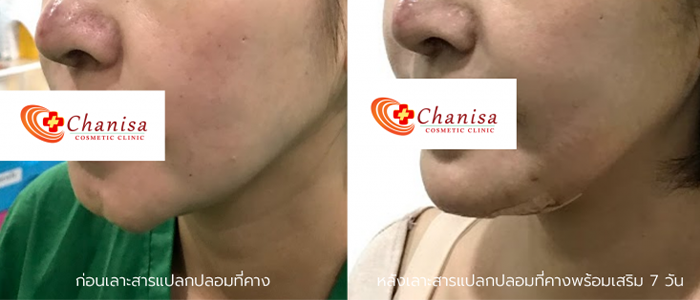
Chin Augmentation Results
The Chin Augmentation Process